


abdominal pain of unclear origin;
CT of the abdominal organs can be undergone at the «Oxford Medical» clinic in Kyiv: on the right bank near the Dorohozhychi metro station and on the left bank — in Berezniaky.

 Adults Adults Adults Adults Adults Adults Adults Adults Adults
  Children Children Children Children


 Hotline:
 Adults Adults Adults Adults Adults Adults Adults Adults Adults Children Children Children Children

CT of the abdominal organs is a highly accurate imaging method that allows assessment of the condition of the liver, gallbladder, pancreas, spleen, kidneys, adrenal glands, and other structures of the abdominal cavity. The examination helps detect inflammatory processes, neoplasms, consequences of injuries, internal bleeding, and other pathological changes in the internal organs.
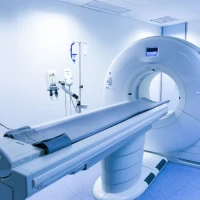
At the Oxford Medical clinic, computed tomography is performed using modern GE Revolution Maxima and SIEMENS Healthineers SOMATOM go.Up scanners. The examination can be undergone in Kyiv on the right bank — near the Dorohozhychi metro station, as well as on the left bank — in Berezniaky.
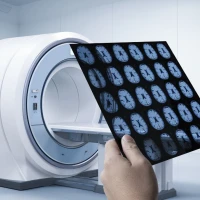
On CT images, the doctor can assess the internal organs and structures of the abdominal cavity in detail, as well as determine the localization and prevalence of pathological changes.
CT allows detection of:
After analyzing the obtained images, the radiologist prepares a conclusion that helps establish the diagnosis, assess the prevalence of the disease, and determine further treatment tactics.
CT of the abdominal organs is prescribed when it is necessary to clarify the diagnosis
and obtain detailed information about the condition and structure of the internal organs.
The examination is performed both routinely and in urgent situations.
Main indications:


abdominal pain of unclear origin;
suspicion of inflammatory diseases of the abdominal organs;
neoplasms or suspicion of their presence;
abdominal injuries and suspicion of damage to internal organs;
internal bleeding or suspicion of it;
enlargement of lymph nodes or internal organs;
monitoring of previously detected pathological changes;
preparation for surgical treatment or assessment of its results.

CT may also be prescribed when acute surgical conditions are suspected, in particular intestinal obstruction, abdominal cavity abscesses, or peritonitis, when it is important to quickly obtain information about the condition of the internal organs. In such cases, the examination is often performed urgently in order to quickly obtain information about the condition of the internal organs.
The doctors of «Oxford Medical» recommend not postponing the prescribed examination in case of intense or prolonged abdominal pain, a sharp deterioration in well-being, suspicion of complications of diseases of the internal organs, or after abdominal cavity injuries. In such cases, timely diagnostics allows the cause of the symptoms to be established faster and the necessary treatment to be started.
The main contraindications are:
In most cases, the decision to perform computed tomography is made individually. If CT with contrast of the abdominal cavity is planned, the doctor may prescribe tests to assess kidney function to increase the safety of the examination.
Abdominal CT without contrast is usually performed on an empty stomach: you should not eat for 4–6 hours before the examination, and you may drink still water. On the day before, it is advisable not to overeat and to temporarily limit foods that may increase gas formation: legumes, carbonated drinks, cabbage, and rich pastries.
If CT with contrast of the abdominal cavity is prescribed, the preparation rules are almost the same, but a blood test for creatinine may additionally be needed to check kidney function. Also, before the procedure, you need to inform the doctor if you previously had allergic reactions to contrast agents or have kidney diseases.
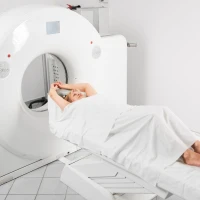
During the examination, the patient lies down on the movable table of the tomograph, which moves through the ring-shaped part of the device. For the images to be clear, it is important to lie still. At certain moments, the patient may be asked to hold their breath briefly.
If CT with contrast of the abdominal cavity is performed, an intravenous catheter is placed in the patient before the examination. First, images without contrast enhancement may be taken, after which the contrast agent is injected and additional scanning series are performed. This approach allows more detailed assessment of the blood supply to the organs, neoplasms, and other pathological changes. During contrast injection, a short-term sensation of warmth in the body or a metallic taste in the mouth is possible.
Scanning usually lasts from 10 to 20 minutes depending on the scope of the examination and the need for contrast enhancement. After the procedure is completed, the patient can return to their usual way of life.
The obtained images are analyzed by a radiologist, who prepares a written conclusion. After receiving the results, you should contact the doctor who referred you for the examination. The specialist will assess the CT conclusion, establish the diagnosis, and, if necessary, prescribe further examination or treatment.
The cost of computed tomography of the abdominal cavity depends on the need to use a contrast agent. You can view the prices for medical services here.
The examination is performed using modern GE Revolution Maxima and SIEMENS Healthineers SOMATOM go.Up scanners, which ensure high visualization quality and image detail. To have computed tomography of the abdominal cavity, you can make an appointment for a convenient time by phone or through the feedback form on the website.
The information is for informational purposes and does not replace a doctor’s consultation.
Sources:
CT of the abdominal organs can be undergone at the «Oxford Medical» clinic in Kyiv: on the right bank near the Dorohozhychi metro station and on the left bank — in Berezniaky.
There is no better method — the choice depends on what information needs to be obtained. CT is usually prescribed for a rapid assessment of the condition of the abdominal organs, in particular in cases of injuries, inflammatory processes, suspected bleeding, or calculi. At the same time, MRI of the abdominal cavity is used more often when more detailed visualization of soft tissues, the liver, bile ducts, or pancreas is needed.
Before abdominal CT, it is usually recommended to refrain from eating for 4–6 hours. This is necessary for better visualization of the organs and to avoid distortion of the results. If CT with contrast is planned, be sure to follow the doctor’s recommendations regarding preparation for the examination.
Abdominal CT can be performed as many times as needed according to medical indications. Modern tomographs make it possible to minimize radiation exposure, so a repeat examination is performed if it is necessary for diagnostics or treatment monitoring.
The result of abdominal CT is usually prepared within several hours after the examination. In some cases, issuing the conclusion may take up to a day — this depends on the complexity of the examination and the volume of images. The approximate time when the results will be ready can be clarified when making an appointment.


Modern tomographs. The examination is performed using expert-class devices that ensure high image quality and detailed visualization of anatomical structures.
Convenient location of departments. CT can be undergone on the right bank of Kyiv near the Dorohozhychi metro station and on the left bank — in Berezniaky.
Fast receipt of results. In most cases, the conclusion is prepared within several hours, and according to separate protocols — within a day.
Comprehensive approach. After the examination, you can make an appointment with a specialist and receive recommendations regarding further diagnostics or treatment.



 in the clinic
  online
  Hello!


