Sign up via call center
Department
The nearest hours
for a otolaryngologist consultation
Looking for a place to record...
Sorry, there are currently no available places to register in this direction.
Try again later.
Sign up for the next time
slots-avatar
We are contacted
Our services
Consultations
Consultation with an otolaryngologist
1100.00 ₴
Order
Online consultation with an otolaryngologist
1100.00 ₴
Sign up by the call center
Consultation with a leading otolaryngologist
1989.00 ₴
Sign up by the call center
Services
Paracentesis of the tympanic membrane (unilateral)
1489.00 ₴
Sign up by the call center
Eustachian tube catheterization
589.00 ₴
Sign up by the call center
Cryodestruction of tonsils
1489.00 ₴
Sign up by the call center
Cryodestruction of ENT papilloma
1489.00 ₴
Sign up by the call center
Cryodestruction of mucous membranes (throat, nose)
1489.00 ₴
Sign up by the call center

Symptoms Requiring
a Otolaryngology Consultation

If you experience one or more of these symptoms, we recommend
making an appointment with your doctor

runny or stuffy nose;

sore throat, hoarseness or change in voice;

ear pain, hearing loss;

snoring and mouth breathing during sleep.

List of diseases

Diagnostic methods in the Department of
Otolaryngology «Oxford Medical»

The primary otolaryngology diagnostics is carried out during the consultation. He asks about the symptoms of the disease, the time of their appearance, previous and chronic diseases. The specialist also examines the nose, throat and ears. In some cases, this is enough to make a diagnosis. If the pathology is more complex, additional examinations may be required for its diagnosis.

Rhinoscopy

Examination of the nasal cavity using a special instrument - a rhinoscope. The procedure allows the otolaryngologist to assess the condition of the nasal mucosa, septum, and turbinates and detect signs of inflammation, curvature, polyps, neoplasms, or other pathologies.

Pharyngoscopy

This is a visual examination of the pharynx that an otolaryngologist performs during an examination. The procedure allows you to assess the condition of the oropharyngeal mucosa, palatine tonsils, posterior pharyngeal wall, and palate.

Otoscopy

Method of visual examination of the external auditory canal and tympanic membrane using a special instrument called an otoscope. It helps detect inflammation, earwax buildup, foreign bodies, injuries, or perforations of the eardrum.

Endoscopy

Modern diagnostic method used to examine the nasal cavity, nasopharynx, larynx, ears, and throat with the help of a thin flexible or rigid endoscope equipped with a light and camera. It allows for detailed visualization of internal structures to detect inflammation, tumors, polyps, foreign bodies, or anatomical abnormalities. The procedure is minimally invasive, quick.

Ultrasound examination

Non-invasive diagnostic method used to assess the condition of soft tissues of the neck, salivary glands, lymph nodes, nasal sinuses, and other structures near the ENT organs. Ultrasound helps detect inflammation, cysts, tumors, and abscesses. The procedure is safe, painless, and does not require special preparation.

Computed tomography

Highly accurate CT imaging method that provides cross-sectional views of the paranasal sinuses, middle ear, pharynx, larynx, and adjacent structures. CT is particularly useful for diagnosing sinusitis, tumors, infections, or anatomical abnormalities. It can be performed with or without contrast.

Bronchoscopy

Endoscopic procedure used to examine the inside of the trachea and bronchi with a special instrument called a bronchoscope. It helps detect inflammation, tumors, foreign bodies, bleeding, or airway narrowing. Bronchoscopy may be diagnostic or therapeutic and is performed under local or general anesthesia.

Audiometry

Hearing test used to measure a person's ability to perceive sounds of different frequencies and volumes. It is performed using a special device called an audiometer. The results are recorded on an audiogram and help diagnose the degree and type of hearing loss, such as sensorineural or conductive hearing loss.

How to Prepare
for a otolaryngologist visit

What should you take to an appointment with an otolaryngologist?

It is advisable to bring the results of preliminary examinations, if any (tests, X-rays, endoscopy, CT scans) to the appointment. Also take with you a referral from your family doctor or an extract from your medical history, if relevant. This will help the doctor quickly get his bearings in the clinical picture.

What should you not do before a visit to an otolaryngology clinic?

Before taking the drug, it is advisable to refrain from using vasoconstrictor drops, sprays, antiseptic solutions or other medications for the nose, throat or ears. Their use may affect the accuracy of the diagnosis. If you are already undergoing treatment, be sure to inform your doctor.

Do I need to come on an empty stomach?

An otolaryngologist appointment usually does not require fasting. However, if blood sampling or endoscopic examination (for example, nasal or laryngeal endoscopy) is planned, the doctor may recommend that you refrain from eating 2–4 hours before the procedure. We recommend that you clarify this when making your appointment.a

Advantages of Oxford Medical — a modern ENT clinic in Kyiv

Accurate diagnostics. The otolaryngology department is equipped with equipment from leading manufacturers of medical technology, which allows accurate assessment of the condition of ENT organs.

Experienced doctors. Consultations are conducted by specialists with many years of experience who work according to modern clinical recommendations.

Comfortable appointment. At Oxford Medical, an ENT specialist provides consultations in Kyiv and Irpin, which makes it possible to choose a convenient location and the optimal time for a visit.

Modern inpatient department. Surgical treatment is carried out in the modern surgical inpatient department of the private clinic Oxford Medical.

Our doctors

Doctor at the private clinic Oxford Medical Kyiv
4.87
rating (15)
33+
Years of experience
Otolaryngologist of the highest category
33+ Years of experience
Consultation 1100
Kyiv, Sribnokilska St. 20
Make an appointment
Gerasimova Alena Volodymyrivna - otolaryngologist of the private clinic Oxford Medical Kyiv
4.81
rating (16)
6+
Years of experience
Online consultation
Otolaryngologist Category II
6+ Years of experience
Consultation 1100
Kyiv, Mykhayla Hryshka St., 1
Make an appointment
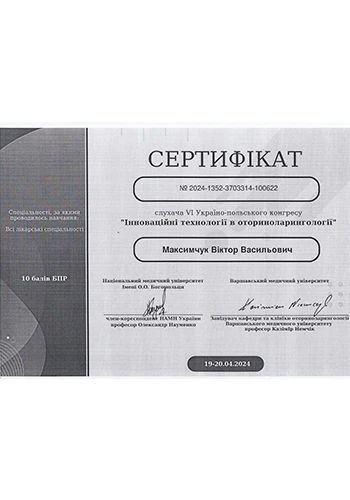
Maksymchuk Viktor Vasyliovych
4.92
rating (24)
30+
Years of experience
Online consultation
Otolaryngologist of the highest category
30+ Years of experience
Consultation 1100
Kyiv, Hlybochytska St., 40x
Make an appointment
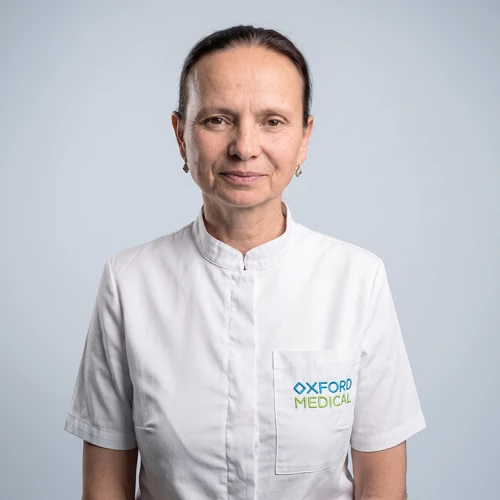
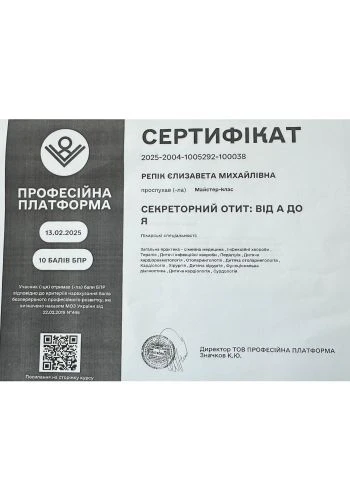
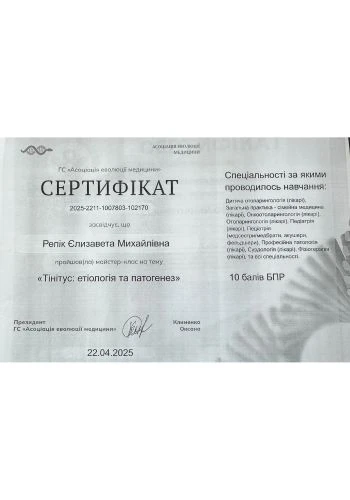
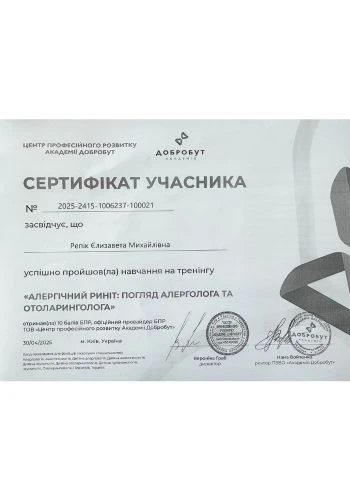
Repik Elizaveta Mikhailovna
4.85
rating (13)
14+
Years of experience
Online consultation
Otolaryngologist, pediatric otolaryngologist
14+ Years of experience
Consultation 1100
Make an appointment
All doctors
Reviews
Олена 26.05.2026
Приводила сина до Оксани Василівни з отитом. Уже за кілька днів дитині стало набагато краще. Гарний лікар!
Star Star Star Star Star
Юлія 19.05.2026
Після затяжного нежитю та болю в горлі звернулася до Оксани Василівни. Лікарка пояснила, чому лікування до цього не допомагало, і призначила нове. Уже через кілька днів стало значно легше.
Star Star Star Star Star
Current information
All Articles

Prices for ENT services in Kiev at the Oxford Medical clinic

At the Oxford Medical medical center, various ENT services are available — from consultation and prescribing outpatient treatment to conducting endoscopic examinations, minimally invasive procedures, and operations. You can preliminarily view the prices for ENT services here.

If you need an ENT specialist on the left bank of Kyiv, on the right bank, or in Irpin, book a consultation at Oxford Medical. The doctor will perform an examination, prescribe additional diagnostics if necessary, and select treatment taking into account the cause of the symptoms and the specific features of the course of the disease. You can make an appointment with an ENT specialist by phone or through the online appointment form on the clinic’s website.

Methods of treatment of ENT organs

Treatment tactics in otolaryngology depend on the diagnosis, severity of symptoms, duration of the disease, and presence of complications. In our clinic, ENT specialists use both conservative treatment methods and modern minimally invasive and surgical interventions.

Conservative treatment

Many acute and chronic ENT diseases are successfully treated with medication. After examination and diagnostics, the doctor selects an individual therapy regimen depending on the cause of the disease and symptoms.

Conservative treatment may include:

  • antibacterial drugs;

  • anti-inflammatory agents;

  • antihistamine drugs;

  • vasoconstrictor agents;

  • antiseptic drugs;

  • local drugs for treating throat diseases.

In most cases, treatment is carried out on an outpatient basis, and after the consultation the patient can return to the usual way of life.

Physiotherapy

In the comprehensive treatment of ENT diseases, physiotherapeutic procedures may be used, which help reduce inflammation, swelling, and accelerate recovery of the mucous membranes.

The clinic performs:

  • cryoapplication of the tonsils;

  • ultrasound therapy;

  • laser therapy;

  • ultraviolet therapy;

  • phototherapy.

Physiotherapeutic procedures are often combined with medication treatment to achieve a better result and reduce the risk of repeated exacerbations.

Also, in outpatient conditions, ENT procedures are performed that help cleanse the mucous membranes and reduce inflammation. In particular, doctors perform washing of the lacunae of the palatine tonsils, washing of the nasal sinuses by the method of fluid displacement (“cuckoo”), as well as removal of earwax plugs.

Minimally invasive treatment

Modern minimally invasive methods allow treatment to be carried out with minimal tissue trauma and a shorter recovery period.

The ENT department performs:

  • endoscopic interventions;

  • minimally invasive treatment of snoring;

  • removal of polyps;

  • removal of benign neoplasms;

  • endoscopic removal of foreign bodies;

  • procedures using laser and radio wave technologies.

Many procedures are performed through natural anatomical approaches — the nasopharynx or oropharynx, which allows avoiding external incisions in the area of the face and neck. Thanks to this, interventions are less traumatic and usually require a shorter recovery period.

Surgical treatment

If conservative treatment does not provide the required result or the disease requires surgical intervention, the doctor may recommend surgical treatment. The tactics of the operation depend on the diagnosis, degree of changes, and general condition of the patient.

The clinic performs:

  • septoplasty — an operation to correct deviation of the nasal septum;

  • maxillary sinusotomy — surgical treatment of diseases of the maxillary sinuses;

  • tonsillectomy — removal of the palatine tonsils;

  • adenotomy — removal of adenoids;

  • operations on the nasal turbinates;

  • endoscopic ENT operations;

  • otoplasty — correction of the shape of the auricle;

  • removal of neoplasms of ENT organs.

Surgical interventions are performed using modern endoscopic technologies and minimally invasive methods. Many operations are low-traumatic, require a shorter recovery period, and do not involve a long stay in the inpatient department.

What does an otolaryngologist treat?

An otolaryngologist is engaged in the diagnosis and treatment of diseases of the ear, throat, nose, and paranasal sinuses.

Diseases of the nose and nasal sinuses:

  • rhinitis — inflammation of the nasal mucosa;

  • maxillary sinusitis — inflammation of the maxillary sinuses;

  • sinusitis — inflammation of the paranasal sinuses;

  • nasal polyps — benign overgrowths of the mucous membrane.

Diseases of the throat and larynx:

  • tonsillitis — inflammation of the palatine tonsils;

  • pharyngitis — inflammation of the mucous membrane of the pharynx;

  • laryngitis — inflammation of the larynx;

  • sore throat — acute inflammation of the tonsils;

  • adenoids — enlargement of the nasopharyngeal tonsil.

Ear diseases:

  • otitis — inflammation of different parts of the ear;

  • eustachitis — inflammation of the auditory tube;

  • earwax plugs — excessive accumulation of earwax;

  • hearing loss — hearing impairment of different origins.

A consultation with an otolaryngologist is needed for acute and chronic ENT diseases, when it is important to establish an accurate diagnosis, determine the cause of the problem, and select treatment. At the Oxford Medical clinic, an ENT doctor for adults and children provides consultations, so patients can undergo examination and treatment with the whole family in one medical center.
Frequently asked questions

How much does an ENT appointment cost?

At the Oxford Medical clinic, a paid consultation with an otolaryngologist costs 1100 UAH. During the appointment, the doctor examines the ENT organs, assesses symptoms, prescribes additional diagnostics if necessary, and selects treatment.

What does an ENT specialist check?

During the consultation, an ENT specialist, or an “ear-throat-nose” doctor, checks the condition of the corresponding organs. The doctor assesses the mucous membranes, tonsils, nasal breathing, hearing, the presence of inflammation or neoplasms. If necessary, an endoscopic examination and other examinations may be performed, which help clarify the cause of the symptoms and establish a diagnosis.

How to get to an ENT specialist without a referral?

For a consultation with an otolaryngologist in a private clinic, a referral from a family doctor is not required. The patient can make an appointment independently. At Oxford Medical, preliminary booking is available by phone or through the online appointment form on the website.

What should be done before visiting an ENT specialist?

Before the appointment, it is advisable not to use nasal drops, sprays, or throat gargling products immediately before the examination. It is also worth preparing the results of previous examinations and a list of medications you are taking. This will help the doctor assess the condition faster and select treatment.

Can an ENT specialist see adenoids?

Yes, modern diagnostic methods allow an ENT doctor to assess the condition of the nasopharynx and detect adenoids. Most often, an endoscopic examination is performed for this, during which the doctor sees the degree of enlargement of the nasopharyngeal tonsil and the presence of inflammation. Based on the examination results, removal of adenoids or medication therapy may be recommended.

How can an ENT specialist detect throat cancer?

An otolaryngologist can detect signs that indicate throat cancer during an examination and endoscopic examination of the larynx and oropharynx. To accurately confirm the diagnosis, a biopsy is performed with subsequent histological examination of the tissues, and CT or MRI may also be prescribed if necessary.

Can an otolaryngologist help with snoring?

Yes, an otolaryngologist can help determine the cause of snoring and select therapy. Snoring is often associated with deviation of the nasal septum, enlargement of the tonsils, adenoids, polyps, or impaired nasal breathing. After the examination, the doctor may recommend medication methods, minimally invasive procedures, or surgical correction.

( Rating: 4.38 , Votes: 773 )

We use cookies and other technologies to remember your preferences and find out exactly how you use and interact with the site.

By using our site, you also agree to the terms of the "User Agreement" and "Regulation on the processing and protection of personal data". By clicking "I AGREE", you consent to the processing of your data.