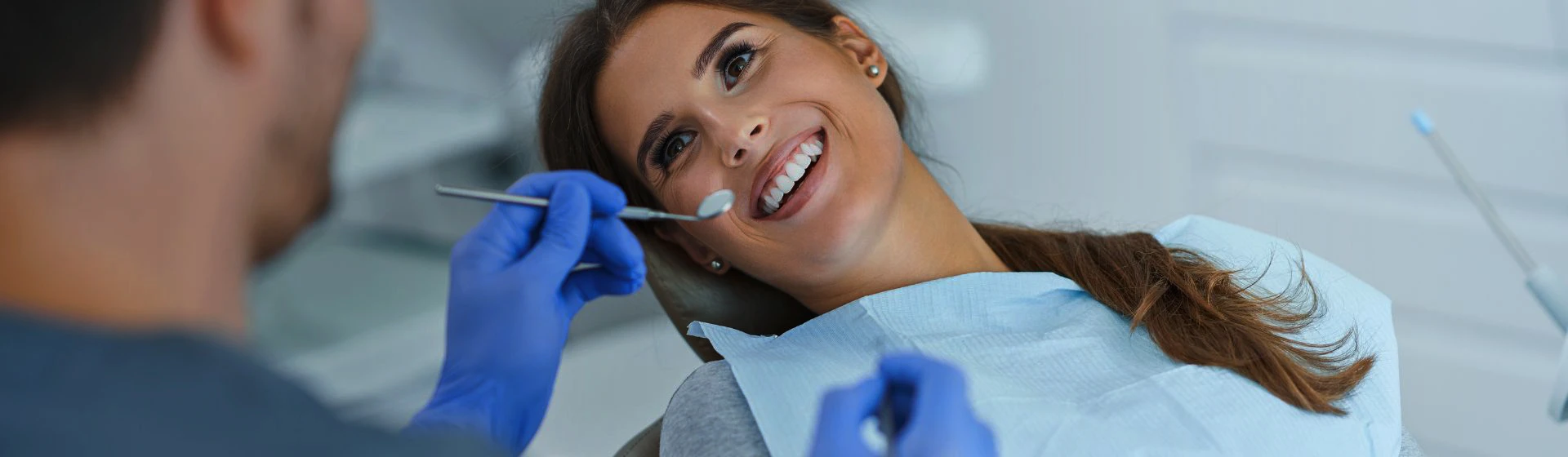
Diagnosis begins with a consultation with a dentist-periodontist. During the appointment, the doctor listens to the patient’s complaints, examines the oral cavity, assesses the condition of the gums, the presence of dental plaque and dental calculus, checks for bleeding, tooth mobility, the presence of recessions, and other pathological changes.
If necessary, the following may be performed to clarify the diagnosis:
-
periodontal probing to measure the depth of periodontal pockets and assess the condition of the tissues around the teeth;
-
dental X-rays, an orthopantomogram, or computed tomography to assess the condition of the bone tissue and determine the extent of its damage.
A comprehensive examination makes it possible to establish an accurate diagnosis, determine the stage of the disease, and select the most effective treatment method.