


A night guard does not eliminate the cause of bruxism, but it helps protect your teeth from its effects. In some patients, the intensity of grinding and clenching may decrease, but the main task of the guard is to prevent tooth wear, cracks, chips, and overloading of the dento-jaw system.
Sign up via call center 
 Adults Adults Adults Adults Adults Adults Adults Adults Adults
  Children Children Children Children
Department
Adults Outpatient department
Adults Outpatient department
Inpatient department
Adults Inpatient department
Aesthetic medicine
Adults Aesthetic medicine
Dentistry
Adults Dentistry
Plastic surgery
Adults Plastic surgery
Diagnostics
Adults Diagnostics
Analyzes
Adults Analyzes
Outbound services
Adults Outbound services
Children Outpatient department
Children Outpatient department
Dentistry
Children Dentistry
Diagnostics
Children Diagnostics

Kyiv


 Hotline:
 Request a call:


Department
Adults Outpatient department
Adults Outpatient department
Inpatient department
Adults Inpatient department
Aesthetic medicine
Adults Aesthetic medicine
Dentistry
Adults Dentistry
Plastic surgery
Adults Plastic surgery
Diagnostics
Adults Diagnostics
Analyzes
Adults Analyzes
Outbound services
Adults Outbound services
Children Outpatient department
Children Outpatient department
Dentistry
Children Dentistry
Diagnostics
Children Diagnostics
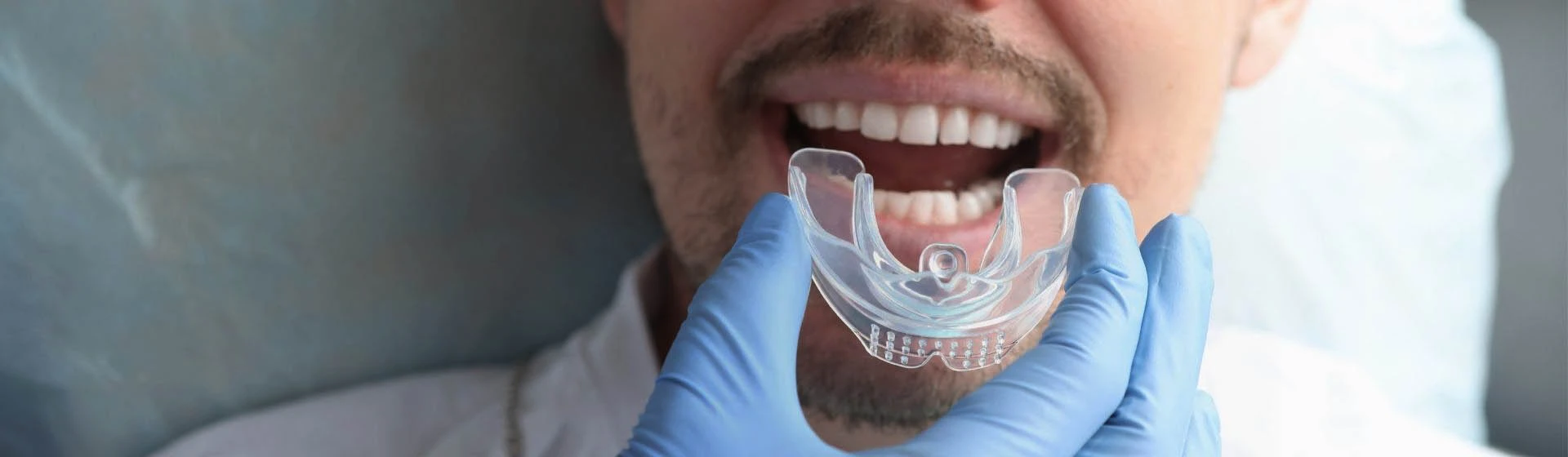
Bruxism mouthguard
Bruxism is involuntary clenching of the jaws or grinding of the teeth, which most often occurs during sleep. Over time, excessive load can lead to enamel wear, increased tooth sensitivity, the appearance of cracks, discomfort in the chewing muscles and the temporomandibular joint.
To protect the teeth, dentists often recommend an individual mouthguard for sleep. It helps reduce the negative impact of bruxism and prevent further damage to the teeth.
At the Oxford Medical clinic, you can have a consultation with a gnathologist and receive an individual mouthguard taking into account the features of the bite. This allows ensuring comfortable use of the construction and its effective work during sleep.
How a bruxism mouthguard works (night mouthguard)
A night mouthguard for teeth performs a protective function during sleep. When a person involuntarily clenches the jaws or grinds the teeth, the load falls on the mouthguard, and not directly on the teeth. It softens the contact between the jaws and prevents excessive enamel wear.
Modern bruxism mouthguards are made individually, so they fit tightly to the teeth, are reliably fixed, and do not create significant discomfort during sleep. Thanks to this, they can be used regularly for a long time.
A correctly selected night mouthguard helps reduce the negative impact of bruxism, lower the risk of enamel damage and other dental problems associated with excessive load on the dentoalveolar system.
Who is recommended an individual mouthguard for bruxism
An individual mouthguard may be recommended for patients with confirmed bruxism, as well as for people who already have signs of excessive load on the teeth and chewing muscles.
The main indications for making a mouthguard are:
- teeth grinding during sleep;
- enamel wear and reduction in tooth height;
- the appearance of cracks, chips, or other damage;
- increased tooth sensitivity without other obvious causes;
- a feeling of tension or fatigue of the chewing muscles after waking up;
- morning headaches associated with excessive clenching of the jaws;
- discomfort in the area of the temporomandibular joint;
- frequent damage to fillings, veneers, or orthopedic constructions due to excessive load.
The doctors of Oxford Medical recommend seeking a consultation when the first signs of bruxism appear. The earlier prevention of tooth damage is started, the higher the chances of avoiding more complex dental treatment in the future.
How the making of a mouthguard for bruxism and treatment takes place
The making of a mouthguard for bruxism includes several stages that allow creating a construction taking into account the individual features of the patient's dentoalveolar system.
Main stages:
- Consultation and diagnostics. The doctor examines the oral cavity, assesses the condition of the teeth, the presence of signs of bruxism, the features of the bite, and the work of the temporomandibular joint. Based on the obtained data, the doctor determines further tactics.
- Additional examinations. For a more accurate assessment of the clinical situation, diagnostic studies may be prescribed, in particular dental X-ray, computed tomography, or condylography — a method of studying the work of the temporomandibular joint and movements of the lower jaw.
- Taking impressions or digital scanning. The doctor takes dental impressions or performs digital scanning of the oral cavity. The obtained data are used to make an individual mouthguard that exactly corresponds to the features of the patient's bite.
- Making the mouthguard. In a dental laboratory, an individual mouthguard for teeth for sleep is created, which corresponds to the features of the patient's bite and ensures comfortable use.
- Fitting and recommendations. After making it, the doctor checks the fit of the mouthguard, performs correction if necessary, and provides recommendations on its use.
The doctors of Oxford Medical note: treatment of bruxism is not always limited only to the use of a mouthguard. Depending on the causes of the problem, the doctor may recommend bite correction, treatment of diseases of the temporomandibular joint, or other methods aimed at eliminating the factors that provoke excessive clenching of the jaws. If bruxism has already led to enamel wear, the appearance of cracks or chips, in addition to the main treatment, tooth restoration or restoration by another method may be needed.
How to care for a night mouthguard for bruxism
A dental mouthguard for sleep requires proper care. This helps maintain its hygiene, extend its service life, and ensure comfortable use.
For care, it is recommended to:
- rinse the product with cool water after each use;
- regularly clean it with a soft toothbrush without abrasive agents;
- store the construction in a special container with ventilation openings;
- not use hot water, which can lead to deformation of the material;
- avoid mechanical damage and store the product away from heat sources.
Even if the medical mouthguard for sleep has no visible damage, it is important to visit the dentist regularly. During follow-up examinations, the doctor assesses the condition of the construction, the effectiveness of treatment, and, if necessary, adjusts recommendations for its use.
It is also important to maintain proper oral hygiene. Regular preventive examinations and professional teeth cleaning from tartar help preserve the health of teeth and gums during long-term use of the mouthguard.
How much does it cost to order a mouthguard for sleep in Kyiv at the Oxford Medical clinic
For bruxism mouthguards, the price is determined individually and depends on the type of construction and the complexity of its making. You can preliminarily familiarize yourself with the prices here. The doctor will guide you in more detail regarding bruxism treatment, the type of mouthguard, and its cost during the initial consultation. Schedule an appointment at a time convenient for you by phone or through the online chat on the website.
The information is for informational purposes and does not replace a doctor's consultation.
Sources:
Frequently asked questions:
Does a night guard help with teeth grinding in your sleep?
How long should you wear a mouthguard for bruxism?
The mouthguard is worn every night while you sleep. The duration of use is determined individually: some patients use it for several months during the treatment of bruxism, others for years for permanent protection of the teeth. The need for further wearing of the mouthguard is assessed by the doctor during follow-up examinations.


Advantages of making mouthguards for bruxism at the private clinic "Oxford Medical"

Individual approach. The mouthguard is made using individual impressions, taking into account the features of the bite and the condition of the patient's teeth.
Comfortable use. Individually made night mouthguards for bruxism fit the teeth precisely, are well fixed, and do not interfere.
Accurate diagnostics. At the clinic, you can undergo additional examinations to assess the condition of the dentoalveolar system and the temporomandibular joint.
Comprehensive treatment. If necessary, the patient can receive consultations with related specialists and undergo the necessary dental procedures.
Show more 
Our doctors

 4.95
4.95  14+
14+ Dentist-orthodontist, gnathologist
 14+ Years of experience
 Consultation 1
 Kyiv, Andriy Verkhoglyad St., 14B
 4.83 9+
 Dentist-orthodontist
9+ Years of experience Consultation 1
Kyiv, Andriy Verkhoglyad St., 14B  5 2+
5 2+ 
Reviews
Vitalina 12.10.2026
Робила чистку зубів у лікаря Польотової у відділенні на Гришка. Все дуже сподобалось, лагідно робила, враховуючи мою чутливість зубів. Рекомендую

Ірина 08.10.2026
Вже не вперше звертаюся до Новицької Лесі Олександрівни. Подобається її уважність до деталей і дуже акуратна робота. Цього разу відновлювали зуб, і результат вийшов природним та естетичним. Дякую Лесі Олександрівні за якісне лікування та відповідальний підхід.
Current information

29 September 2026
Pus on the Gums: Causes and What to Do
19 August 2026
Stains on teeth: why they appear and what they mean
19 August 2026
Bleeding Gums: Causes and Treatment
23 July 2026
Toothache: what to do before a visit to the dentist
Sign up via call center
 in the clinic
  online

 Hello!
Let's take care
about your health:
Sign up via call center 
