Contents:
- What spots on teeth mean
- Why spots appear on teeth
- White spots on teeth
- White spots on teeth in adults
- White spots on teeth after whitening
- White spots on baby teeth
- White spots on teeth in a child
- Yellow spots on teeth
- Dark spots on teeth
- Brown spots on teeth
- Black spots on teeth
- Pigmented spots on teeth
- Treatment and prevention of spots on teeth
Spots on teeth can appear for different reasons, and they do not always indicate tooth decay. Sometimes this is only surface pigmentation, while in other cases it may be one of the first signs of tooth decay or other dental problems. It is almost impossible to determine the cause independently by the color or size of the spot.
In this article, we will explain why white spots appear on teeth, what yellow, brown, and black spots may mean, and when professional hygiene is enough and when treatment is needed. We will also separately consider the causes of their appearance in children.
What spots on teeth mean
Spots on teeth can have different origins. In some cases, they are related only to surface pigmentation, while in others they may be the first sign of tooth decay, insufficient enamel mineralization, or other dental problems.
That is why it is impossible to determine the cause only by the color of the spot. A dental examination is needed for this, during which the doctor assesses the condition of the tooth and, if necessary, performs radiological diagnostics.
Why spots appear on teeth
The most common causes are:
- pigmented plaque;
- initial tooth decay;
- impaired enamel mineralization;
- fluorosis;
- tooth trauma;
- age-related enamel changes.
Doctors at Oxford Medical note: spots often become the first manifestation of tooth decay or another problem. Therefore, you should not wait for pain or other symptoms to appear before seeing a dentist.
White spots on teeth
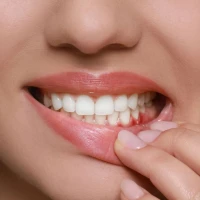
A white spot on a tooth most often appears when the enamel loses part of its minerals and becomes less dense. Because of this, its surface loses its natural translucency and acquires a matte white shade.
According to the US National Library of Medicine, the white spot stage is an initial form of tooth decay, when enamel destruction can still be stopped without tooth preparation if treatment is provided in time.
Doctors at Oxford Medical note: matte white spots that do not disappear after brushing require a dental examination. The earlier the cause of their appearance is identified, the more opportunities there are to avoid more complex dental treatment with root canal filling.
White spots on teeth in adults
.jpg)
In adults, white spots are most often noticeable near the gumline or between the teeth, as dental plaque accumulates most easily in these areas. They may also appear after wearing braces if it was difficult to maintain proper oral hygiene during treatment.
If the spot increases in size, becomes rough, or tooth sensitivity appears nearby, it is worth seeing a dentist. In the early stages, remineralization methods may be used.
White spots on teeth after whitening
Sometimes white spots may appear after teeth whitening. Most often, this is associated with temporary dehydration of the enamel after the procedure, which makes areas with reduced mineralization contrast more strongly. In most cases, after the natural water balance of the enamel is restored within 1-3 days, this effect gradually decreases.
If white spots do not disappear within several days or appeared after home whitening, a dental examination is necessary. This may be related both to incorrect performance of the procedure and to enamel changes that became noticeable after whitening.
White spots on baby teeth
White spots on baby teeth are most often the first sign of enamel demineralization or initial tooth decay. Because the enamel of baby teeth is thinner and less strong than that of permanent teeth, the carious process in children can progress much faster.
Doctors at Oxford Medical note: if you see a dentist in time, it is often possible to stop the development of tooth decay at an early stage and preserve the baby tooth. That is why even small white spots should not be ignored.
White spots on teeth in a child
White spots on children's teeth do not always mean tooth decay, but they are always a reason for a dental examination. In the early stages, enamel changes usually do not cause pain, so the child may not complain of any discomfort. The earlier the cause is identified, the greater the chance of stopping the process without complex treatment.
Doctors at Oxford Medical recommend not postponing a visit to a pediatric dentist. During the examination, the doctor will determine the cause of the spots, assess the condition of the enamel, and, if necessary, prescribe treatment or preventive measures.
.jpg)
White spots on teeth in a child aged 1 year
In children in the first year of life, white spots most often appear on the upper front teeth. At this age, they often become the first noticeable sign of early tooth decay. Therefore, even small matte areas on the enamel are a reason for an unscheduled examination by a pediatric dentist.
White spots on teeth in a child aged 2 years
At the age of two, the risk of white spots increases due to the expansion of the diet and an increase in the amount of sweet foods and drinks. In addition, not all children can brush their teeth properly, so it is important for parents to help with hygiene and monitor it until school age.
Yellow spots on teeth
Yellow spots on teeth in children and adults may be associated with plaque, enamel changes, or dentin changes. The cause is determined during a dental examination, after which the doctor decides whether professional hygiene is sufficient or whether treatment is needed.
Most often, yellowish changes occur due to:
- accumulation of plaque and tartar;
- thinning of the enamel, through which more dentin shows through;
- initial tooth decay;
- consequences of tooth trauma;
- impaired formation or mineralization of the enamel.
If the cause is plaque or tartar, professional hygiene will help clean the teeth. If a yellow spot on a tooth is associated with tooth decay, trauma, or enamel disorder, appropriate treatment is needed.
Dark spots on teeth
.jpg)
Dark spots on teeth most often attract attention because many people perceive them as a sign of tooth decay. In fact, this is not always the case. Darkening may be associated both with the accumulation of pigmented plaque and with changes in the enamel, dentin, or internal tissues of the tooth.
Doctors at Oxford Medical note: if a dark spot appeared recently, increases in size, changes color, or is accompanied by sensitivity or tooth destruction, a dental examination should not be postponed. In the early stages, many problems can be eliminated with less complex treatment methods.
Brown spots on teeth
Brown spots are most often associated with pigmented plaque that forms under the influence of coffee, tea, red wine, tobacco smoke, and other colorants. Such changes are usually located on the tooth surface and are clearly visible near the gums, between the teeth, or in the natural grooves of the chewing surface.
At the same time, brown color may be one of the signs of tooth decay. If the spot gradually darkens, increases in size, or looks like a depression in the tooth, a dental examination is necessary.
Black spots on teeth
Black dots on teeth do not always indicate tooth decay. In some cases, they are a manifestation of so-called black stain, which forms as a result of the interaction between oral bacteria and iron compounds in saliva. According to the US National Institutes of Health, such plaque is more common in children but may also appear in adults.
If black dots on teeth do not disappear after regular brushing, increase in size, change appearance, or are combined with pain or tooth destruction, it is necessary to see a dentist. The doctor will determine the cause of their appearance and, if necessary, recommend professional hygiene or appropriate treatment.
Pigmented spots on teeth
Pigmented spots on teeth occur when colorants accumulate on the enamel surface. Unlike changes associated with tooth decay or disruption of the tooth structure, they do not destroy the enamel, but they worsen its appearance.
Most often, pigmentation on teeth appears due to:
- regular consumption of coffee, tea, red wine, and other drinks with natural or artificial colorants;
- smoking;
- insufficient oral hygiene;
- long-term accumulation of soft dental plaque;
- use of certain medications that may change the color of teeth.
Doctors at Oxford Medical note: if tooth pigmentation is associated only with surface plaque, it can usually be removed during professional hygiene. If color changes remain after cleaning, in the absence of contraindications, the dentist may recommend professional whitening.
Treatment and prevention of spots on teeth
.jpg)
Treatment depends on the cause of the spots. If they are associated with pigmented plaque, professional hygiene is sufficient. If the color change occurred due to tooth decay, impaired enamel mineralization, trauma, or other dental diseases, treatment is selected individually after an examination.
Depending on the cause, the dentist may recommend:
- professional oral hygiene;
- enamel remineralization;
- dental treatment for tooth decay;
- tooth restoration in case of significant damage;
- professional whitening — if the color change is superficial.
To reduce the risk of new spots appearing, dentists recommend:
- brushing teeth twice a day and cleaning interdental spaces daily;
- undergoing professional hygiene every 6–12 months or as recommended by a doctor;
- not overusing foods and drinks with intense colorants;
- rinsing the mouth with water after coffee, tea, red wine, or sweet carbonated drinks whenever possible;
- having regular preventive dental check-ups.
Doctors at Oxford Medical note: the earlier the cause of the spot is identified, the simpler and less extensive treatment usually is. Therefore, with any persistent change in tooth color, it is worth seeing a dentist without waiting for pain or other symptoms to appear.
The information in this article is provided for informational purposes and is not an instruction for self-diagnosis or self-treatment. If symptoms of a disease appear, you should consult a doctor.
Sources:
US National Library of Medicine