


Contents:
- When to Start Brushing Your Child's Teeth
- How to Brush Children's Teeth Properly: Tips for Parents
- Basic Rules for Brushing Children's Teeth
- How to Brush a Baby's Teeth Before the Age of One
- How to Brush a One-Year-Old Child's Teeth
- How Many Minutes Should You Brush Your Child's Teeth?
- How to Choose a Toothbrush and Toothpaste for Your Child
- How to Teach Your Child to Brush Their Teeth Independently
- What to Do If Your Child Does Not Want to Brush Their Teeth
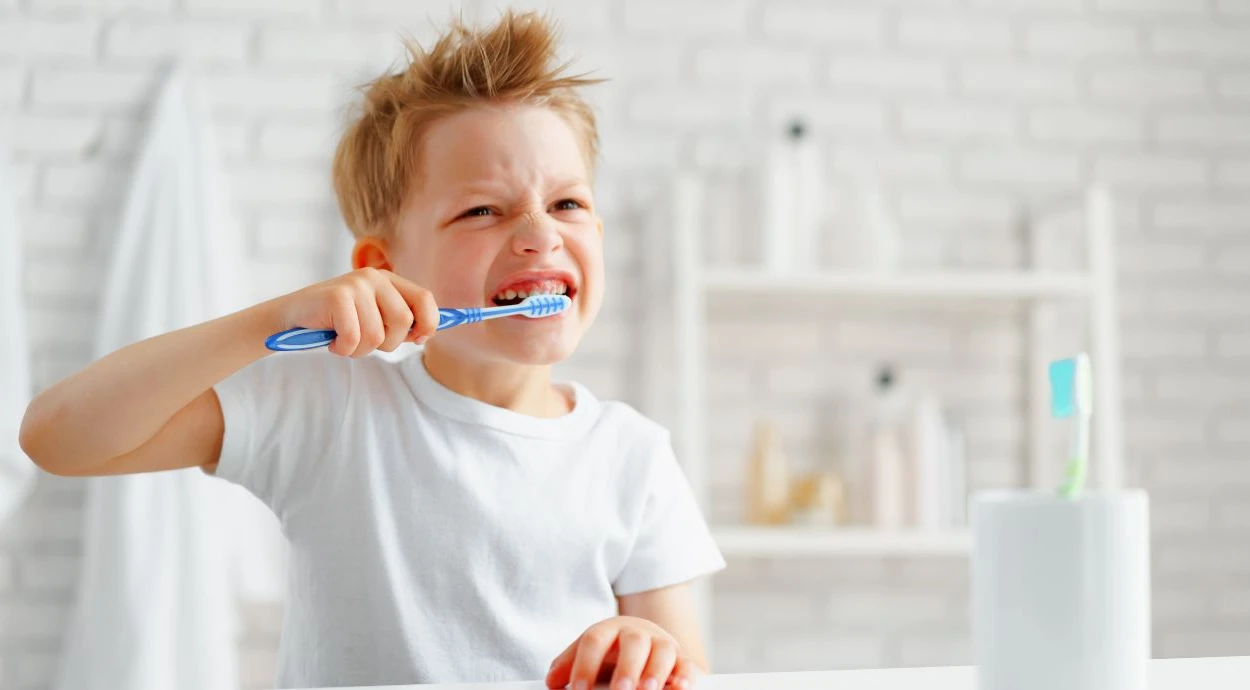
Care for baby teeth should begin immediately after the first tooth erupts. Regular brushing helps prevent plaque buildup and the development of tooth decay, while proper technique reduces the risk of injuring the gums.
An incorrectly chosen toothbrush, insufficient brushing time, or the use of unsuitable toothpaste can reduce the effectiveness of daily oral hygiene. In addition, not all children willingly agree to the procedure, so it is important for parents to develop a positive attitude toward dental care from an early age.
In this article, we will discuss how to brush children's teeth at different ages, which toothbrush and toothpaste to choose, and how much time to devote to oral hygiene. We will also explain how to teach a child to care for their teeth independently and what to do if they refuse to brush their teeth every day.
When to Start Brushing Your Child's Teeth
Parents often ask when they should start brushing their baby's teeth. According to the recommendations of the American Dental Association, brushing should begin immediately after the first baby tooth erupts. This usually happens at around 6 months of age, although some children begin teething earlier or later. It is important not to wait until all the baby teeth have erupted, as tooth decay can develop as soon as the first tooth appears.
How to Brush Children's Teeth Properly: Tips for Parents
To keep teeth healthy, it is important to thoroughly remove plaque every day, including from hard-to-reach areas. Young children cannot yet manage this task independently, so they need their parents' help. As children grow older, they gradually learn to use a toothbrush, but adults still need to monitor the quality of brushing for some time.
Basic Rules for Brushing Children's Teeth
For daily oral hygiene to be effective, it is important to follow the correct technique and clean all areas of the dental arch.
Basic rules for brushing children's teeth:
- Clean the outer surfaces. Position the toothbrush at a slight angle to the gumline and use gentle circular motions without applying excessive pressure.
- Do not forget the inner surfaces. Pay particular attention to the areas behind the front teeth, where plaque also accumulates.
- Clean the chewing surfaces. Use short back-and-forth movements to remove food particles from the grooves of the molars.
- Pay attention to the condition of the gums. Movements should be gentle, without excessive pressure that could injure the soft tissues.
- Clean between the teeth. When adjacent teeth are in close contact with each other, use dental floss.
Oxford Medical dentists note that, in addition to daily dental care, it is recommended to have professional teeth cleaning for children once a year or more frequently. This procedure helps remove plaque and dental deposits that are difficult to eliminate with a regular toothbrush. The dentist determines the optimal frequency of the procedure based on the condition of the oral cavity and the individual risk of developing tooth decay.
How to Brush a Baby's Teeth Before the Age of One
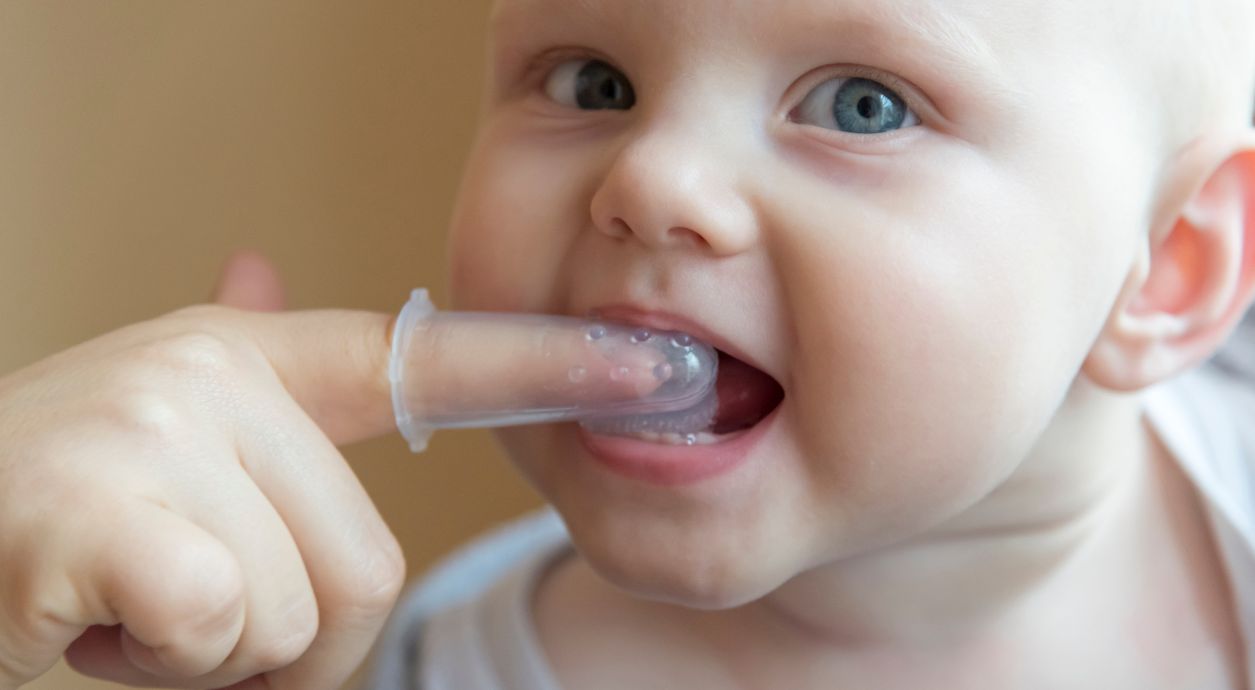
A baby's first teeth should be cleaned carefully to avoid injuring the sensitive gums. For this purpose, use a children's toothbrush with a small head and soft bristles. Apply an amount of fluoride toothpaste no larger than a grain of rice.
During brushing, you can sit the baby on your lap or lay them on their back while gently supporting their head. Clean the teeth on all sides using gentle circular motions, especially near the gums. If the baby becomes restless, it is better to take a short break and continue the procedure once they have calmed down.
How to Brush a One-Year-Old Child's Teeth
By the age of one, a child usually already has several baby teeth, so it is important to clean each of them thoroughly. Particular attention should be paid to the areas near the gums, where plaque most often accumulates. If the chewing teeth have already appeared, it is also necessary to clean the grooves on their surfaces.
The most convenient way is to sit the child on your lap or stand behind them in front of a mirror. This allows parents to see the teeth clearly and control the brushing process. At this age, a child may already show interest in a toothbrush and try to use it independently. Such interest should be encouraged, but parents must always finish brushing the child's teeth afterward, as the child cannot yet do it thoroughly enough.
How Many Minutes Should You Brush Your Child's Teeth?
According to the recommendations of the National Health Service (NHS), children should brush their teeth for approximately 2 minutes twice a day. For babies who have only a few teeth, the procedure may take less time. The main thing is to thoroughly remove plaque from all surfaces. As new teeth erupt, the duration of brushing is gradually increased.
Oxford Medical dentists emphasize that not only the duration but also the quality of brushing is important. If a child spends two minutes cleaning mainly the front teeth while neglecting hard-to-reach areas, plaque will continue to accumulate, which may eventually lead to the development of tooth decay.
How to Choose a Toothbrush and Toothpaste for Your Child
Properly selected oral hygiene products help effectively remove plaque from teeth and prevent tooth decay. The toothbrush should be appropriate for the child's age, while the toothpaste should contain an optimal amount of fluoride to protect the enamel. A pediatric dentist should individually select daily dental care products, taking into account the condition of the child's teeth and their risk of developing tooth decay.
When choosing a toothbrush, pay attention to the following characteristics:
- head size — it should be small enough for the toothbrush to easily reach all teeth, including those at the very back;
- bristle stiffness — soft toothbrushes are recommended for children, as they effectively remove plaque without injuring the gums;
- handle shape — it should be comfortable to hold, and for children learning to brush their teeth independently, it is advisable to choose models with a non-slip grip;
- age labeling — helps select a toothbrush of the appropriate size according to the child's age.
Choosing the right toothpaste is equally important. Fluoride-containing products are recommended for preventing tooth decay, as fluoride helps strengthen enamel and protects it from the effects of acids. It is also necessary to consider the fluoride concentration and the amount of toothpaste the child uses during brushing.
General recommendations for choosing toothpaste according to age:
| Child's Age | Fluoride Content in Toothpaste | Amount of Toothpaste |
| Under 3 years | At least 1000 ppm | The size of a grain of rice |
| 3–6 years | 1000–1500 ppm | Pea-sized amount |
| From 7 years | 1350–1500 ppm | A small amount sufficient for brushing |
These recommendations are based on information from the National Health Service (NHS). The optimal fluoride concentration may vary depending on the individual's risk of developing tooth decay.
For young children, it is better to choose toothpastes with a mild, pleasant taste. Whitening products and highly abrasive toothpastes are not recommended, as they are not intended for daily care of baby teeth.
How to Teach Your Child to Brush Their Teeth Independently
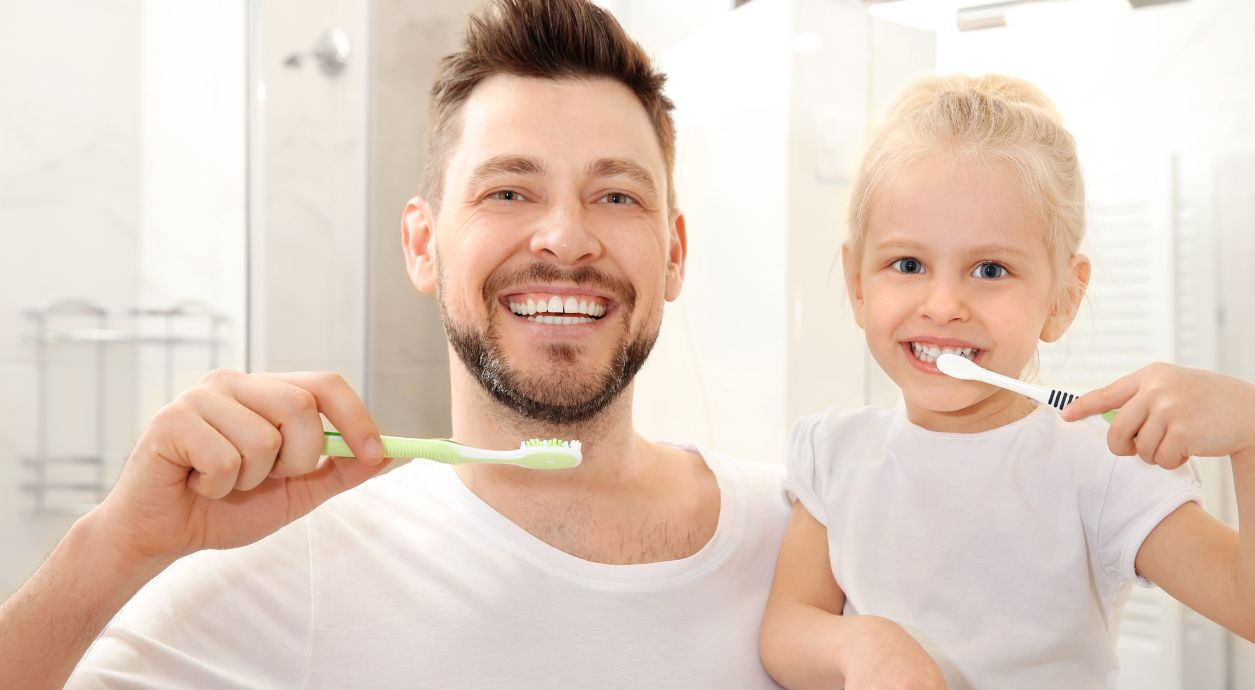
You can begin teaching a child to brush their teeth independently at approximately 2–3 years of age, when they can already hold a toothbrush confidently and try to imitate adults. However, at this age, children still find it difficult to clean all tooth surfaces thoroughly, so parents must always finish brushing their teeth. Such assistance is usually needed until approximately 7–8 years of age.
To help your child learn to care for their teeth properly more quickly, follow a few tips:
- lead by example — brush your teeth together with your child so they can observe your actions and repeat them;
- explain the sequence — teach your child to start with one area and gradually move to others, without skipping the chewing and inner surfaces;
- use a mirror — this will make it easier for your child to see how they hold the toothbrush and which teeth they have already cleaned;
- add elements of play — use songs, an hourglass, or a timer to make the procedure more interesting;
- praise their efforts — encourage your child's desire to care for their teeth, even if they do not succeed at everything at first.
Oxford Medical dentists explain that it is important to gradually give children more independence while continuing to supervise brushing. Initially, the child can brush their teeth independently, while parents check the results and clean any missed areas. Once the child learns to thoroughly remove plaque from all surfaces, parents can gradually allow them to brush their teeth on their own.
What to Do If Your Child Does Not Want to Brush Their Teeth
Refusing to brush teeth is a common problem, especially among young children. They may dislike the taste of toothpaste, the sensation of a toothbrush in their mouth, or having to interrupt playtime. Sometimes the reason is an unpleasant experience during previous brushing sessions. It is important to find out what exactly is bothering the child and avoid turning daily oral hygiene into a conflict.
If your child refuses to brush their teeth, try the following approaches:
- offer a choice — let your child choose a toothbrush featuring their favorite character or a toothpaste with a pleasant flavor;
- turn the procedure into a game — suggest brushing a favorite toy's teeth first and then repeating the activity together;
- change the usual approach — if your child does not like brushing their teeth in the bathroom, try doing it in another comfortable place;
- maintain a consistent routine — brush teeth at the same time each day so that it becomes a familiar part of the daily routine;
- do not force the child — avoid threats, punishments, and sudden movements that may increase fear and resistance.
If a child previously brushed their teeth calmly but suddenly begins to refuse, it is worth checking whether there is any pain or irritation in the mouth. Discomfort may be caused by teething, gum inflammation, or tooth decay. In such cases, a dental examination is necessary, and if dental problems are detected, appropriate treatment of baby teeth is required.
Oxford Medical dentists recommend not scolding children for refusing to brush their teeth but gradually helping them get used to the procedure. A calm atmosphere, patience, and consistency help reduce resistance and develop a positive attitude toward daily oral hygiene.
The information in this article is provided for informational purposes only and is not intended as a guide to self-diagnosis or self-treatment. If symptoms of a disease occur, you should consult a doctor.
Sources: