Sign up via call center
Department
Cost of services
Services
CT scan of the chest (lungs, mediastinum, rib cage) (with contrast)
4589.00 ₴
Sign up by the call center
CT of the urinary system with excretory urography (kidneys, adrenal glands, ureters, bladder) (with contrast)
5189.00 ₴
Sign up by the call center
CT scan of the abdominal cavity and pelvis (with contrast)
5789.00 ₴
Sign up by the call center
CT scan for stones (abdominal cavity, retroperitoneal space, pelvis)
2689.00 ₴
Sign up by the call center
CT abdominal cavity, retroperitoneal space, pelvis (with contrast)
5189.00 ₴
Sign up by the call center
Head and neck CT services
CT scan of the brain and skull bones
1969.00 ₴
Sign up by the call center
CT scan of soft tissues of the neck (with contrast)
3589.00 ₴
Sign up by the call center
CT of the orbits
2300.00 ₴
Sign up by the call center
CT scan of the paranasal sinuses
1969.00 ₴
Sign up by the call center
Bone and joint CT services
CT scan of two joints (both feet with ankle/knee/hip joints)
2589.00 ₴
Sign up by the call center
CT scan of one joint (one foot with ankle/knee/hip)
2100.00 ₴
Sign up by the call center
CT services of non-standard anatomical areas
CT scan of two anatomical areas
2389.00 ₴
Sign up by the call center
CT scan of two anatomical areas (with contrast)
4289.00 ₴
Sign up by the call center
CT scan of one anatomical area
2400.00 ₴
Sign up by the call center
CT scan of one anatomical area (with contrast)
3850.00 ₴
Sign up by the call center
CT cancer screening services
Oncoscreening CT in bones (skull, sternum, ribs, spine, pelvic bones, femurs) (with contrast)
8589.00 ₴
Sign up by the call center
Oncoscreening CT head, neck, chest organs (with contrast)
5789.00 ₴
Sign up by the call center
Oncoscreening CT of the head, neck, chest, abdominal and pelvic organs (with contrast)
6300.00 ₴
Sign up by the call center
Oncoscreening CT of the chest and abdominal cavity, pelvic organs (with contrast)
5100.00 ₴
Sign up by the call center
Oncoscreening CT of the neck, chest, abdominal and pelvic organs (with contrast)
5800.00 ₴
Sign up by the call center
Chest CT services
Chest CT scan
1969.00 ₴
Sign up by the call center
CT scan of the chest (lungs, mediastinum, rib cage) (with contrast)
3800.00 ₴
Sign up by the call center
CT scan of the chest (lungs, mediastinum, rib cage) (with contrast)
4589.00 ₴
Sign up by the call center
CT scan of the neck and chest (with contrast)
4889.00 ₴
Sign up by the call center
Vascular CT services
CT angiography of the upper extremities (with contrast)
4099.00 ₴
Sign up by the call center
CT angiography of the entire aorta and iliac arteries (with contrast)
4989.00 ₴
Sign up by the call center
CT angiography of the thoracic aorta (with contrast)
3989.00 ₴
Sign up by the call center
CT angiography of the thoracic and abdominal aorta (with contrast)
6489.00 ₴
Sign up by the call center
CT angiography of pulmonary arteries (with contrast)
3989.00 ₴
Sign up by the call center
Spine CT services
CT scan of the thoracic spine
1969.00 ₴
Sign up by the call center
CT scan of one part of the spine
1969.00 ₴
Sign up by the call center
CT scan of the lumbar spine
1969.00 ₴
Sign up by the call center
CT scan of three sections of the spine
5300.00 ₴
Sign up by the call center

Benefits of CT Scans at Oxford Medical Clinic

State-of-the-art CT scanners. CT scans are performed using GE Revolution Maxima and SIEMENS Healthineers SOMATOM go.Up machines.

AI technology. The GE Revolution Maxima uses intelligent algorithms to optimize scans.

24/7 CT. In Bereznyaky, scans are available 24/7, including for acute conditions.

Convenient locations. You can get a CT scan on the left bank of Kyiv in Bereznyaky, as well as on the right bank in Dorogozhychi.

Quick service. Scans usually take up to 15 minutes, results are provided within 24 hours, and urgent reports are available if needed.

Comprehensive care. At the clinic, you can receive consultations with doctors, other examinations, and treatment, including in the surgical ward.

We are contacted

Indications for CT scanning

Computed tomography is prescribed for a quick and accurate assessment of internal
organs, bones, joints, vessels, and soft tissues. CT helps clarify the localization,
size, and nature of the pathological process and determine further treatment tactics.

CT may be recommended in cases of:

injuries to the head, chest, abdomen, pelvis, spine, or limbs;

suspected internal bleeding, organ damage, or complications following an injury;

persistent or sudden severe headache, especially accompanied by neurological symptoms;

pain in the chest, abdomen, back, joints, or bones;

suspected inflammation, abscess, complications from an infection, or pneumonia;

suspected tumors, metastases, or to monitor previously detected neoplasms;

preparation for surgery or assessment of condition following surgical treatment;

the need to clarify changes detected on ultrasound, X-ray, or during laboratory testing.

List of diseases

Types of Computed Tomography

Computed tomography can be performed without contrast or with intravenous contrast. A separate type is CT angiography—an examination of blood vessels using a contrast agent. The format of the examination depends on what exactly needs to be assessed: bones, organs, soft tissues, blood vessels, or the blood supply to a specific area.

CT without contrast

This is a standard examination. It is often prescribed for injuries, suspected hemorrhage, fractures, diseases of bone tissue, lung pathology, or an acute condition. This format helps quickly assess the required area of the body and in many cases is sufficient for primary diagnostics.

CT with contrast enhancement

This is an examination with the injection of a contrast agent into a vein. The contrast agent makes vessels and individual tissues clearer on the images, therefore CT with contrast helps more accurately assess the boundaries of neoplasms, inflammatory changes, metastases, disorders of blood supply to organs, and the structure of soft tissues.

CT angiography

This is computed tomography of vessels with contrast enhancement. CT angiography is performed when it is necessary to assess arteries or veins, detect narrowing, thrombosis, aneurysm, impaired blood flow, or other vascular changes.

Reviews
Коломієць Катя 23.02.2024
Дуже задоволена цією клінікою,робила КТ черевної порожнини і гастроскопію дуже вдячна спеціалістам гарне обслуговування . Дякую ще дівчаткам на інформаційній.
Star Star Star Star Star
Роман 24.10.2022
Дякую за якісне КТ легенів , результати надійшли вже на наступний день. Дуже ввічливий персонал.
Star Star Star Star Star
Current information
All Articles

What CT shows

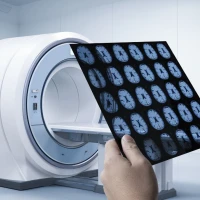
CT shows layer-by-layer images of organs, bones, vessels, and soft tissues, therefore it helps detect changes that are not always visible on a regular X-ray or ultrasound. Based on the results of computed tomography, it is possible to assess the location, size, structure, and nature of the pathological process.

Computed tomography can help detect:

  • inflammatory changes in organs and tissues;

  • consequences of injuries, cracks, and other bone damage;

  • hemorrhages, hematomas, and fluid accumulations;

  • tumors, metastases, cysts, and other volumetric formations;

  • abscesses and complications of infections;

  • changes in the lungs, bronchi, pleura, and lymph nodes;

  • stones in the kidneys, ureters, or gallbladder;

  • degenerative changes of the spine, large joints, and bone structures;

  • narrowing, enlargement, thrombosis, or other changes of vessels.

Doctors of “Oxford Medical” explain: CT results help understand how much the changes may affect the patient's condition and what next step is needed: additional tests, drug therapy, surgical intervention, or monitoring over time.

Computed tomography services at the “Oxford Medical” clinic

At the “Oxford Medical” clinic, different types of CT are performed for the diagnosis of injuries, inflammatory processes, vascular disorders, tumor changes, diseases of internal organs, the spine, bones, and joints. The scope of the examination is determined individually — depending on complaints, previous diagnostic results, and doctor's recommendations.

The following areas of computed tomography are available:

  • CT of the head and neck;

  • CT of the paranasal sinuses;

  • CT of the chest organs;

  • CT of the abdominal organs;

  • CT of the pelvic organs;

  • CT of the kidneys, ureters, and urinary bladder;

  • CT of the spine;

  • CT of vessels;

  • CT angiography;

  • CT of joints;

  • CT oncoscreening of several anatomical zones.

Computed tomography at “Oxford Medical” can be undergone in two clinics of Kyiv. CT on the right bank is performed at the address Parkovo-Syretska St., 7A, near the “Dorohozhychi” metro station. On the left bank, CT is available in Berezniaky at the address Berezniakivska St., 30B (around the clock).

When CT may be contraindicated

Computed tomography has few contraindications, but before the examination, the doctor always assesses possible risks and the expected benefit. Special attention is paid to the patient's general condition, the presence of concomitant diseases, and the need to use a contrast agent.
General contraindications to CT:

  • pregnancy;

  • severe general condition of the patient;

  • inability to maintain an immobile position during scanning.

Contraindications to CT with contrast enhancement:

  • severe kidney function disorders;

  • allergy to iodine-containing contrast preparations;

  • pronounced thyroid function disorders;

  • decompensated diabetes mellitus;

  • severe bronchial asthma.

Before CT with contrast enhancement, it is important to inform the doctor about chronic diseases, allergic reactions, and medications that are taken regularly. This will help determine whether additional preparation is needed and which examination format will be the safest.

Preparation for computed tomography

Preparation for CT depends on the examination area and the need to use a contrast agent. For many studies, in particular CT of the head, paranasal sinuses, bones, joints, or spine, special preparation is not needed.

Before CT of the abdominal and pelvic organs, it is usually recommended not to eat for 6–8 hours before the examination. This helps obtain clearer and more informative images.

If CT with contrast is planned, according to the recommendations of American College of Radiology, preparation may include:

  • a blood test for creatinine to assess kidney function;

  • refusal of food 6–8 hours before the study.

Doctors of “Oxford Medical” recommend clarifying the preparation rules when making an appointment for the examination. This allows taking into account the features of a specific type of CT and obtaining the most accurate study results.

How CT is performed

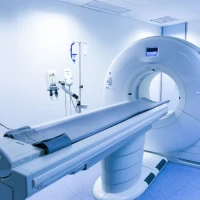
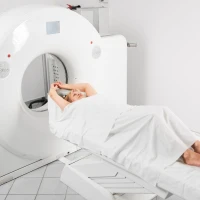
Computed tomography is a quick and painless examination. During CT, the patient is positioned on a special table of the tomograph. To obtain high-quality images, it is important to lie still and follow the specialist's recommendations. During some examinations, it may be necessary to hold the breath for a few seconds.

If an examination with contrast enhancement is prescribed, an intravenous catheter is placed before scanning to administer the contrast agent. At the moment of contrast administration, a short-term sensation of warmth in the body or a metallic taste in the mouth may occur — this is a normal reaction that quickly passes.

The duration of CT depends on the examination area and the need for contrast enhancement, but the scanning itself usually takes only a few minutes. After the examination is completed, it is possible to return to usual activities. If a contrast agent was used, it is recommended to drink a sufficient amount of fluid for its faster elimination from the body.

Interpretation of results

The interpretation of results is performed by radiologists. At “Oxford Medical”, this task is performed by highly qualified specialists with many years of experience. They carefully study all images, after which they make their description.

It should be taken into account that the conclusion indicates whether the condition of the examined organ corresponds to the norm, and if not — what changes are present. At the same time, the radiologist does not write an exact diagnosis. It can only be made by the doctor who referred the patient for CT, taking into account the patient's symptoms and the results of other examinations.

How much does it cost to have a CT scan in Kyiv at the private clinic “Oxford Medical”

The cost of CT in Kyiv depends on the type of examination, the scanning area, and the need for contrast. For example, CT of one anatomical area and complex studies of several zones may differ in price.

Current prices for CT in Kyiv at the “Oxford Medical” medical center can be viewed here or clarified with the administrators when making an appointment. To undergo CT at a convenient time, it is possible to leave a request on the website for a callback or contact the “Oxford Medical” contact center.

The information is for informational purposes and does not replace a doctor's consultation.

Sources:

FAQ

How often can a CT scan be done?

CT scans can be performed up to 10-20 times per year. The World Health Organization states that radiation exposure of up to 150 m3V over 1 year is associated with minimal risk of adverse effects on the body. During a CT scan of the head, the radiation exposure is 1-2 m3V, and of the pelvic and abdominal organs – from 6 to 11 m3V.

After how long can a repeat CT scan be done?

Repeated CT can be done even the next day after the examination, but only if there are indications and a referral from a doctor. The degree of potential harm to health depends not on the frequency, but on the level of radiation to the body. According to WHO, during the year, the permissible exposure is up to 150 m3v, while during CT of the head it is 1-2 m3v, and for the pelvic and abdominal organs - from 6 to 11 m3v.

Where can computed tomography be done in Kyiv?

Computed tomography in Kyiv can be undergone in two “Oxford Medical” clinics: on the right bank — at the address Parkovo-Syretska St., 7A, near the “Dorohozhychi” metro station, and on the left bank — at the address Berezniakivska St., 30B. CT in Berezniaky is available around the clock.

How long does CT take?

The scanning itself usually takes several minutes. The total time spent in the room depends on the examination area and the need for contrast enhancement. If CT with contrast is performed, the procedure takes longer due to preparation, catheter placement, and administration of the contrast agent.

What should not be done before CT?

Before CT, one should not eat if an examination of the abdominal organs, pelvis, or CT with contrast is planned: it is usually recommended to refrain from food for 6–8 hours. It is also advisable not to consume alcohol and not to smoke.

Is radiation during computed tomography harmful?

CT is associated with ionizing radiation, so it is performed only for medical indications. If the examination is prescribed reasonably, the benefit of accurate diagnosis usually exceeds the potential risks.

Can computed tomography be performed for children?

Yes, computed tomography can be performed for children. According to RadiologyInfo, CT is one of the diagnostic methods used in pediatrics to detect injuries, inflammatory processes, congenital anomalies, and other diseases. For children, special scanning protocols are used that allow reducing radiation exposure.

( Rating: 4.95 , Votes: 622 )
Sign up
in the clinic
online
This site is protected by reCAPTCHA technology, and the Google Privacy Policy and Terms of Service apply.
Hello!
Let's take care
about your health:
Sign up via call center

We use cookies and other technologies to remember your preferences and find out exactly how you use and interact with the site.

By using our site, you also agree to the terms of the "User Agreement" and "Regulation on the processing and protection of personal data". By clicking "I AGREE", you consent to the processing of your data.