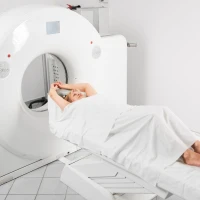
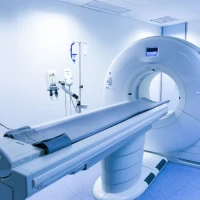
Before the examination begins, the patient is placed on the movable table of a computed tomography scanner. To obtain clear images, it is important to remain still, so the head is fixed in a comfortable position using special pads.
After preparation, the table smoothly moves into the scanning zone, and the examination begins. The procedure is painless and lasts several minutes.
Since CT angiography is performed with contrast enhancement, a catheter is placed into a vein before scanning. The contrast agent is injected automatically during the examination, which allows clear visualization of arteries and veins at the moment the agent passes through the bloodstream.
During the injection of contrast, a feeling of warmth in the body, a short-term metallic taste in the mouth, or a feeling of heat is possible — this is a normal reaction that quickly passes.
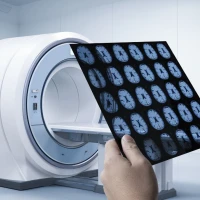
The total duration of the procedure together with preparation usually takes about 10–20 minutes. After the examination is completed, the radiologist analyzes the obtained images, assesses the condition of the vessels, their patency, the presence of narrowings, thrombi, aneurysms, or other changes. The conclusion indicates the nature of the detected changes or states that the indicators correspond to the norm. The results are given to the patient for further consultation with the doctor who referred them for the examination. Usually this is a neurosurgeon, vascular surgeon, or neurologist.