


The duration depends on the amount and density of the calculus, the presence of gum inflammation, and the selected method. On average, teeth cleaning by a dentist takes 30–60 minutes. In complex cases, two sessions may be required to remove calculus from the teeth.
Sign up via call center 
 Adults Adults Adults Adults Adults Adults Adults Adults Adults
  Children Children Children Children
Department
Adults Outpatient department
Adults Outpatient department
Inpatient department
Adults Inpatient department
Aesthetic medicine
Adults Aesthetic medicine
Dentistry
Adults Dentistry
Plastic surgery
Adults Plastic surgery
Diagnostics
Adults Diagnostics
Analyzes
Adults Analyzes
Outbound services
Adults Outbound services
Children Outpatient department
Children Outpatient department
Dentistry
Children Dentistry
Diagnostics
Children Diagnostics

Kyiv


 Hotline:
 Request a call:


Department
Adults Outpatient department
Adults Outpatient department
Inpatient department
Adults Inpatient department
Aesthetic medicine
Adults Aesthetic medicine
Dentistry
Adults Dentistry
Plastic surgery
Adults Plastic surgery
Diagnostics
Adults Diagnostics
Analyzes
Adults Analyzes
Outbound services
Adults Outbound services
Children Outpatient department
Children Outpatient department
Dentistry
Children Dentistry
Diagnostics
Children Diagnostics
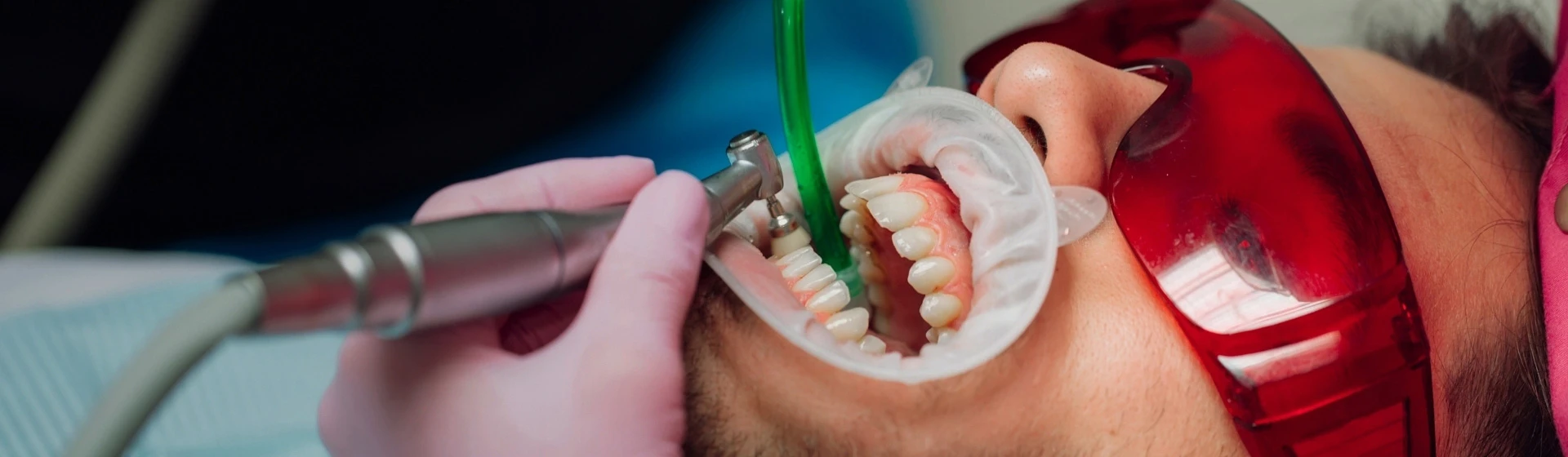
Teeth cleaning from tartar and plaque
Cost of services
Services

Preventive teeth cleaning with a brush and paste with optragate insulation (1 jaw)
400.00 ₴
Sign up by the call center
Professional oral hygiene (Air-flow, optragate) (1 jaw)
780.00 ₴
Sign up by the call center
Comprehensive combined oral hygiene (optragate, ultrasound, Air flow, polishing) (1 jaw)
1450.00 ₴
Sign up by the call center
Comprehensive combined oral hygiene (optragate, ultrasound, Air flow, polishing) (2 jaws)
2800.00 ₴
Sign up by the call center
Professional oral hygiene after removal of the braces system with optragate isolation (1 jaw)
2350.00 ₴
Sign up by the call center
Do you want to have a healthy smile, free from plaque, inflamed gums, and bad breath? Dental cleaning by a dentist helps not only improve aesthetics but also prevent the development of serious dental diseases. At «Oxford Medical» dentistry, we offer modern teeth-cleaning methods that help achieve a high-quality result and make the procedure comfortable. Make an appointment for a consultation with a dentist — take care of the health and beauty of your smile today.
What Is Dental Calculus
Dental calculus — is hard deposits that form from soft bacterial plaque and firmly attach to the enamel or root surface. It has a rough structure, is not washed away with water, cannot be removed with an ordinary toothbrush, and requires removal by a dentist.
Unlike soft dental plaque, which can be removed during daily tooth brushing, calculus is already a mineralized deposit. Pigmented layers may accumulate separately — dark or yellowish-brown plaque after coffee, tea, smoking, or foods containing colorants.
According to its location, calculus on the teeth is of two types:
-
supragingival — located above the gum margin and usually visible during examination;
-
subgingival — hidden under the gums or in periodontal pockets.
Both types create conditions for the accumulation of bacteria, irritate the gums, and may cause bleeding, inflammation, and bad breath.
Why Dental Calculus Forms
The main cause of hard deposit formation — is incomplete cleaning of soft plaque from the teeth. It most often remains in hard-to-reach areas: near the gums, between the teeth, on the inner surface of the lower front teeth, around fillings, crowns, braces, retainers, and other dental appliances.
The faster accumulation of deposits is promoted by:
-
irregular or insufficiently thorough hygiene;
-
failure to follow the rules of tooth brushing;
-
lack of daily cleaning of the interdental spaces;
-
crowded teeth or an improper bite;
-
the presence of braces, crowns, bridges, implants, or retainers;
-
smoking;
-
frequent consumption of coffee, strong tea, and foods containing colorants;
-
dry mouth;
-
individual characteristics of saliva composition.
Deposits form at different rates in different people. This depends not only on care but also on the bite, the condition of the gums, dietary habits, and salivation. Therefore, during an examination, the dentist may advise how often you need to undergo cleaning in your particular case.
Why Dental Deposits Need to Be Removed
Removal of dental deposits is necessary to reduce the number of bacteria in the gum area, remove dark plaque, and maintain a well-groomed appearance of the smile. If calculus remains on the teeth for a long time, it may irritate the gums, cause bleeding, and intensify bad breath.
Without regular cleaning, the risk of the following problems increases:
-
gingivitis — inflammation of the gums, which may manifest as redness, swelling, and bleeding;
-
caries — destruction of tooth tissues, especially in areas where plaque accumulates;
-
periodontitis — inflammation of the tissues that hold the tooth;
-
gum recession — exposure of the tooth necks and increased sensitivity;
-
darkening of the teeth — a change in shade due to pigmented plaque.
Doctors at «Oxford Medical» recommend removing dental plaque and calculus before pronounced inflammation appears. This helps reduce the risk of gum disease, preserve the natural appearance of the teeth, and avoid more complex treatment.
Methods for Removing Dental Calculus and Plaque
At «Oxford Medical» dentistry, the following procedures are performed:
-
Air Flow cleaning — removal of soft and pigmented plaque with a stream of water, air, and a special finely dispersed powder;
-
ultrasonic teeth cleaning — hardware cleaning used to remove dental calculus above the gums and near their margin;
-
manual scaling — cleaning of individual areas with special instruments, including in the case of subgingival deposits;
-
mechanical cleaning — treatment of the teeth with special brushes or polishing attachments.
Within professional oral hygiene, several methods may be combined. This helps remove hard calculus, soft and pigmented plaque, as well as make the tooth surface smoother and lighter.
How Dental Calculus and Plaque Are Removed
The procedure begins with an examination: the dentist determines exactly where the deposits have accumulated, whether there is subgingival calculus, pigmented plaque, bleeding, or areas of increased sensitivity. This helps select the cleaning sequence and avoid injuring the gums.
Teeth cleaning from calculus usually includes several stages:
-
ultrasonic teeth cleaning — breaking down and removing hard calculus above the gums and near their margin;
-
manual additional cleaning — treatment of areas where dense or hard-to-reach deposits remain;
-
plaque removal — removal of soft and pigmented layers using Air Flow;
-
polishing — smoothing the tooth surface after the main cleaning.
Doctors at «Oxford Medical» explain: to make the removal of calculus from the teeth more comfortable, the dentist works gradually: first removes the main deposits, then additionally cleans individual areas and polishes the tooth surface. If necessary, the procedure may be performed in a gentle mode or with local anesthesia, especially if the calculus is located close to the gums or beneath them.
Recommendations After the Removal of Dental Deposits
After cleaning, the teeth may temporarily react to cold, hot, or acidic foods and drinks, especially if the calculus was located near the gums or beneath them. Such sensitivity usually decreases within a few days. To avoid irritating the gums and preserve the result of the procedure for longer, it is important to follow the dentist’s recommendations.
After dental calculus cleaning, it is advisable to:
-
not eat or drink for 2 hours;
-
follow a «white diet» during the first day — limit coffee, strong tea, red wine, brightly colored sauces, berries, and other foods containing colorants;
-
temporarily refrain from smoking, as tobacco smoke quickly stains the tooth surface;
-
brush the teeth with a soft or medium-bristled toothbrush without applying strong pressure;
-
use dental floss, interdental brushes, or an irrigator if recommended by the dentist;
-
consult a doctor if pain, pronounced bleeding, or swelling does not go away.
After the procedure, the dentist may immediately advise when it is best to come for the next cleaning. Most often, a scheduled cleaning is prescribed approximately 6 months later. If plaque accumulates quickly on the teeth, or if there are braces, retainers, implants, crowns, or gum disease, a repeat visit may be needed earlier.
How Much Does It Cost to Remove Dental Calculus and Plaque in Kyiv at the Private Clinic «Oxford Medical»
The cost of the procedure depends on the amount and location of the deposits, as well as on the selected type of cleaning. Therefore, the price of teeth cleaning from calculus may vary depending on whether ultrasonic cleaning, Air Flow, scaling, or a combination of several methods is required.
Current prices for medical services can be viewed here. To make an appointment for the procedure, submit a request through the feedback form or call the contact center.
The information is for informational purposes only and does not replace a doctor’s consultation.
Sources:
Frequently asked questions
How Long Does Dental Calculus Cleaning Take?
How Often Should Teeth Be Cleaned of Calculus and Plaque?
The procedure is usually recommended once every 6 months. If deposits form quickly, braces or retainers are installed, or gum disease is present, the dentist may recommend cleaning every 3–4 months. The exact interval is determined individually.
How Long Should You Avoid Eating After Dental Calculus Cleaning?
After the procedure, it is recommended not to eat for 2 hours. During the first day, it is also advisable to avoid hot, very cold, spicy, and acidic foods, and after Air Flow — drinks and foods with intense colorants.
Can Pregnant Women Have Dental Calculus Removed?
Yes, dental calculus can be removed during pregnancy. The procedure helps remove bacterial plaque and reduce gum inflammation, which may occur more often during pregnancy. Before cleaning, it is necessary to inform the dentist about the stage of pregnancy and the particular features of its course.
Dentistry
Professional teeth cleaning
Teeth cleaning from tartar and plaque
Show more 
Teeth cleaning result
Photos before and after




Benefits of cleaning teeth from tartar and plaque at Oxford Medical Dentistry

Modern equipment. Ultrasonic devices, Air Flow technology, and instruments for manual additional cleaning and polishing are used to clean the teeth.
Individual selection of methods. The type and sequence of cleaning are determined depending on the amount and location of the deposits and the condition of the teeth and gums.
Comprehensive removal of deposits. Combining different methods makes it possible to remove hard calculus, soft plaque, and pigmented plaque.
Noticeable aesthetic result. The teeth look cleaner and lighter, and the smile — more well-groomed.
Show more 
Our doctors

 4.8
4.8  1+
1+ Dentist-therapist
 1+ Years of experience
 Consultation 1
 Kyiv, Pavlivska St., 26/41
 5 16+
5 16+ Doctor dentist-therapist
16+ Years of experience Consultation 1
Kyiv, Mykhayla Hryshka St., 1  4.86
4.86 Dentist-therapist
Consultation 1
Kyiv, Pavlivska St., 26/41 Kyiv, Andriy Verkhoglyad St., 14B  4.89 6+
 Dentist-therapist, orthopedist
6+ Years of experience Consultation 1
Kyiv, Andriy Verkhoglyad St., 14B 
Reviews
Алла 26.10.2026
Звернулася до Дмитрієва Ігоря Олеговича через сильне запаморочення. Дуже уважний лікар, усе детально розпитав і пояснив. Після лікування напади стали набагато рідшими. Дякую за допомогу!

Ірина 26.10.2026
Звернулася до Шабранської Валентини Володимирівни через сильну чутливість і біль у зубі під час їжі. Після лікування біль повністю зник, можу нормально їсти без дискомфорту. Дуже вдячна за акуратну роботу.
Current information


01 October 2025
"Oxford Medical» Clinic’s Loyalty Program

01 October 2025
Certificates for services Oxford Medical
29 January 2026
Air Flow Dental Cleaning

27 August 2026
10 Veneers for UAH 35,000
Sign up via call centre
 in the clinic
  online

 Hello!
Let's take care
about your health:
Sign up via call center 
