Sign up via call center
Department
Gnathological mouthguard — price of mouthguard for TMJ in Kyiv | Oxford Medical

Splint therapy

Cost of services
Consultations
Gnathologist consultation
1880.00 ₴
Order
Dentist consultation
1.00 ₴
Order
Services
Splint therapy
19500.00 ₴
Sign up by the call center

Are you bothered by jaw pain, clicking, tension of the chewing muscles, or teeth grinding during sleep? Such symptoms may indicate disorders in the function of the temporomandibular joints (TMJ). In many cases, splint therapy is an effective method of treatment, which helps reduce the load on the TMJ, relax the chewing muscles, and restore the proper function of the dentoalveolar system.

At Oxford Medical dentistry, you can receive a consultation with a gnathologist, undergo the necessary diagnostics, and receive an individual treatment plan. If, based on the results of the examination, the doctor identifies the relevant indications, he will prescribe splint therapy. Thanks to individual manufacturing, the occlusal splint corresponds as much as possible to the features of the bite, which ensures comfortable wearing and increases the effectiveness of treatment. Make an appointment for a consultation with a gnathologist to establish the cause of the disorders and start treatment.

What is splint therapy

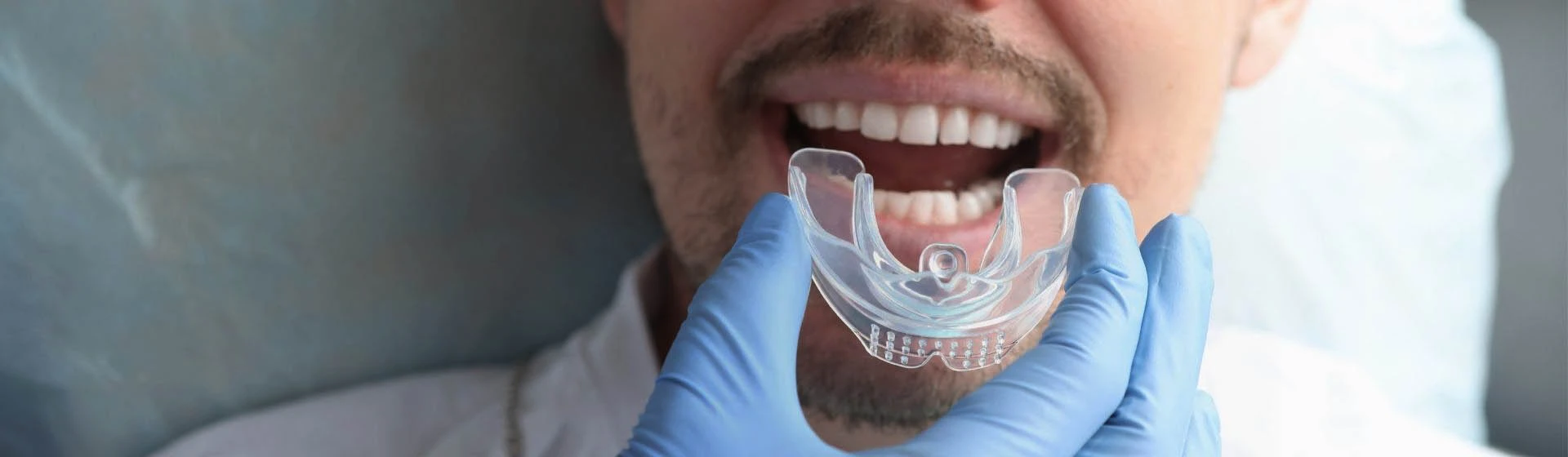
Splint therapy is a method of treating disorders of the temporomandibular joints and chewing muscles. The main element of treatment is an occlusal mouthguard, which is made for each patient individually based on the results of diagnostics.

An occlusal splint — splint creates the correct contact between the dental rows, helps restore the physiological position of the lower jaw and eliminate functional TMJ disorders. Depending on the clinical situation, the doctor may prescribe a splint for the teeth for wearing during the day, at night, or according to an individual scheme.

Indications for splint therapy

TMJ splint therapy is prescribed after a consultation with a gnathologist and comprehensive
diagnostics. It is used for functional disorders of the dentoalveolar system, when it is necessary
to reduce the load on the TMJ and chewing muscles.

The main indications are:

bruxism (teeth grinding or strong clenching of the jaws);

clicking, jaw pain, limited opening of the mouth;

pathological tooth wear;

pain, tension, fatigue of the chewing muscles.

List of diseases

Doctors of Oxford Medical recommend not postponing a consultation with a gnathologist when clicking in the joint, pain, or a feeling of stiffness during opening the mouth appears. The earlier treatment is started, the easier it is to eliminate functional disorders and prevent their progression.

Contraindications to splint therapy

Splint therapy is suitable for most patients, however in some cases before the start of treatment it is necessary to eliminate factors that may affect its effectiveness. The final decision regarding the possibility of conducting therapy is made by a gnathologist after examination and diagnostics.

The main contraindications are:

  • acute inflammatory processes in the oral cavity;

  • untreated caries and other dental diseases that require priority treatment;

  • significant mobility of teeth due to diseases of periodontal tissues;

  • impossibility of reliable fixation of the mouthguard due to the features of the dental rows.

Doctors of Oxford Medical explain: in most cases after elimination of inflammation, treatment of dental diseases, or professional preparation of the oral cavity, splint therapy in dentistry can be carried out without restrictions.

Stages of treatment with an occlusal mouthguard (splint)

Treatment is carried out in stages, since to achieve the result it is important not only to make a myorelaxing splint, but also to correctly determine the cause of TMJ function disorders. The therapy plan is always drawn up individually.

The main stages are:

  • Consultation with a gnathologist. The doctor collects anamnesis, assesses complaints, conducts an examination of the oral cavity, analyzes the bite and the function of the temporomandibular joints.

  • Diagnostics. If necessary, additional examinations are prescribed, in particular condylography, which helps assess the movement of the lower jaw and plan further treatment.

  • Manufacturing of the mouthguard. After diagnostics, digital or classic impressions are taken and an individual splint is manufactured, which exactly corresponds to the features of the patient's bite.

  • Fitting and correction. The doctor checks the fit of the mouthguard, if necessary corrects it and explains the rules of wearing.

  • Treatment control. During repeat visits, the gnathologist assesses changes, controls the effectiveness of therapy and, if necessary, corrects the construction.

Doctors of Oxford Medical recommend not skipping control examinations, since regular observation allows timely correction of treatment and achievement of maximum effectiveness.

How long splint therapy lasts

The duration of treatment depends on the cause of the disorders and their severity. The treatment plan and the mode of wearing the mouthguard are determined by the gnathologist individually after diagnostics.

According to PubMed Central, in most cases the splint is worn from 2 to 3 months. If necessary, treatment may last longer — up to 6–12 months with regular control examinations and correction of the construction. For some patients, it is enough to use the mouthguard only at night, for others the doctor may recommend wearing it also during the day.

Doctors of Oxford Medical explain: it is not worth independently stopping wearing the splint after the symptoms decrease. The decision to complete treatment is made by the gnathologist after a control examination and assessment of the achieved result.

Rules for caring for an occlusal mouthguard

Proper care helps maintain hygiene, preserve the shape of the mouthguard, and extend its service life. The doctor necessarily explains the rules of use after the installation of the construction.

Main recommendations:

  • rinse the mouthguard with cool water after each use;

  • clean it daily with a soft toothbrush without abrasive agents;

  • store the splint for teeth in a special ventilated container;

  • do not leave the mouthguard near sources of heat or under direct sunlight in order to avoid its deformation;

  • regularly bring the construction to control examinations for assessment of its condition and the effectiveness of treatment.

Doctors of Oxford Medical recommend not using hot water, aggressive detergents, or alcohol-containing solutions for cleaning. They may damage the material of the mouthguard and shorten the term of its operation.

How much does splint therapy cost in Kyiv in the private clinic Oxford Medical

You can find out what the price for a splint mouthguard is here. At the same time, it is important to take into account that the total cost of therapy may differ depending on the clinical situation, the scope of diagnostics, and the need for additional stages of treatment.

During the consultation, the gnathologist will conduct an examination, determine the cause of the disorders, and draw up an individual treatment plan. The doctor will also provide detailed guidance regarding the cost of splint therapy and other medical services. To make an appointment for a consultation, call the contact center or use the online appointment form on the website.

The information is for informational purposes and does not replace a doctor's consultation.

Sources:

Frequently asked questions

How long does it take to get used to a splint?

In most patients, adaptation lasts from several days to 1–2 weeks. During this period, a feeling of a foreign body in the mouth or slight discomfort is possible, which usually passes quickly. If the symptoms persist, it is necessary to consult a gnathologist for correction of the construction.

Can a splint be worn only at night?

Yes, in many cases the mouthguard is worn only during sleep, especially with bruxism. However, the wearing mode is determined by the doctor. Depending on the clinical situation, the splint may also be recommended for use during the day.

Are braces needed after splint therapy?

Not always. If bite disorders are detected after stabilization of TMJ function, the doctor may recommend orthodontic treatment. The final therapy plan is drawn up individually after completion of the use of the occlusal splint.

How does a splint differ from a regular mouthguard?

A splint is made individually after gnathological diagnostics for the treatment of TMJ function disorders. Regular joint mouthguards are used mainly to prevent tooth wear in bruxism or during sports activities. They do not correct the function of the temporomandibular joint and do not replace splint therapy.

( Rating: 4.96 , Votes: 73 )
Dentistry

Advantages of the Gnathology Department at Oxford Medical

Accurate diagnostics. Modern examination methods make it possible to thoroughly assess joint function and identify the cause of disorders.

Experienced gnathologists. The doctors work with complex cases of TMJ dysfunction and select an individual treatment strategy.

Digital modelling. Splints are fabricated based on 3D scanning and functional data, which ensures precision and effectiveness.

Reliable materials. Hypoallergenic polymers are used, resistant to load and comfortable for long-term wear.

Our doctors

Komerista Yulia Volodymyrivna - pediatric dentist at the private medical clinic Oxford Medical Kyiv
4.83
rating (29)
9+
Years of experience
Dentist-orthodontist
9+ Years of experience
Consultation 1
Kyiv, Andriy Verkhoglyad St., 14B
Make an appointment
Alekseev Volodymyr Oleksandrovych - dentist of the private clinic Oxford Medical Kyiv
4.95
rating (21)
14+
Years of experience
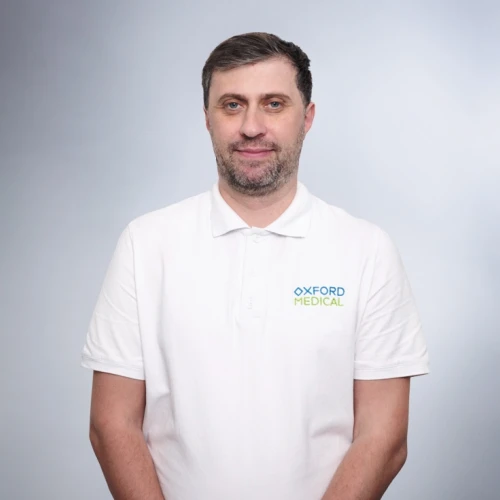
Dentist-orthodontist, gnathologist
14+ Years of experience
Consultation 1
Kyiv, Andriy Verkhoglyad St., 14B
Kyiv, Pavlivska St., 26/41
Make an appointment
Startseva Asya Yuriivna – dentist-orthodontist of the II category of the private clinic Oxford Medical Kyiv
5
rating (2)
2+
Years of experience
Orthodontist of the second category
2+ Years of experience
Consultation 1
Kyiv, Obolonska Naberezhna, 1, building 2
Make an appointment
All doctors
Reviews
Роман 06.07.2026
Чистка зубів пройшла чудово, приємний персонал, особливо лікар стоматолог Польотова Ірина Вячиславівна ))))
Star Star Star Star Star
Аня 06.07.2026
Хочу подякувати Польотовій І.В , чудовий лікар. Вперше прийшла на консультацію рік тому, залишилась дуже задоволена первинним лікування. Тепер всі свої процедури роблю лише в даного лікаря, рекомендую близьким та друзям)
Star Star Star Star Star
Current information
All Articles
Sign up via call center
in the clinic
online
This site is protected by reCAPTCHA technology, and the Google Privacy Policy and Terms of Service apply.
Hello!
Let's take care
about your health:
Sign up via call center

We use cookies and other technologies to remember your preferences and find out exactly how you use and interact with the site.

By using our site, you also agree to the terms of the "User Agreement" and "Regulation on the processing and protection of personal data". By clicking "I AGREE", you consent to the processing of your data.