Contents:
- Why gums bleed
- Blood in the mouth in the morning
- Gums bleed heavily
- Gums hurt and bleed
- Bleeding gums and bad breath
- Gums bleed when brushing teeth
- Bleeding gums in a child
- Bleeding gums during pregnancy
- What symptoms can accompany bleeding gums
- What to do if gums bleed
- How to stop bleeding from the gums at home
- How to treat bleeding gums
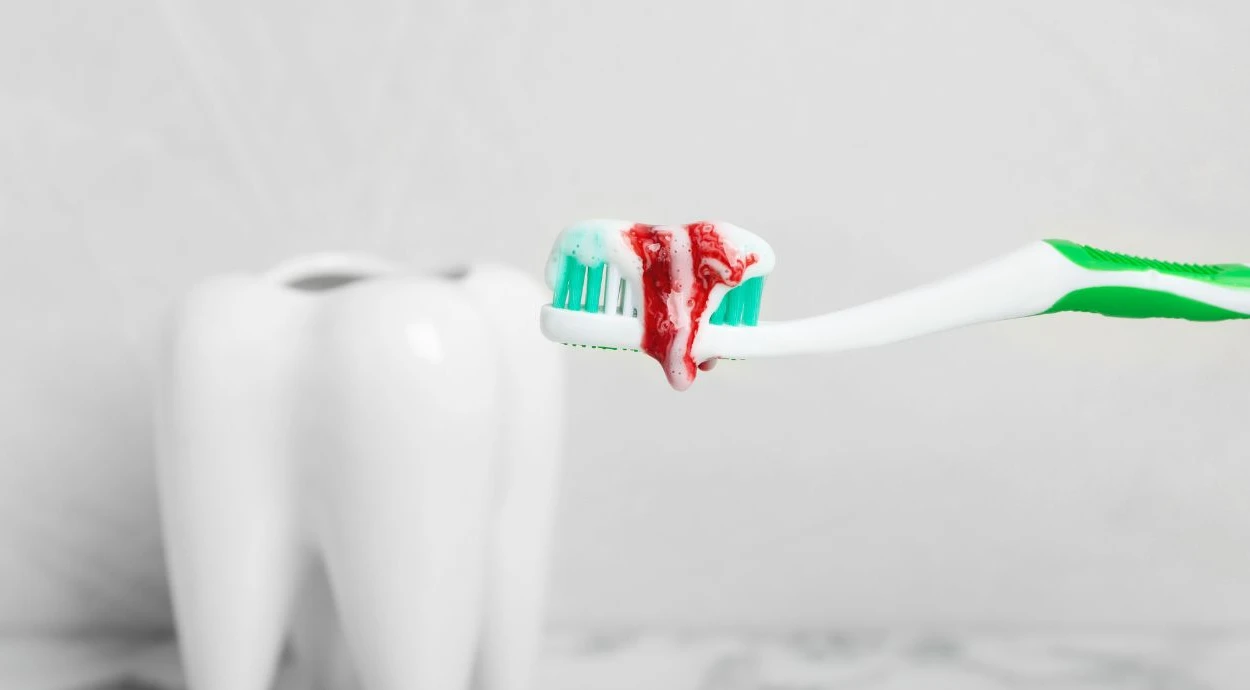
Many people perceive blood during tooth brushing as a minor issue, especially if it quickly disappears. Sometimes it can indeed be the result of accidental gum injury. However, if bleeding gums recur regularly, they most often indicate an inflammatory process or other diseases of the oral cavity that require treatment.
In this article, we will explain why gums bleed, why this symptom occurs in different situations, and when it is worth seeing a dentist. We will also explain what can be done before visiting a doctor and how gum treatment is performed depending on the diagnosis.
Why gums bleed
Bleeding most often occurs due to gum inflammation, which develops as a result of bacterial plaque accumulation near the gumline. If plaque is not removed in time, it gradually hardens and turns into tartar, which supports the inflammatory process. According to the American Academy of Periodontology, bacterial plaque is the main cause of periodontal diseases.
At the same time, the causes of bleeding gums are not always related only to insufficient hygiene. The symptom may also occur with:
- gum injury caused by a hard toothbrush, dental floss, or hard food;
- gingivitis and periodontitis;
- improperly placed fillings, crowns, or orthodontic appliances;
- hormonal changes during pregnancy or puberty;
- some systemic diseases and the use of certain medications.
Doctors at Oxford Medical note: if bleeding recurs for several days or occurs almost every time during tooth brushing, you should not wait for it to go away on its own. The earlier the cause is identified, the easier it is to eliminate the problem and prevent the development of periodontal diseases.
Blood in the mouth in the morning
If a taste of blood appears in the mouth after sleep or traces of it are noticeable during tooth brushing, this is most often associated with gum inflammation. At night, saliva production decreases, so bacterial plaque remains in contact with the gums for longer, and inflamed tissues may bleed slightly.
If this happens regularly, it is worth seeing a dentist. The most common cause is gingivitis, periodontitis, or other periodontal diseases.
Gums bleed heavily
Severe gum bleeding is not normal. If blood from the gums appears in large amounts, does not stop for a long time, or occurs even without brushing teeth, this may indicate pronounced inflammation, significant damage to periodontal tissues, or, less commonly, systemic diseases that affect blood clotting.
If bleeding does not stop within 10–15 minutes or often recurs, it is necessary to undergo a dental examination as soon as possible.
Gums hurt and bleed
.jpg)
The combination of pain and bleeding most often indicates an active inflammatory process. Swelling, redness, and increased sensitivity during tooth brushing or eating may appear at the same time.
Sometimes the cause is gum injury caused by a filling, crown, or hard food. If the pain intensifies, swelling appears, or purulent discharge occurs, it is necessary to see a dentist as soon as possible to determine the cause.
Bleeding gums and bad breath
If gums bleed, bad breath is most often associated with bacterial plaque that accumulates near the gumline and between the teeth. Bacteria support the inflammatory process and release substances that cause persistent bad breath. This combination of symptoms is often observed with gingivitis and other periodontal diseases.
Doctors at Oxford Medical recommend not masking the odor with mouth rinses or chewing gum, but identifying its cause. After an examination, the dentist may recommend professional teeth cleaning and, if necessary, further treatment of gum diseases.
Gums bleed when brushing teeth
Bleeding during tooth brushing is most often one of the first signs of gum inflammation. In the early stages, blood may appear only during tooth brushing or flossing, while at other times the symptom may be absent.
If bleeding recurs regularly, it should not be considered a normal reaction to brushing teeth. If the symptom does not go away within one to two weeks or recurs constantly, a consultation with a periodontist is necessary.
Bleeding gums in a child
In children, bleeding most often occurs due to insufficient hygiene, plaque accumulation, or overly intensive tooth brushing. The symptom may also appear during the replacement of baby teeth with permanent teeth or when wearing orthodontic appliances.
If bleeding recurs, the child should be shown to a dentist. Regular appearance of blood is not normal even in the absence of pain or other complaints.
Bleeding gums during pregnancy
During pregnancy, the risk of bleeding gums increases due to hormonal changes. They are not the direct cause of inflammation, but they make the gums more sensitive to bacterial plaque. According to the National Health Service (NHS), gingivitis often develops during pregnancy for this reason and in most cases decreases after childbirth, provided that proper oral care is maintained.
Doctors at Oxford Medical note: even if bleeding is associated with pregnancy, it should not be ignored. Regular hygiene, professional care, and timely treatment help reduce inflammation and prevent its progression.
What symptoms can accompany bleeding gums
Bleeding is rarely the only manifestation of gum disease. Along with bleeding, the following may occur:
- redness and swelling of the gums;
- pain or increased sensitivity during tooth brushing or eating;
- bad breath or an unpleasant taste in the mouth;
- a feeling of itching or pulsation in the gums;
- exposure of tooth necks due to gum recession;
- the appearance of gaps between teeth or a feeling that the teeth have become more mobile;
- discharge of pus from under the gumline in case of infection development.
Doctors at Oxford Medical note: if bleeding is combined with tooth mobility, pus discharge, pronounced swelling, or severe pain, you should not postpone a visit to the dentist. Such symptoms may indicate progression of periodontal disease and require timely treatment.
What to do if gums bleed
.jpg)
If gums bleed regularly, you should not try to eliminate only the symptom itself. First of all, it is necessary to determine the cause of bleeding, as it may be associated with gum inflammation, periodontal diseases, tissue injury, or other dental problems. After an examination, the doctor will assess the condition of the gums, prescribe additional diagnostics if necessary, and select treatment according to the established diagnosis.
Doctors at Oxford Medical recommend seeing a dentist at the first signs of regular bleeding. Early treatment helps eliminate inflammation, preserve the health of periodontal tissues, and prevent the development of complications.
How to stop bleeding from the gums at home
If bleeding is associated with gum inflammation, proper home care helps reduce its manifestations and prevent further accumulation of bacterial plaque. At the same time, home measures do not replace professional treatment if the cause is gingivitis, periodontitis, or other gum diseases.
To reduce gum bleeding at home, it is recommended to:
- brush your teeth twice a day with a soft toothbrush, without skipping the area near the gumline;
- clean the spaces between teeth daily with dental floss or interdental brushes;
- rinse the mouth with water after meals and, as prescribed by the dentist, use therapeutic mouth rinses with antiseptic or anti-inflammatory action;
- replace the toothbrush in a timely manner and use a brush with soft or medium-hard bristles;
- stop smoking, as it worsens blood supply to the gums and slows down their recovery.
Doctors at Oxford Medical recommend not using medications without identifying the cause of bleeding. They may temporarily reduce symptoms, but if the cause is not eliminated, bleeding and inflammation may persist or gradually intensify.
How to treat bleeding gums
Treatment of bleeding gums always begins with determining the cause that triggered this symptom. The treatment approach depends on the diagnosis: with gingivitis, the main goal is to eliminate inflammation, while with periodontitis, it is also necessary to restore the health of the tissues that support the tooth. According to the American Academy of Periodontology, early treatment of periodontal diseases helps preserve the gums and prevent tooth loss.
Depending on the diagnosis, the dentist may recommend:
- professional oral hygiene;
- local anti-inflammatory therapy;
- gum curettage if deep periodontal pockets are present;
- correction of fillings, crowns, or other structures that injure the gums;
- surgical treatment of periodontal diseases (if indicated).
Many patients look for the best remedy for bleeding gums, but there is no universal medication. Only treatment aimed at eliminating the cause of this symptom, and not merely temporarily reducing its manifestations, will be effective.
The information in this article is provided for informational purposes and is not an instruction for self-diagnosis or self-treatment. If symptoms of a disease appear, you should consult a doctor.
Sources:
National Institute of Dental and Craniofacial Research