


pronounced hypertrophy of the adenoids;
Not for everyone. Surgery is recommended only when conservative treatment is ineffective, the adenoids significantly impair nasal breathing, or cause complications.

 Adults Adults Adults Adults Adults Adults Adults Adults Adults
  Children Children Children Children


 Hotline:
 Adults Adults Adults Adults Adults Adults Adults Adults Adults Children Children Children Children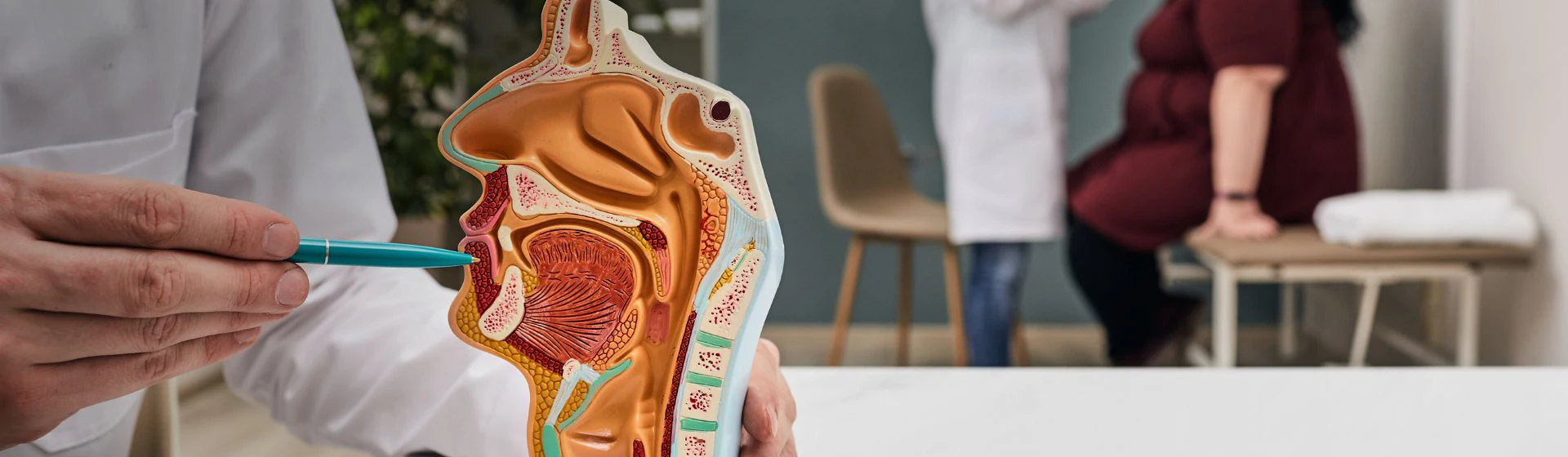

Adenoids are the nasopharyngeal tonsil, which is part of the immune system and helps the body protect itself from bacteria and viruses. Under the influence of frequent inflammatory processes, it may enlarge, disrupting the passage of air through the nose. This condition is called hypertrophy of the adenoids.
In the initial stages of the disease, the doctor may recommend medication treatment and observation. However, if inflammation of the adenoids often recurs, and conservative therapy does not provide a sufficient effect, removal of the adenoids may be recommended.
At the Oxford Medical medical center, operations are performed by experienced otolaryngologists using modern minimally invasive methods. If you or your child are bothered by difficult nasal breathing, snoring, or frequent inflammatory diseases of the ENT organs, do not postpone a consultation with a specialist.
Inflammation most often develops against the background of frequent respiratory tract infections, for example pharyngitis or bronchitis. During the inflammatory process, the nasopharyngeal tonsil enlarges, and with repeated episodes it may remain enlarged even after recovery.
The main causes include:
Doctors of “Oxford Medical” note that recurrent infections of the upper respiratory tract are one of the main factors that may contribute to enlargement of the nasopharyngeal tonsil. That is why it is important to treat diseases of the ENT organs in a timely manner and not to engage in self-medication.
Manifestations of enlarged adenoids depend on the degree of their overgrowth. In the initial stages, symptoms may be mildly expressed, but over time they often intensify and begin to affect breathing, sleep, and general well-being.
The most common symptoms include:
If these symptoms do not go away or recur regularly, you should consult an otolaryngologist. Timely examination makes it possible to assess the degree of enlargement of the nasopharyngeal tonsil and determine the optimal treatment strategy.
Adenotomy is not recommended for everyone. The doctor makes the decision about surgery
after examination, if overgrowth of the nasopharyngeal tonsil leads to persistent impairment
of its function or the development of complications.
The main indications for surgery are:


pronounced hypertrophy of the adenoids;
insufficient effectiveness of conservative treatment;
development of complications (otitis, hearing impairment, maxillary sinusitis);
frequent recurrences of adenoid inflammation.

Doctors of “Oxford Medical” note that the decision about surgical treatment is always made individually. Before recommending surgery, the doctor assesses the degree of enlargement of the adenoids, the presence of complications, and the general condition of the patient.
Like any surgical intervention, adenoidectomy has certain contraindications. Before surgery, the doctor must assess the patient's general condition to make sure that its performance will be safe.
Surgery is usually not performed in case of:
Doctors of “Oxford Medical” note that most contraindications are temporary. After recovery or correction of concomitant disorders, the issue of performing surgery is considered again.
Adenotomy is surgery to remove the enlarged nasopharyngeal tonsil. Today, in ENT surgery, different methods of performing it are used. The choice of the method of surgery depends on the degree of tissue overgrowth, the patient's age, anatomical features, and the doctor's recommendations.
The main methods are:
After examination, the doctor individually selects the method of surgery, taking into account the degree of enlargement of the adenoids, the patient's age, anatomical features, and the presence of concomitant diseases.
Before surgery, the patient undergoes a consultation with an otolaryngologist, who assesses the degree of enlargement of the adenoids, the general state of health, and determines the scope of the necessary examination. This makes it possible to make sure there are no contraindications and to safely plan the surgical intervention.
Before adenotomy, it is usually necessary to:
Before the intervention, the patient is also consulted by an anesthesiologist, who assesses the possibility of performing anesthesia and provides additional recommendations regarding preparation.
The surgery is performed under general anesthesia. During the intervention, the doctor removes the enlarged nasopharyngeal tonsil through the oral cavity, so no external incisions are made on the skin.
After removing the tissues, the surgeon checks the surgical area and stops the bleeding. Thanks to modern methods, the surgery is minimally traumatic and usually lasts about 20–30 minutes.
At the Oxford Medical medical center, operations are performed in a modern high-tech inpatient department equipped with expert-class equipment. After the intervention, the patient remains under the supervision of medical personnel until full recovery after anesthesia, and before discharge receives individual recommendations regarding postoperative care and rehabilitation.
Recovery after surgery usually goes quickly. In the first days after surgery, slight throat pain, nasal congestion, a slight increase in body temperature, and discomfort during swallowing are possible. Such symptoms are most often temporary and gradually pass.
In the first days after surgery, it is recommended to:
Doctors of “Oxford Medical” recommend carefully following all postoperative recommendations and coming for a follow-up examination at the specified time. This helps assess tissue healing and make sure that recovery proceeds without complications.
Serious complications after adenoid removal occur rarely, especially if the surgery is performed by an experienced surgeon and the patient follows all recommendations in the postoperative period. At the same time, as after any surgical intervention, it is impossible to completely exclude the risk of their development.
Possible complications include:
Doctors of “Oxford Medical” recommend immediately consulting a doctor if profuse bleeding occurs after surgery, body temperature exceeds 38.5 °C and does not decrease after taking antipyretic medications, pain intensifies, or general well-being sharply worsens.
If the doctor recommended surgical treatment, adenoid removal in Kyiv can be performed at the Oxford Medical medical center. You can familiarize yourself in advance with the cost of adenoid removal and prices for other medical services here.
To make an appointment for an otolaryngologist consultation or surgery, leave a callback request on the website or call the contact center. Our administrators will help choose a convenient time for the visit and provide information about the price of adenoid removal and other details.
The information is for informational purposes and does not replace a doctor's consultation.
Sources:
Not for everyone. Surgery is recommended only when conservative treatment is ineffective, the adenoids significantly impair nasal breathing, or cause complications.
Usually, adenoid surgery lasts 20–30 minutes. The duration may vary somewhat depending on the chosen method and the individual characteristics of the patient.
Take documents, examination results, a change of clothes, personal hygiene items, and things that may be needed during the stay in the inpatient department.
A slight increase in temperature may be observed for 1–3 days after surgery. If the temperature is high or lasts longer, you need to consult a doctor.
Swelling of the mucous membrane of the nasopharynx usually persists from several days to 1–2 weeks and gradually decreases as the tissues heal.
Recurrent overgrowth of adenoid tissue occurs rarely. The risk is higher in younger children if part of the lymphoid tissue remained during surgery.
In the first days, soft, warm food is recommended: porridges, pureed soups, yogurts, fermented milk products. Hot, spicy, and coarse food should be temporarily avoided.
The nose can be rinsed only on the doctor's recommendation. You should not start rinsing independently immediately after surgery.


Experienced ENT surgeons. Operations are performed by qualified doctors who have extensive experience in performing surgical interventions on ENT organs.
State-of-the-art equipment. Operating rooms are equipped with expert-class equipment, which allows interventions to be performed in accordance with modern safety standards.
Comfortable inpatient department. After surgery, patients remain under the supervision of medical personnel in comfortable wards until full recovery after anesthesia.
Comprehensive support. Doctors accompany the patient at all stages — from diagnostics and preparation for surgery to postoperative observation and follow-up examinations.

 4.9
4.9  27+
27+  4.88 10+
 10+ Years of experience
 4.75 5+ 5+ Years of experience
  4.94 16+
 in the clinic
  online
  Hello!


