


You should consult a neurologist if you experience headaches, dizziness, coordination problems, numbness in the limbs, tremors, weakness in the arms or legs, sensitivity disorders, memory impairment, or sleep problems. A neurologist treats conditions such as migraine, neuralgia, epilepsy, the effects of traumatic brain injury, stroke, multiple sclerosis, radiculitis, neuropathies, Parkinson's disease, and other pathologies of the central and peripheral nervous system. The doctor selects an individual program of diagnosis and treatment, helps to restore the functions of the nervous system and improve the patient's quality of life.
Sign up via call center 
 Adults Adults Adults Adults Adults Adults Adults Adults Adults
  Children Children Children Children
Department
Adults Outpatient department
Adults Outpatient department
Inpatient department
Adults Inpatient department
Aesthetic medicine
Adults Aesthetic medicine
Dentistry
Adults Dentistry
Plastic surgery
Adults Plastic surgery
Diagnostics
Adults Diagnostics
Analyzes
Adults Analyzes
Outbound services
Adults Outbound services
Children Outpatient department
Children Outpatient department
Dentistry
Children Dentistry
Diagnostics
Children Diagnostics

Kyiv


 Hotline:
 Request a call:


Department
Adults Outpatient department
Adults Outpatient department
Inpatient department
Adults Inpatient department
Aesthetic medicine
Adults Aesthetic medicine
Dentistry
Adults Dentistry
Plastic surgery
Adults Plastic surgery
Diagnostics
Adults Diagnostics
Analyzes
Adults Analyzes
Outbound services
Adults Outbound services
Children Outpatient department
Children Outpatient department
Dentistry
Children Dentistry
Diagnostics
Children Diagnostics
Prytyka Viktoriia Valeriivna
Doctor neurologist of the highest qualification category

 20+
20+ 
Schedule doctor
 Kyiv, Vasyl Lypkivskoho St., 38
Main areas of activity:
Neurology
Education
- 1998–2004 – Luhansk State Medical University.
- 2004–2005 – Specialization in Neurology.
- 2005 – TU "Reflexotherapy".
- 2008 – Work with the "NEUROCOM" functional diagnostics computer system (Kharkiv).
- 2009 – PAC "Neurology", Donetsk National Medical University named after Gorky.
- 2015 – PAC "Neurology", Donetsk National Medical University named after Gorky.
- 2020 – "Functional diagnostics of nervous system diseases: computer electroencephalography", Romadanov Institute of Neurosurgery.
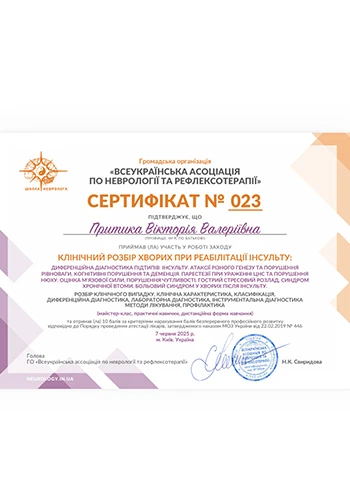
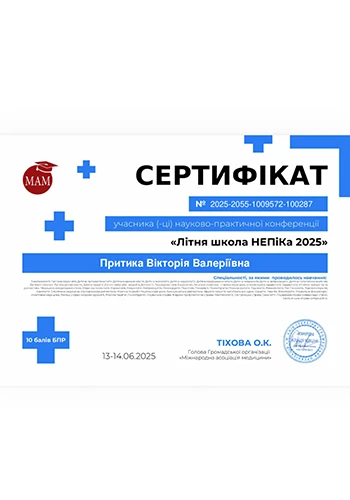
- 2025 – Neurologists’ School “NEPIKa”.
- 2025 – “Chronic traumatic encephalopathy, myasthenia and complications of extrapyramidal pathology; brain tumors, autonomic dysfunction and cognitive disorders; complications of strokes, polyneuropathies, acute and chronic back pain, anxiety and depression”.
- 2025 – “REFLEXOTHERAPY SCHOOL: physical rehabilitation in chronic cerebral ischemia, acupuncture for anxiety disorders and headache of unclear genesis, rehabilitation for compression-ischemic syndromes, manual therapy and acupuncture, principles of blockade techniques for tunnel syndromes”.
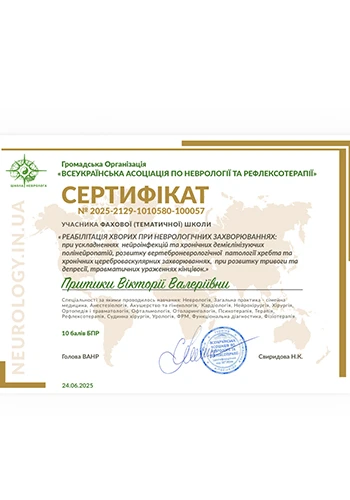
- 2025 – “REHABILITATION OF PATIENTS WITH NEUROLOGICAL DISEASES: complications of neuroinfections and chronic demyelinating polyneuropathies, development of vertebroneurological spinal pathology and chronic cerebrovascular diseases, anxiety and depression, traumatic limb injuries”.
- 2025 – Scientific and practical conference “Neurosymposium XVII”.
Professional development
-
2017 – Scientific-practical conference "Brain and Heart".
-
2018 – Stroke and cerebrovascular diseases.
-
2018 – Modern aspects of clinical neurology.
-
2019 – Regional Society of Neurologists.
-
2019 – New approaches to the treatment of ischemic damage of the heart and brain.
-
2019 – World Congress of Neurology (Dubai, UAE).
-
2020 – "The Art of Treatment" – postgraduate course of professional improvement.
-
2020 – Training "Diagnosis and treatment of chronic neuroinfectious diseases".
-
2020 – "Cognitive impairments and dementia in cerebrovascular and neurodegenerative diseases".
-
2021 – International Neurological Neurosymposium.
-
2021 – NEPIKa School (neurology, psychiatry).
-
2022 – Acute stroke management.
-
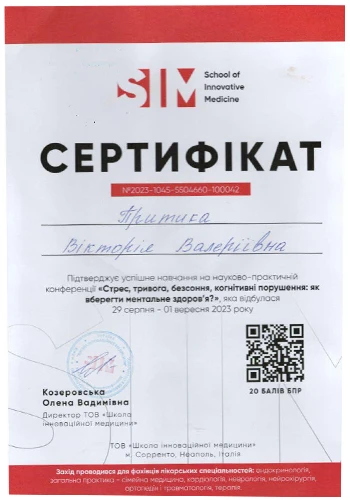
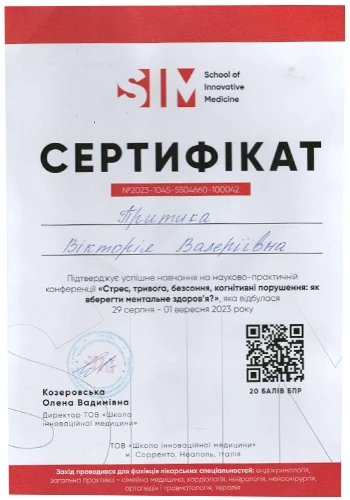
2023 – "Stress, anxiety, cognitive disorders" – School of Innovative Medicine (Sorrento, Italy).
-
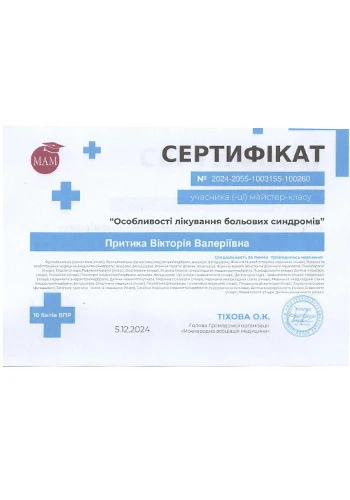
2024 – "Features of pain syndrome treatment".
-
2024 – Ukrainian-American School of Neurology.
Conditions treated
-
Vascular diseases of the nervous system (strokes, post-stroke conditions, encephalopathies).
-
Headache of various origins.
-
Degenerative-dystrophic diseases of the spine.
-
Chronic and acute back pain.
-
Polyneuropathies, neuritis, neuralgia of various origins.
-
Neuroinfections.
-
Neurasthenia, psychosomatic, depressive-anxiety disorders, sleep disturbances.
-
Vestibular dysfunctions.
-
Consequences of spinal and head injuries.
The doctor treats:
-
Headache: migraine, tension headache, cluster headache, all types of headaches.
-
Dizziness: coordination disorders, unsteady gait, tinnitus or head noise, benign paroxysmal vertigo.
-
Nerve lesions: numbness or weakness in arms or legs, walking difficulties, burning or shooting pain in feet, tunnel syndrome, carpal tunnel syndrome, radial, median, ulnar, tibial, and peroneal nerve lesions.
-
Trigeminal neuralgia: facial pain and numbness, jaw pain, pain while chewing.
-
Facial nerve neuropathy: facial asymmetry, inability to close the eye or raise the eyebrow, taste disturbances, numbness of one side of the face.
-
Polyneuropathy: numbness, tingling, “pins and needles,” burning sensations, weakness in limbs, chronic forms — diabetic, dishormonal, dysmetabolic, infectious-allergic, demyelinating.
-
Multiple sclerosis: coordination and vision disorders, numbness in limbs, unsteady gait.
-
Parkinson’s disease: tremor of the head, hands, or legs, stiffness of movements.
-
Epilepsy: body or limb seizures, convulsive attacks, loss of consciousness, episodes of staring or disorientation, brief blackouts, unusual smells, presyncope.
-
Osteochondrosis: neck, thoracic, or lumbar pain, intercostal neuralgia, disc protrusions and hernias, radiculitis, sciatic nerve lesions, myositis.
-
Restless legs syndrome: cramps, spasms, heaviness in legs, difficulty walking.
-
Myelopathies: muscle pain, shoulder girdle weakness, muscle atrophy, fasciculations, spinal cord lesions, amyotrophic lateral sclerosis.
-
Myasthenia: general weakness, limb weakness, drooping eyelids, double vision.
-
Herpetic lesions: herpes zoster (shingles), postherpetic effects.
-
Dystonias: spasms or stiffness in arms and legs, facial grimaces, facial spasms, writer’s cramp, torticollis.
-
Consequences of neurological diseases: traumatic brain injury, meningitis, encephalitis, brain or spine surgeries.
-
Dyscirculatory encephalopathy.
-
Cerebrovascular diseases.
-
Intracranial pressure disorders.
-
Vegetovascular dysfunction: panic attacks, short-term fainting (syncope).
-
Anxiety disorders: anxiety attacks, excessive worry, post-traumatic stress disorder, depression, apathy, mood swings.
-
Sleep disorders: insomnia, difficulty falling asleep, excessive sleepiness.
-
Dementia: memory decline, reduced attention span, slowed thinking, spatial disorientation.
 Show more
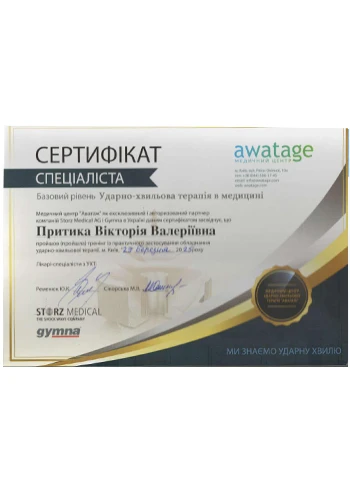
 Diplomas and certificates
Our doctors
 4.91 26+



 4.96 36+
Sign up via call center
 in the clinic
  online

 Hello!
Let's take care
about your health:
Sign up via call center 
