


Manual therapy is a modern medical approach that restores joint mobility, reduces pain, and relieves muscle tension without medication or surgery. People see a manual therapist for back or neck pain, restricted movement, headaches, scoliosis, or after injuries and excessive physical strain. At Oxford Medical, we use safe techniques and create personalized rehabilitation programs for each patient.
Sign up via call center 
 Adults Adults Adults Adults Adults Adults Adults Adults Adults
  Children Children Children Children
Department
Adults Outpatient department
Adults Outpatient department
Inpatient department
Adults Inpatient department
Aesthetic medicine
Adults Aesthetic medicine
Dentistry
Adults Dentistry
Plastic surgery
Adults Plastic surgery
Diagnostics
Adults Diagnostics
Analyzes
Adults Analyzes
Outbound services
Adults Outbound services
Children Outpatient department
Children Outpatient department
Dentistry
Children Dentistry
Diagnostics
Children Diagnostics

Kyiv


 Hotline:
 Request a call:


Department
Adults Outpatient department
Adults Outpatient department
Inpatient department
Adults Inpatient department
Aesthetic medicine
Adults Aesthetic medicine
Dentistry
Adults Dentistry
Plastic surgery
Adults Plastic surgery
Diagnostics
Adults Diagnostics
Analyzes
Adults Analyzes
Outbound services
Adults Outbound services
Children Outpatient department
Children Outpatient department
Dentistry
Children Dentistry
Diagnostics
Children Diagnostics
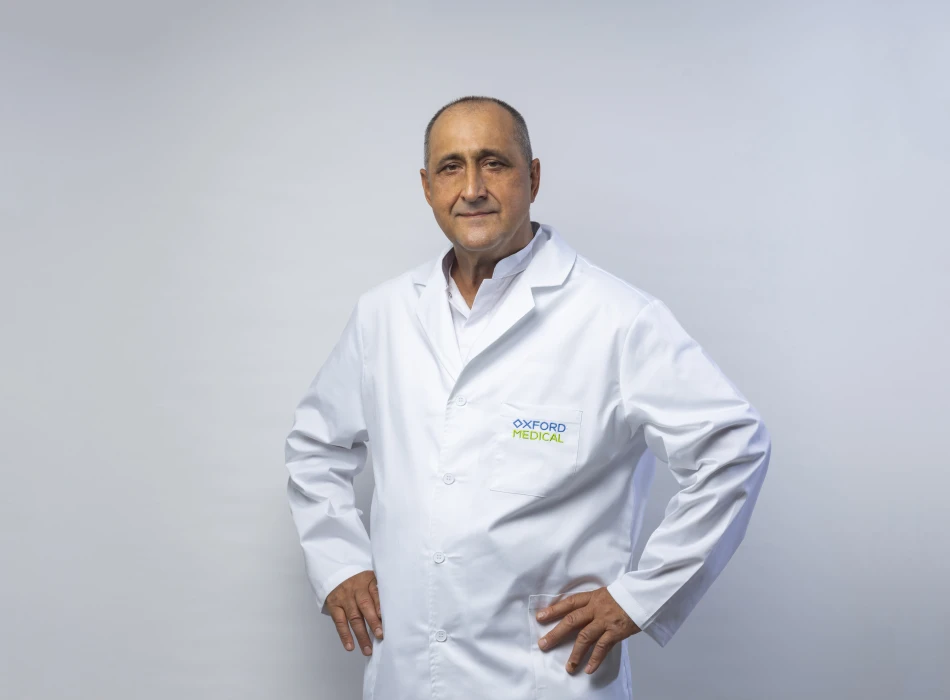
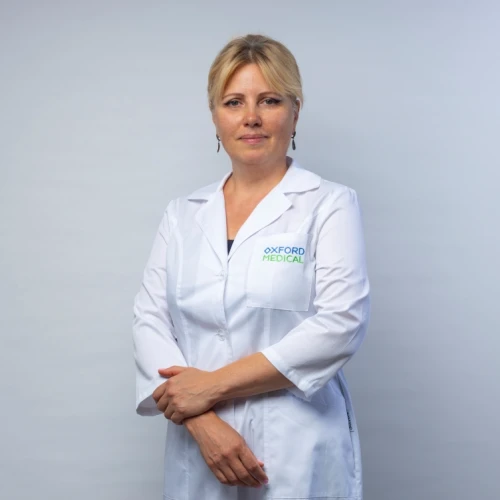
Suleimanov Mykhailo Zakhirovych
Neurologist, rehabilitation specialist, chiropractor


 34+
34+ 
Schedule doctor
 Kyiv, Hlybochytska St., 40x
Main areas of activity:
Manual therapy
Neurology
You should consult a neurologist if you experience headaches, dizziness, coordination problems, numbness in the limbs, tremors, weakness in the arms or legs, sensitivity disorders, memory impairment, or sleep problems. A neurologist treats conditions such as migraine, neuralgia, epilepsy, the effects of traumatic brain injury, stroke, multiple sclerosis, radiculitis, neuropathies, Parkinson's disease, and other pathologies of the central and peripheral nervous system. The doctor selects an individual program of diagnosis and treatment, helps to restore the functions of the nervous system and improve the patient's quality of life.
Education
-
1991 – Luhansk Medical University, specialty "General Medicine".
-
1991 – TSOLIUV, specialization "Manual Therapy".
-
1998 – KhIUV, specialization "Reflexotherapy".
-
1999 – KhIUV, specialization "Neurology".
-
2001 – RMAPO, specialization "Manual Therapy".
-
2005 – DonMI, PAC "Neurology".
-
2019 – Ministry of Defense of Ukraine, Ukrainian Military Medical Academy, specialty "Neurology".
-
2022 – Ministry of Health of Ukraine, Shupyk NMAPE, specialty "Physical and Rehabilitation Medicine".
When should you consult a neurologist, manual therapist?
-
If you spend long periods behind the wheel.
-
If you have lifted a heavy load.
-
If you have made a sharp turn.
-
If you have to carry heavy things for a long time.
-
If your work is stressful.
-
If you experience numbness in your hands.
-
If you have depression, stiffness, withdrawal, irritability.
-
If you are overweight.
-
If you feel morning muscle stiffness.
-
If your work is sedentary.
-
If you train at the gym and experience back pain or other discomfort after workouts.
What diseases does the doctor treat?
-
Osteochondrosis.
-
Osteochondrosis manifestations such as heart pain, headaches, dizziness, functional disorders of internal organs.
-
Displacement of intervertebral discs.
-
Intervertebral hernias.
-
Radiculitis.
-
Back and spine pain.
-
Cervical lumbago.
-
Restricted mobility in the neck or lower back.
-
Coccyx pain.
-
Scoliosis in children.
-
Headaches.
-
Intercostal neuralgia.
-
Neurosis.
-
Neurasthenia.
-
Vision reduction.
-
Neurocirculatory dystonia.
Treatment features
-
The doctor applies his own treatment method in practice. Its universality lies in comprehensive patient management, which allows achieving positive results in a short time.
-
The doctor’s main area of focus as a neurologist and manual therapist is highly specialized treatment of neurological manifestations of spinal and joint osteochondrosis, as well as rehabilitation.
Applied methods
-
Manual diagnostics.
-
Manual therapy of the spine and joints (shoulder, elbow and others).
-
Acupuncture (reflexotherapy).
-
PIR (post-isometric relaxation).
-
MET (muscle-energy techniques).
-
Hatha yoga complex exercises.
-
Exercise therapy, special set of exercises.
 Show more
 Reviews
Тетяна 19.02.2026
Була вимушена звернутися до лікаря з гострою болю в шиї. Лікар відразу виявив причину, поставив діагноз та запропонував лікування. Буквально відразу після сеансу мануальної терапії відчула полегшення. Подальші сеанси тільки закріплювали результат. Досвідченність , професійність та компетентність, як кажуть в одному флаконі. Всім раджу звертатися за допомогою до професіоналів, а саме до Михайла Захіровича.

Інна 28.01.2026
Хочу подякувати лікарю Сулейманову Михайлу Захіровичу. Дуже професійний лікар, пояснює все зрозуміло та чітко. Після кількох сеансів біль в шиї та грудному відділі хребта зникла, натомість зʼявилось відчуття легкості та рухливості.
Our doctors
 4.91 26+


 4.88 33+
  4.83 28+
Sign up via call center
 in the clinic
  online

 Hello!
Let's take care
about your health:
Sign up via call center 
