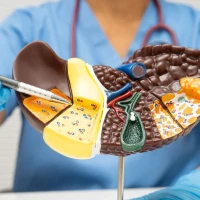
Fibroadenoma of the breast is one of the most common benign tumors in women. It usually does not cause pain and can remain unnoticed for a long time. However, any lumps in the breast require attention, as it is important to distinguish a benign growth from a potentially dangerous one in time.
In this article, we will look at what a fibroadenoma is, why it occurs, how it is diagnosed, and what treatment methods exist.
What is a Fibroadenoma of the Breast?
A fibroadenoma of the breast is a benign tumor that develops from glandular and connective tissue. It most often occurs in women aged 15 to 35 but can also appear at a more mature age. In most cases, a fibroadenoma has a round or oval shape, smooth surface, and clear contours. It is mobile and painless, which makes it easy to palpate.
This tumor is not malignant, but it can sometimes change under the influence of hormonal factors.
Causes and Risk Factors
The exact causes of fibroadenoma are not established, but there is a close connection with hormonal changes in a woman’s body. Risk factors include:
-
Hormonal disorders. Excess estrogen and progesterone deficiency can provoke tumor growth in the breast.
-
Heredity. Women with a family history of fibroadenomas or other benign tumors have a higher risk of developing this growth.
-
Age. Fibroadenomas most often appear in young women during hormonal changes.
-
Environmental factors. Radiation exposure, chemicals, and stress may affect the risk of developing growths.
-
Breast injuries. Blows, bruises, and other damage can contribute to tissue changes and tumor formation.
Symptoms of Fibroadenoma of the Breast
A fibroadenoma usually appears as a dense, elastic nodule that moves easily under the skin. Main signs:
-
a palpable lump in the breast;
-
smooth tumor surface;
-
absence of pain or discomfort;
-
possible increase of the growth before menstruation.
Since the tumor usually does not cause pain, many women discover it accidentally during self-examination or a preventive check-up by a doctor.
Diagnostic Methods
Several methods are used to confirm the diagnosis:
-
Clinical examination. The doctor palpates the breast, assessing the characteristics of the growth.
-
Ultrasound examination (US). Helps determine the size, structure of the tumor, and its differences from other growths.
-
Mammography. Used in women over 40 to assess the overall condition of the breasts.
-
Biopsy. If cancer is suspected, tissue is taken for histological analysis.
Types of Fibroadenomas of the Breast
Fibroadenomas may have different structures and development features. Depending on histological structure, the main types are:
-
Pericanalicular fibroadenoma – connective tissue grows around the milk ducts, giving the tumor a dense structure.
-
Intracanalicular fibroadenoma – differs by uneven structure, as connective tissue grows inside the milk ducts, deforming them.
-
Mixed fibroadenoma – combines features of both pericanalicular and intracanalicular types, containing both dense and expanded duct areas.
Other specific forms include:
-
Juvenile fibroadenoma – occurs in adolescents and young women, grows quickly but is usually benign.
-
Phyllodes (leaf-like) fibroadenoma – rare type with potential for rapid growth. In some cases, it may contain malignant cells and requires close monitoring.
Each type of fibroadenoma requires observation and, if necessary, timely treatment.
Treatment of Fibroadenoma of the Breast
The treatment method depends on the tumor’s size, type, growth rate, and risk of complications. The doctor may recommend observation, drug therapy, or surgery.
1. Observation
If the fibroadenoma is small (up to 1–2 cm), does not cause discomfort, and is not increasing, the doctor may recommend regular monitoring.
Observation includes:
-
regular visits to a mammologist (every 3–6 months);
-
ultrasound or mammography to control tumor size;
-
hormonal balance correction if needed.
Sometimes small tumors can shrink on their own, especially after pregnancy or the end of puberty.
2. Drug Therapy
Drug treatment is used to stabilize hormonal balance and prevent tumor growth:
-
Hormonal correction. If the fibroadenoma appeared due to hormone imbalance, hormonal drugs regulating the menstrual cycle may be prescribed.
-
Herbal medicine and vitamin complexes. In some cases, supplements with vitamins A, E, B6, iodine, and other trace elements may be recommended.
-
Anti-inflammatory drugs. If inflammation or pain is present, non-steroidal anti-inflammatory agents may be prescribed.
However, drug therapy cannot completely remove the tumor, only control its growth.
3. Surgical Removal
Surgery is recommended if:
-
the fibroadenoma grows rapidly;
-
there is suspicion of malignant transformation;
-
the tumor is large (over 3 cm) and causes discomfort;
-
a phyllodes fibroadenoma is diagnosed.
Surgical methods:
-
Sectoral resection – the tumor is removed along with part of the surrounding tissue. Used if atypical cells are suspected or the tumor is large.
-
Enucleation (shelling) – minimally invasive procedure removing only the fibroadenoma without affecting healthy tissue.
Postoperative Period
Fibroadenoma removal surgery usually takes little time, and recovery lasts from a few days to several weeks. Recommendations include:
-
avoid physical strain in the first days;
-
wear a supportive bra;
-
monitor the condition of the incision and follow doctor’s advice.
Surgical treatment allows complete removal of the tumor and minimizes the risk of recurrence.
Benign Breast Tumor: Prevention
To reduce the risk of fibroadenoma and other breast changes, it is recommended to:
-
regularly perform breast self-exams;
-
have preventive check-ups with a mammologist;
-
control hormone levels;
-
maintain a healthy lifestyle, avoid stress and bad habits.
Other benign breast growths include fibroadenomatosis and fibroadenosis, which may cause pain and have a higher risk of malignancy. They require regular monitoring by a specialist.
If any breast changes appear, it is important to consult a doctor in time. Specialists at «Oxford Medical» will help you undergo high-quality diagnostics and choose the optimal treatment method.
Book a consultation with a mammologist by phone or through the online form on the website.
Frequently Asked Questions
Can a fibroadenoma dissolve on its own?
In young women, small fibroadenomas (up to 1 cm) may sometimes shrink or disappear on their own when hormone balance stabilizes. Larger or long-lasting tumors usually do not resolve without treatment.
What are the signs that a fibroadenoma should be removed?
A fibroadenoma should be removed if it grows quickly, reaches over 3 cm, causes discomfort, or there is risk of malignant transformation (phyllodes form). The final decision is made by the doctor after examination.
Why can cancer risk appear after fibroadenoma removal?
Removal itself does not increase cancer risk. However, if atypical cells were present in the tumor, they may indicate precancerous changes. Regular mammologist check-ups are important for early detection of possible pathologies.
Can fibroadenoma development be prevented?
Complete prevention is not possible, but risk can be reduced: maintain hormonal balance, avoid stress, eat properly, have regular mammologist check-ups, and monitor breast health.