Preventive examinations are often considered unnecessary, and many people do not see a doctor for years. Only noticeable deterioration in vision makes them book a consultation. In such cases, the doctor usually diagnoses myopia or hyperopia, prescribes glasses, or helps choose contact lenses. Visual acuity depends on many factors, but preventive measures often help preserve it.
Even more dangerous are such diseases as glaucoma, cataracts, optic neuritis, and others. They cause irreversible changes and can lead to complete loss of vision. According to WHO, there are about 40 million blind people worldwide. In 80% of them, blindness could have been prevented if timely treatment had been carried out.
3 main reasons to visit an ophthalmologist regularly
Preventive eye examinations are necessary for both adults and children. For schoolchildren, they are included in the check-up program before the school year. Adults, however, are usually not monitored.
Three main reasons why scheduled ophthalmologist consultations are necessary:
-
Vision deteriorates gradually, and at first, it happens unnoticed. At the same time, the eyes strain more, which leads to disease progression. During the consultation, the ophthalmologist will check visual acuity and, if disorders are found, prescribe glasses or lenses, treatment, and explain how to prevent further deterioration.
-
Glaucoma and other serious eye diseases develop asymptomatically at early stages, and the effectiveness of their treatment directly depends on the time of diagnosis. They can be detected using instrumental examinations.
-
With the development of hyperopia, myopia, or other eye diseases, regular examinations are necessary to track dynamics. This allows for prevention and timely selection of optimal treatment.
When adults and children need to visit an ophthalmologist
The first ophthalmological examination is carried out for a newborn in the maternity hospital. Special attention is paid to premature babies. They have a high risk of developing retinopathy of prematurity, which, without timely treatment, threatens complete vision loss.
If everything is fine, the child should be examined by an ophthalmologist at:
-
1–2 months;
-
2 years;
-
3 years;
-
6 years.
Children aged 7 to 18 years are recommended to undergo preventive examinations 1–2 times a year. Due to studying, eye strain increases, which can provoke vision deterioration.
Adults aged 20 to 40 years should see an ophthalmologist once a year. After 40–45 years, doctor visits are recommended more often – once every 6 months. This also applies to people with vision problems, increased intraocular pressure, risk factors, or hereditary predisposition to eye diseases. In particular, people with diabetes, cardiovascular, neurological, and other chronic diseases should carefully monitor eye health.
It is also necessary to visit an ophthalmologist before conception and during pregnancy. Vision acuity check and fundus diagnostics are included in the list of mandatory examinations for pregnant women.
What does an ophthalmologist check during a consultation?
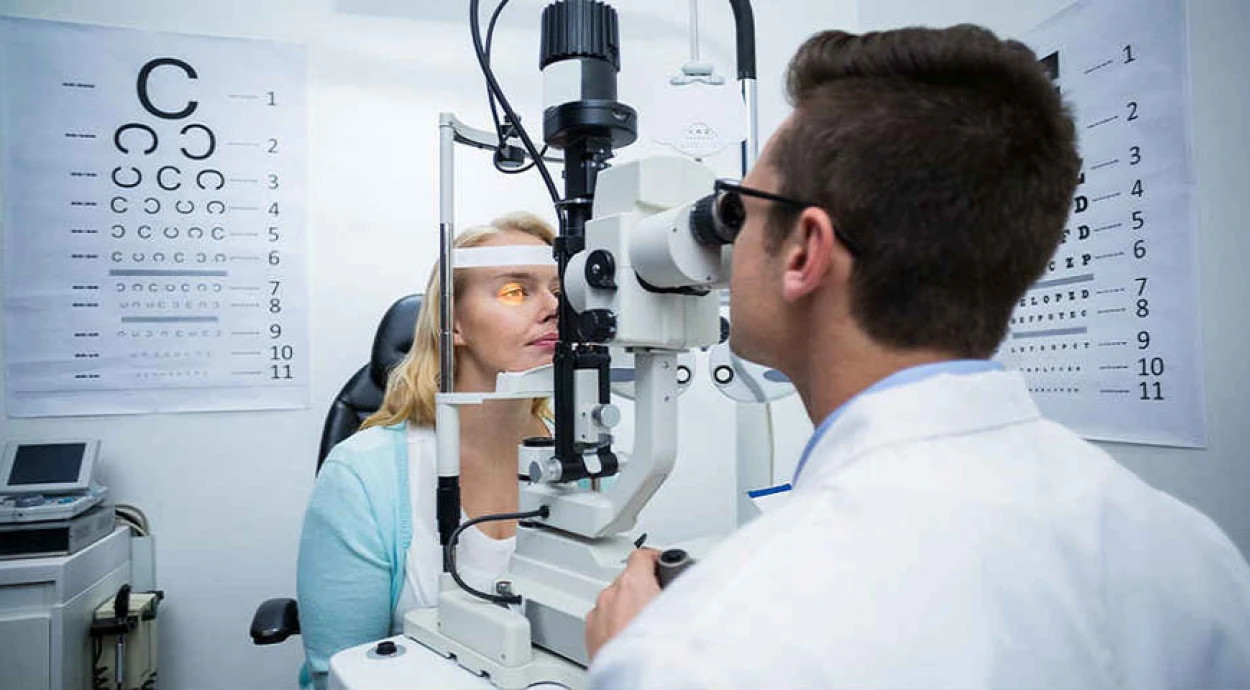
During a consultation, the ophthalmologist performs standard examinations to assess visual acuity and detect other diseases. The specialist also asks about symptoms and studies medical history.
At a preventive examination, the ophthalmologist performs:
-
Visual acuity check;
-
Autorefractometry – computer evaluation of eye refraction (light refraction system), which determines the degree of myopia, hyperopia, astigmatism, and some other diseases;
-
Tonometry – a non-contact method of measuring intraocular pressure.
At «Oxford Medical», vision diagnostics is carried out using new equipment from premium brands (refractometer, pneumotonometer, OCT (optical coherence tomograph), and slit lamp from the Japanese company Topcon). It ensures maximum accuracy of results and allows detecting complex diseases at the earliest stages. For example, timely glaucoma diagnostics allows stopping irreversible changes in the eye and preventing vision loss.
In which symptoms is an unscheduled ophthalmologist consultation needed
The main symptom that makes people consult an ophthalmologist is vision deterioration. However, eye diseases can manifest differently.
An unscheduled examination is necessary if the following symptoms appear:
-
Deterioration of vision at near or far distance;
-
Blurring in the eyes after waking up;
-
Decreased clarity of vision in the evening or at dusk;
-
Appearance of blurred contours or colored circles around objects, light sources;
-
Flickering of “flies”;
-
Narrowing of the visual field;
-
Pain in or near the eye;
-
Frequent redness of the eyes;
-
Redness and swelling of the eyelids;
-
Dryness, itching, or burning in the eyes;
-
Tearing;
-
Light sensitivity;
-
Feeling of pressure in the eye;
-
Eye inflammation (redness, tearing, discharge, etc.);
-
Frequent headaches;
-
Eye injuries, foreign objects in the eyes, etc.
These symptoms may occur in various eye diseases, including glaucoma and cataracts. At early stages, pathologies can develop unnoticed, so it is very important to undergo regular preventive examinations and consult an ophthalmologist even with minor eye problems.
The most common eye diseases
Common eye diseases:
-
Myopia;
-
Hyperopia;
-
Glaucoma;
-
Cataract;
-
Strabismus;
-
Astigmatism;
-
Retinal detachment;
-
Optic neuritis;
-
Inflammatory eye diseases (uveitis, conjunctivitis, keratitis, etc.);
-
Retinopathy and others.
Specialists identify many different eye diseases. These are far from only myopia and hyperopia, which are well known. In some pathologies, vision may remain clear for a long time, while irreversible changes occur in the eye. Only an experienced ophthalmologist can timely and correctly diagnose the disease.
Methods of treating eye diseases and vision correction
In ophthalmology, conservative and surgical methods of treatment are used. The therapy program depends on the diagnosis, degree of eye damage, age, and other individual characteristics of the patient. First of all, including in glaucoma, ophthalmologists prescribe drug therapy and physiotherapy procedures. For many patients, this approach is effective. Surgical methods are used when conservative treatment is inappropriate or ineffective.
Vision correction can be performed with classic glasses or soft contact lenses. There are many options now, so the ophthalmologist can choose the best one for each patient.
Special attention should be paid to so-called progressive glasses. They are ideal for middle-aged and older people who have worsening near vision. These glasses have three zones for vision at different distances, allowing clear sight both up close and at a distance.
Prevention of vision deterioration
To prevent vision deterioration and eye diseases, it is recommended to:
-
Take breaks of at least 5–10 minutes every hour when working at a computer and regularly look away from the monitor to rest the eyes;
-
Reduce eye strain – try to watch less TV, use the computer and smartphone less, do not read in the dark or in transport;
-
Ensure proper lighting of the workplace – light should be as natural as possible, not too dim and not too bright, without flickering;
-
Wear sunglasses in sunny weather, but remove them at dusk and indoors;
-
Eat properly – lack of certain vitamins and minerals increases the risk of vision deterioration;
-
Sleep 8 hours a day;
-
Monitor blood sugar, cholesterol, and blood pressure – diabetes and pressure disorders can lead to vision deterioration;
-
Regularly perform eye exercises;
-
Avoid alcohol – it disrupts blood supply to the choroid;
-
Quit smoking – it increases the likelihood of retinal diseases and vision loss.
Also, for preventive purposes, you need to visit an ophthalmologist regularly – at least once a year. The specialist will explain in more detail how to prevent eye diseases, and in case of pathology development, will be able to diagnose it at an early stage and prescribe optimal treatment. In many diseases, significant deterioration or complete vision loss can only be avoided with timely treatment.
Related services:
Ophthalmology
Sources:
AAPOS
UT Southwestern Medical Center
American Academy of Ophthalmology