


The information in the article is provided for informational purposes and is not a guide to self-diagnosis or treatment. If symptoms of a disease appear, you should consult a doctor.
Contents:
- Symptoms and causes of the development of valgus deformity of the foot
- Stages of development of valgus deformity
- When is surgical intervention necessary?
- How is surgical treatment of valgus deformity of the foot performed?
- Why is surgery needed?
- Effectiveness of surgery for valgus deformity of the foot
- How to prepare for surgery?
- What to pay attention to after surgery?
- Advantages of surgical treatment at “Oxford Medical”
- Which specialist should you make an appointment with for valgus deformity of the foot?
- Frequently asked questions
Valgus deformity of the foot is a common orthopedic disease. It manifests as a change in the metatarsophalangeal joint that connects the big toe to the foot, as a result of which it deviates to the side and a bump appears on the foot.
Many consider valgus deformity of the foot to be only an aesthetic issue, but this is not the case. In addition to discomfort and difficulty choosing footwear, it entails serious health problems. Without treatment, the deformity of the joint increases and the other toes shift. This leads to constant pain, and due to compression of the foot by footwear there is a risk of inflammation of the joint. Arthritis and arthrosis may also develop.
In mild deformity, conservative therapy is sometimes used — it is recommended to wear orthoses, which allow slowing changes in the foot but not curing the disease. In severe deformity such methods are ineffective. The bump can be removed and the correct shape of the joint restored only surgically.
Symptoms and causes of the development of valgus deformity of the foot
Valgus deformity of the foot is encountered mainly by women. The main reason lies in anatomical features — in women the ligamentous apparatus of the foot is weaker than in men. In addition, many wear shoes with heels or with a narrowed toe, which creates an incorrect distribution of weight across the foot.
Predisposing factors also include injuries, flat feet, work on one’s feet, excess weight, hormonal imbalance, and metabolic disorders.
In the majority of women, the disease manifests in middle or older age.
The first symptoms may be:
-
protrusion of the bone near the big toe;
-
discomfort, pain when wearing narrow shoes;
-
quick fatigue of the legs;
-
swelling;
-
change in the shape and position of the toes.
Valgus deformity of the foot is a progressive disease, therefore it is recommended to consult an orthopedist at the first signs of curvature of the joint.
Stages of development of valgus deformity
Depending on the severity of the pathological process, 3 degrees of valgus deformity of the foot are distinguished:
The first degree manifests as a slight curvature of the joint — the angle of deviation of the big toe is no more than 20 degrees. Redness and thickening of the skin in the area of the 2nd–5th toes also occur, which is a sign of transverse flatfoot. After prolonged walking or wearing uncomfortable shoes, the patient feels severe fatigue in the legs.
The second degree manifests as a deviation of the big toe by 20–39 degrees. Calluses appear on the skin under the metatarsal bones of the toes. Discomfort and pain become stronger.
The third degree is accompanied by a deviation of the toe by more than 35 degrees. In addition to the aesthetic defect, the patient develops severe pain in the foot and sometimes in the hip joint. Wearing shoes and walking become difficult. Sometimes swelling of the legs appears, and inflammation of the joints and tendons develops.
When is surgical intervention necessary?
Treatment of valgus deformity of the foot is carried out by orthopedic doctors and surgeons. The need for surgery is determined after examining the patient, performing an X-ray of the foot, and other examinations.
Indications for surgical treatment may be:
-
pronounced deformity of the joints of the foot and unnatural deviation of the toes;
-
pain in the area of the big toe;
-
bursitis — inflammation of the synovial membrane of the joint;
-
arthrosis — destruction of the intra-articular cartilage;
-
transverse flatfoot;
-
change in gait;
-
inability to choose comfortable footwear;
-
ineffectiveness of conservative methods (wearing an orthosis, anti-inflammatory therapy, etc.).
Surgical treatment is carried out not only for medical indications but also when the patient complains of aesthetic discomfort caused by a change in the shape of the foot and the appearance of a “bump.”
How is surgical treatment of valgus deformity of the foot performed?
At “Oxford Medical,” the following types of operations are performed for valgus deformity of the foot:
-
arthroscopy — a minimally invasive operation performed using endoscopic equipment introduced into the joint cavity through 2 small punctures;
-
osteotomy — a reconstructive operation during which, through a longitudinal incision, bony growths are removed and tendons and ligaments are sutured, restoring the correct position of the joints, metatarsal bones, and phalanges of the toes (sometimes special titanium prostheses are used);
-
arthrodesis — a radical operation that involves forming an immobile joint, which eliminates the risk of recurrence but does not interfere with normal walking.
Which operation will be most effective is decided individually by the orthopedic surgeon, taking into account the degree of valgus deformity of the foot and other features of the patient.
Arthroscopy is used mainly at an early stage, when the deformity is minor and there are no concomitant pathologies. This is the easiest operation with a minimal recovery period.
In grades 2 and 3 of valgus deformity of the foot, osteotomy is most often performed. There are different types of the operation, but given a number of advantages, preference is now given to Chevron osteotomy. It involves excision of the bony growth in the area of the head of the metatarsal bone of the big toe, as well as a series of manipulations with the joint capsule, ligaments, and tendons. In this way, the correct anatomy of the foot is restored, and the position of the joint is fixed with a titanium construct.
Chevron osteotomy is performed through an incision slightly more than 3 cm long, which ensures both effectiveness and aesthetics — over time the scar becomes almost invisible.
As for arthrodesis, such an operation is performed quite rarely, mainly in patients with arthritis or arthrosis of the metatarsophalangeal joint.
Why is surgery needed?
Surgery is the only way to eliminate valgus deformity and restore the anatomically correct shape of the foot. Only by surgical method is it possible to get rid of the associated pain and the aesthetic defect, as well as to prevent the development of complications such as bursitis, arthritis, and arthrosis.
Surgery allows you to:
-
restore the correct shape of the foot;
-
remove the “bump” on the foot;
-
eliminate the cause of pain;
-
prevent the development of or carry out treatment of bursitis, arthritis, and arthrosis;
-
get rid of the aesthetic defect and problems with choosing footwear.
If the prescribed surgery is not performed in time, valgus deformity of the foot will progress. In the disease, the angle of curvature of the metatarsophalangeal joint gradually increases, which leads to a change in the position of all toes. This results in chronic pain, gait disturbance, and destruction of the joint.
Effectiveness of surgery for valgus deformity of the foot
According to international studies, 80% of patients feel well after surgery and remain satisfied with its results. About 15% note a significant improvement immediately after the intervention, and only 5% say that their sensations have not changed.
Specialists at “Oxford Medical” report that the complexity and effectiveness of surgical treatment largely depend on the degree of valgus deformity of the foot. At an early stage, minimally invasive arthroscopy is possible, whereas in pronounced deformity and concomitant pathologies more complex manipulations are required. For example, with grade 3 valgus deformity and arthrosis of the joint, installation of a titanium construct may be recommended, which needs to be removed in a year or a year and a half.
In most cases, operations are successful even with severe deformity of the joint, and patients are freed from pain, problems with walking, and aesthetic defects. The main thing is to entrust your health to professionals and strictly follow their recommendations.
How to prepare for surgery for valgus deformity of the foot?
Before surgery, the patient must undergo a comprehensive examination to determine the condition of the joints and bones of the foot, as well as to exclude general contraindications to surgical intervention.
For diagnosis, the following may be prescribed:
-
X-ray of the foot;
-
CT or MRI;
-
electrocardiogram (ECG);
-
fluorography (results valid for 1 year);
-
blood tests (complete, biochemistry, coagulation, etc.);
-
consultation with an anesthesiologist and relevant specialists if chronic diseases are present.
The orthopedic doctor can make a diagnosis based on a visual examination and X-ray, but before surgery, as a rule, CT or MRI is additionally prescribed — they make it possible to assess the condition not only of the bones but also of the soft tissues (to detect bursitis, arthritis, or arthrosis).
ECG, fluorography, and blood tests are part of the standard preparation for any surgery. They are needed to exclude contraindications to anesthesia and reduce the risk of complications.
What should you pay attention to after surgery?
After surgery, it is important to follow all of the doctor’s prescriptions. This will allow the fastest possible recovery and help avoid complications.
Most often, patients are advised to remain in the clinic from 1 to 3 days. Only occasionally, after arthroscopy, it is allowed to go home the same day.
For several days, it is recommended to keep the leg elevated and periodically apply cold compresses. This helps reduce swelling and pain. In addition, after surgery a dressing is applied to the foot, which holds the big toe in a certain position. It must not be removed or wetted independently — usually for 10–12 days until the sutures are removed.
As for the ability to get up and put weight on the leg after surgery, this can be done after the doctor’s permission. Sometimes it is allowed to get out of bed without putting weight on the leg on the day of surgery, whereas in other cases this is allowed the next day or later.
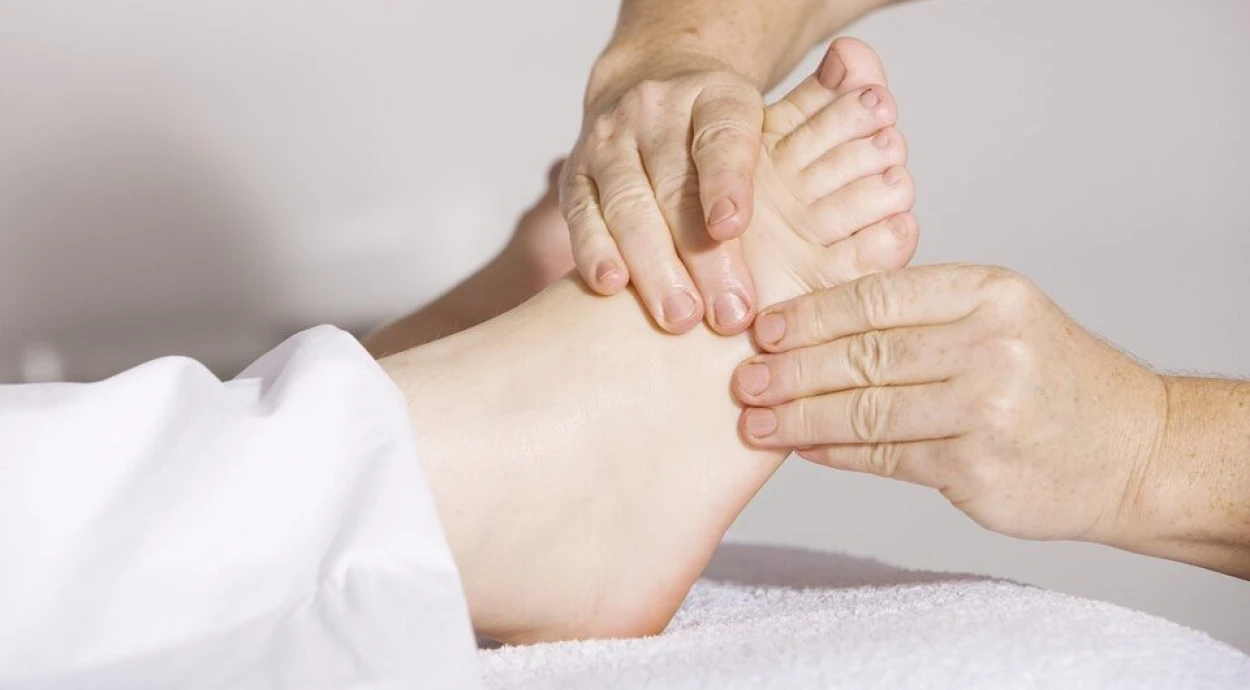
In general, the rehabilitation period is from 1 to 2 months. During this period, it is recommended to wear special orthopedic shoes that relieve the load from the forefoot, and to regularly perform massage and light exercises for the feet. Sometimes physiotherapy procedures are also prescribed.
Returning to heavy physical activity and wearing high-heeled shoes is usually possible only after six months. Failure to follow these rules may lead to a recurrence of the disease.
Advantages of surgical treatment at “Oxford Medical”
At “Oxford Medical,” surgical treatment is carried out in a modern surgical inpatient unit. The clinic is equipped with two high-tech operating units with new medical equipment from well-known manufacturers. Thanks to this, as well as the involvement of leading specialists, operations of any complexity are performed at “Oxford Medical,” including with the help of innovative minimally invasive techniques.
There is also an intensive care unit in the inpatient facility, equipped with everything necessary to monitor and maintain the body’s vital functions. This makes it possible to provide assistance to patients with acute conditions and in the event of operative complications, which cannot be completely ruled out even with the most thorough preparation.
After surgery, patients are transferred to cozy single and double rooms, where they remain under round-the-clock supervision of doctors and medical staff.
Advantages of the “Oxford Medical” surgical inpatient unit:
-
new equipment from the best global brands;
-
involvement of leading surgical doctors;
-
high-tech operating units and an intensive care unit;
-
use of innovative minimally invasive surgical techniques;
-
comfortable single and double rooms;
-
round-the-clock medical supervision in the inpatient unit;
-
flexible pricing policy.
Which specialist should you make an appointment with for valgus deformity of the foot?
If symptoms of valgus deformity of the foot appear, you should consult an orthopedic traumatologist or an orthopedic surgeon.
To make an appointment with specialists at “Oxford Medical,” call our contact center or write in the chat on the website. Our administrators will select a convenient time for your visit to the clinic.
Frequently asked questions:
Can valgus deformity of the foot be corrected?
The correct shape of the foot in valgus deformity can be restored only by surgical method. Most often, minimally invasive operations are performed, which are accompanied by minimal damage to healthy tissues and a short rehabilitation period. It is not possible to eliminate the deformity by conservative methods. Orthoses and insoles recommended at early stages of the disease only slow its progress and reduce pain.
How long does surgery to correct valgus deformity of the foot last?
Different types of operations are performed for valgus deformity of the foot. The specific one needed by the patient is determined by the doctor depending on the degree of curvature and the presence of concomitant diseases. Therefore, it is impossible to say in advance exactly how long the surgery will last. On average, surgeons may need from 40 minutes to 2 hours.
When can you walk after surgery to correct valgus deformity of the foot?
After some operations it is allowed to get up without putting weight on the leg on the same day. In more complex cases, the first getting up is postponed to the 2nd, 3rd, or even 4th day. You may get up only with the doctor’s permission.
As for walking, it should be minimized during the first 2 weeks. The operated leg must not be heavily loaded. In addition, when walking you must use the orthosis or orthopedic shoes recommended by the doctor, which relieve the load from the front part of the foot by redistributing it to the heel.
What should not be done with valgus deformity of the foot?
With curvature of the joint, you must not wear shoes with heels or platforms, with a narrowed toe and an uncomfortable last. It is also not recommended to engage in active sports, walk for a long time, or stay on your feet all day.
At the first symptoms, you should consult an orthopedic doctor, who will provide individual recommendations and help stop the development of the disease.