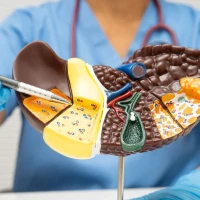
Laparoscopic kidney tumor removal is an effective and minimally invasive surgical procedure performed in cases of diagnosed small tumors up to 4 cm in diameter, as well as when the patient has only one kidney or when tumors develop on both sides. Thanks to special imaging and navigation technologies, surgeons can perform this operation with greater precision and safety. Learn more about the advantages of laparoscopic kidney tumor removal, treatment and recovery duration, possible risks and complications, as well as postoperative care and recommendations from Oxford Medical doctors in this article.
Advantages of Laparoscopic Kidney Tumor Removal Compared to the Open Method
Minimal trauma. Laparoscopic surgery is performed under general anesthesia and lasts 2–3 hours. All manipulations are carried out through small punctures no larger than 1 cm in diameter. Small incisions reduce surgical trauma and shorten wound healing time. Thanks to a mini-camera with multiple magnification, the manipulations are performed with high precision.
Less blood loss. Due to the high resolution of cameras, thin instruments, and minimal incisions, laparoscopic surgery is accompanied by less blood loss, and surgeons immediately coagulate damaged vessels.
Faster recovery period. Patients who undergo laparoscopic kidney tumor removal recover faster, experience less pain, and return to their normal lifestyle more quickly compared to patients who undergo open surgery. Usually, they feel better the next day and are discharged from the hospital within 1–3 days.
High effectiveness. The effectiveness of laparoscopic kidney tumor removal reaches 95%.
Imaging and Navigation Technologies During Laparoscopic Kidney Tumor Removal
-
Modern high-resolution laparoscopes allow surgeons to obtain clear images of internal organs and tumors, which helps in accurate removal of pathological formations.
-
Laparoscopic surgical systems provide three-dimensional imaging, which facilitates surgeon orientation, precise tumor margin identification, and helps preserve the kidney and its function.
-
Special navigation systems help surgeons precisely determine the position of instruments, control their movements during surgery, and reduce the risk of damage to surrounding tissues.
Indications for Laparoscopic Kidney Tumor Removal
-
Benign kidney tumors. Removal of benign tumors such as adenomas, oncocytomas, fibromas, angiomyolipomas, etc.
-
Malignant kidney tumors. For some malignant tumors, such as early stages of kidney cancer (e.g., carcinoma).
-
Tumor size. Small tumor size (usually up to 4 cm in diameter) allows the operation to be performed laparoscopically.
Contraindications for Laparoscopic Kidney Tumor Removal
-
Large tumor size. Large tumors or tumors with a complex structure may require open nephrectomy instead of laparoscopy.
-
Tumor spread. Kidney cancers that have spread beyond the kidney may not be suitable for laparoscopic removal.
-
Pathological changes in the kidney. Conditions such as a large number of stones may make laparoscopic removal impossible.
-
Pregnancy. Laparoscopic removal is not recommended during pregnancy due to potential risks to the fetus, especially in later stages.
-
Comorbidities. Serious conditions such as heart failure or chronic obstructive pulmonary disease may be contraindications.
-
Other medical indications. Certain individual health factors may influence the choice of surgical method.
The decision regarding laparoscopic tumor removal and kidney cancer treatment methods should be based on the individual characteristics of each patient and consultation with a urologist or oncologist.
The Role of Laparoscopic Kidney Tumor Removal in Reducing Treatment and Recovery Duration
Laparoscopic kidney tumor removal is an important and effective procedure that allows patients to return to normal life more quickly. Small incisions, nearly invisible cosmetic scars, less blood loss, and faster healing contribute to quicker recovery and shorter hospital stays. However, before surgery, it is essential to discuss all possible benefits, risks, and aspects of postoperative care with your doctor.
Possible Risks and Complications Associated with Laparoscopic Kidney Tumor Removal
Although laparoscopic kidney tumor removal is relatively safe, there are potential risks and complications associated with any surgical procedure.
Possible complications:
-
bleeding if the tumor is located close to vessels or kidney branches;
-
damage to surrounding tissues;
-
wound infection;
-
allergic reaction to anesthesia.
Postoperative Care and Recommendations for Patients After Laparoscopic Kidney Tumor Removal
To ensure faster recovery after laparoscopy, patients should follow specific rules:
-
Wound care. Patients are advised to regularly treat the wound and monitor for signs of infection.
-
Diet. Avoid spicy and salty foods, foods causing constipation, and drink at least three liters of fluids daily.
-
Avoid harmful habits. Alcohol consumption and smoking are prohibited.
-
Support physical recovery. Follow individual recommendations regarding physical activity and rehabilitation exercises.
-
Medication. The surgeon may prescribe medications to control pain and prevent complications.
-
Regular medical check-ups. Patients should regularly visit their doctor to monitor health and detect complications or recurrences. Repeat examinations and ultrasound are necessary at 3 and 6 months.
Follow all your doctor’s recommendations to recover as quickly as possible.
Laparoscopic Kidney Tumor Surgery at Oxford Medical
At the Oxford Medical oncology urology department, laparoscopic tumor removal is performed by oncological surgeons and urologists with over 20 years of experience and hundreds of successful operations. State-of-the-art expert equipment enables doctors to perform high-quality diagnostics, determine whether a kidney tumor is benign or malignant, and identify tumors as small as 1 mm. Surgery and postoperative rehabilitation take place within the same clinic. The surgical department includes a modern operating unit and comfortable single or double hospital rooms. This allows the Oxford Medical team to provide effective care in complex cases and help patients recover as quickly as possible.
Frequently Asked Questions
What types of kidney tumors are most suitable for laparoscopic removal, and which may require other treatment methods?
Small tumors up to 4 cm are the most ideal option for laparoscopic removal. Large tumors or metastatic kidney lesions usually require open surgery with wider access.
What risks are associated with laparoscopic kidney tumor removal, and how can they be minimized?
Possible risks include bleeding, damage to nearby organs, infections, kidney size or function impairment, and thrombosis risk. These risks can be minimized through careful preoperative planning, adherence to modern safety protocols, surgeon expertise, and strict compliance with postoperative recommendations.
What are the advantages of the laparoscopic approach compared to traditional open surgery for patients with kidney tumors?
Smaller scars and incisions, less blood loss, faster recovery, lower risk of complications, and shorter hospital stay.