

Contents:
Pain, swelling, or redness in the joint area may occur as a result of injuries and various diseases. If they are accompanied by discomfort during movement, one of the possible causes may be gout. This is a condition in which uric acid accumulates in the body, which can lead to inflammation of the joints and periodic attacks of pain.
The disease may develop gradually, and its first signs are sometimes perceived as other joint problems. That is why it is important to understand the features of this condition and know which symptoms are worth paying attention to.
In this article, we will consider how gout manifests itself, why it occurs, and which approaches are used for its treatment and pain relief.
What Is Gout
Gout — is a chronic disease associated with impaired purine metabolism and increased uric acid levels in the blood. Normally, this substance is formed during the breakdown of certain food products and is excreted from the body by the kidneys. If its concentration increases or the excretion process is impaired, urate crystals may accumulate in the tissues.
These crystals are deposited mainly in the joints, as well as in the surrounding tissues. The immune system perceives them as foreign particles, which causes an inflammatory reaction. As a result, characteristic symptoms appear — pain, swelling, redness of the skin, and limitation of mobility.
Most often, gout affects the joint of the big toe, but the inflammatory process may also occur in the knee, ankle, elbow, or wrist joints. During an exacerbation, the pain may be very intense and appear suddenly, even at rest.
What Provokes Gout
The main cause of gout development is an increase in the level of uric acid in the blood. This condition is called hyperuricemia. It occurs when the body produces an excessive amount of this substance or when the kidneys do not manage to excrete it in a sufficient volume.
Various factors may influence the development of the disease. Most often, gout is provoked by:
-
Metabolic disorders. Changes in metabolism may lead to the accumulation of purine breakdown products and an increase in the level of uric acid.
-
Hereditary predisposition. If close relatives had gout, the risk of developing the disease may be higher.
-
Kidney diseases. If their function is impaired, uric acid is excreted from the body less effectively.
-
Excess body weight. Obesity is often accompanied by metabolic changes that may contribute to the development of gout.
-
Dietary habits. Frequent consumption of purine-rich foods, in particular fatty meat, organ meats, and some types of fish, may increase the level of uric acid.
-
Alcohol consumption. Alcoholic beverages, especially beer, may disrupt purine metabolism and provoke gout attacks.
-
Some chronic diseases. For example, diabetes mellitus, arterial hypertension, or metabolic syndrome.
Sometimes a gout attack may occur after overeating, alcohol abuse, dehydration, or significant physical exertion. That is why it is important to take risk factors into account and, if possible, control them.
How Gout Begins
Gout usually develops gradually. For a certain period of time, the level of uric acid in the body may remain elevated without noticeable manifestations. At this stage, a person does not feel changes in well-being, but microscopic crystal deposits may already begin to form in the tissues.
The first symptoms most often appear suddenly in the form of a gout attack. It may occur at night or early in the morning and be accompanied by sharp pain in the joint. Sometimes before this, a person feels slight discomfort or increased sensitivity in the joint area.
At the initial stage, one joint is usually affected. Most often, this is the joint of the big toe, but inflammation may also occur in the knee, ankle, or other joints. An attack may last from several hours to several days, after which the symptoms gradually decrease.
After the first episode, the pain and inflammation may disappear completely for a certain time. However, without controlling the level of uric acid, attacks sometimes recur, and over time they may occur more often and affect other joints.
What Hurts in Gout
Most often in gout, the joints of the lower extremities are affected. The classic manifestation is considered to be inflammation of the joint of the big toe. In this case, the pain may be so severe that even a light touch or pressure causes significant discomfort.
The inflammatory process may also occur in other joints:
-
the joint of the big toe;
-
the ankle joint;
-
the knee joint;
-
the joints of the foot;
-
the wrist joint;
-
the elbow joint.
Sometimes the pain spreads to the surrounding tissues, because of which a person feels discomfort while walking, bearing weight on the leg, or performing usual movements.
What Symptoms Occur in Gout
During a gout attack, symptoms usually occur suddenly and intensify quickly. Most often, they develop over several hours.
The characteristic manifestations of gout include:
-
sharp pain in the joint;
-
swelling in the area of the affected joint;
-
redness of the skin;
-
a feeling of warmth or an increase in the temperature of the skin over the joint;
-
limitation of mobility;
-
increased sensitivity to touch.
In some cases, during an attack, general inflammatory symptoms may appear, in particular weakness or an increase in body temperature. The duration of the attack may vary, but without treatment such episodes may recur.
How to Detect Gout
Gout can be suspected by its characteristic manifestations. Most often, people pay attention to the following changes:
-
sudden severe pain in the joint without a prior injury;
-
swelling and redness of the skin in the affected area;
-
a feeling of warmth or increased sensitivity when touched;
-
increased pain at night or early in the morning;
-
periodic attacks of pain that may recur after a certain time;
-
a gradual change in the shape of the joint or the appearance of dense nodules under the skin.
However, similar symptoms may also occur in other joint diseases. Therefore, only a specialist can finally confirm the diagnosis after an examination. For this, an examination is usually carried out and additional tests are prescribed, in particular a blood test to determine the level of uric acid, a urine test, ultrasound, or X-ray of the joints.
What Gout Looks Like on the Legs
.jpg)
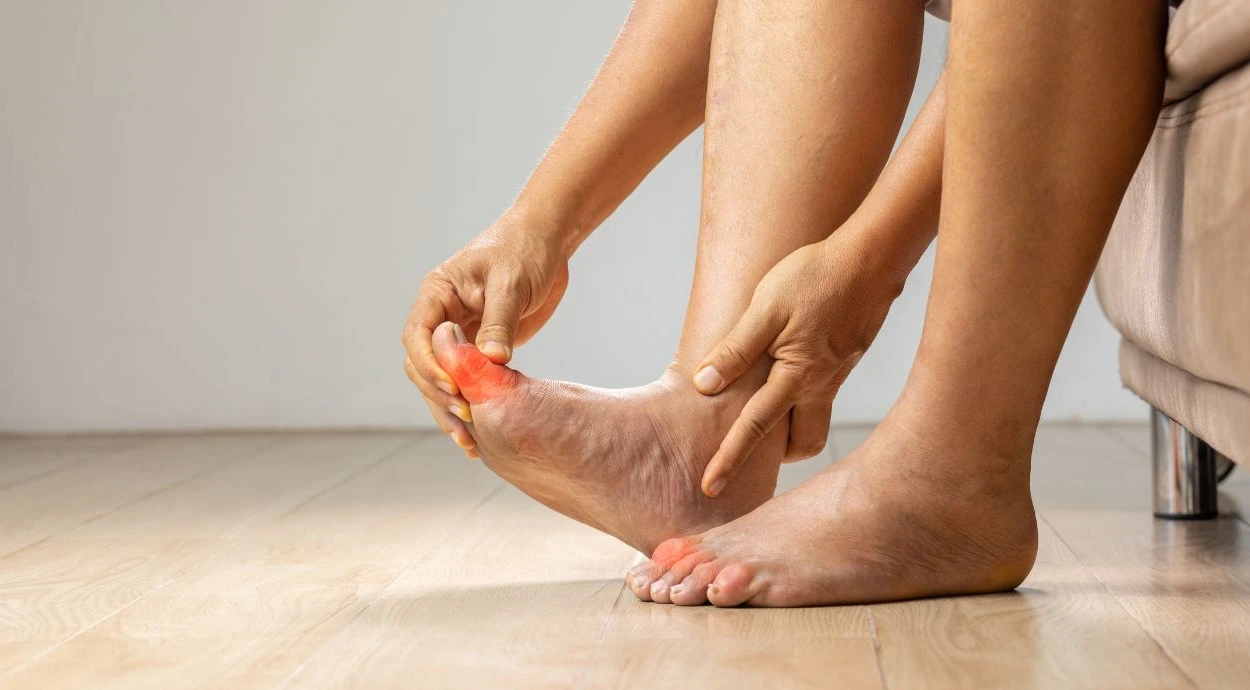
Most often, gout manifests itself specifically on the legs. The classic variant is the involvement of the joint of the big toe. In this case, it swells sharply, the skin over it becomes red, and it becomes hot to the touch.
During an attack, the following may be observed:
-
a sharp increase in the joint in volume;
-
pronounced swelling;
-
redness or shine of the skin;
-
severe pain when touched or when bearing weight on the leg;
-
limitation of mobility.
Over time, with repeated attacks, tophi may appear — dense subcutaneous deposits of uric acid. They sometimes form in the area of the foot, the ankle joint, or around the toes.
What Gout Looks Like on the Hands
.jpg)
Gout on the hands occurs less often than on the legs, but it may also arise, especially with a long course of the disease. Most often, the finger joints, the wrist, or the elbow joint are affected.
Externally, this may manifest itself by the following changes:
-
swelling in the joint area;
-
redness or darkening of the skin;
-
an increase in volume;
-
the appearance of dense nodules under the skin (tophi);
-
limitation of movements of the fingers or hand.
Sometimes tophi may gradually increase. They usually have the appearance of small dense formations under the skin that contain urate crystals.
Can Gout Be Treated
Gout belongs to chronic diseases associated with metabolic disorders. It is usually impossible to completely eliminate the body's tendency toward an increased level of uric acid; however, the course of the disease can be controlled. With the correct approach, it is possible to reduce the frequency of attacks, weaken the inflammatory process, and prevent joint damage.
The main goal of therapy is to normalize the level of uric acid in the body and prevent new exacerbations. That is why the treatment of gout usually includes a set of measures: drug therapy, dietary correction, lifestyle changes, and control of concomitant diseases.
An important role is played by regular monitoring of the state of health and adherence to the doctor's recommendations. With timely treatment and control of risk factors, many patients may have no attacks for a long time and lead a usual lifestyle.
What to Do in Case of Gout
If symptoms characteristic of gout appear — sharp pain in the joint, swelling, redness, or increased sensitivity to touch — it is important to respond to these manifestations correctly. First of all, the load on the affected area should be reduced and factors that may intensify inflammation should be avoided.
In case of repeated attacks or prolonged discomfort, it is not worth postponing a visit to the doctor. Gout requires control of the uric acid level and the correct approach to treatment, so it is important to establish the diagnosis in time and receive the recommendations of a specialist.
How to Relieve Gout Pain at Home
During a gout attack, the pain may be very intense, so it is important to reduce inflammation and the load on the joint. At home, the following steps can be taken:
-
ensure rest for the affected joint — if possible, do not step on the leg or do not strain the arm;
-
raise the limb slightly above body level to reduce swelling;
-
apply a cold compress for 10–15 minutes several times a day;
-
take a pain reliever or anti-inflammatory medication if there are no contraindications;
-
drink a sufficient amount of water to maintain water balance;
-
temporarily отказаться from alcohol and products with a high purine content.
Such measures may temporarily relieve the condition during an attack. However, to confirm the diagnosis and select treatment, it is necessary to consult a doctor.
Which Doctor to Consult for Gout
If gout is suspected, it is worth consulting a specialist who deals with joint diseases and metabolic disorders. The relevant specialist in this case is a rheumatologist.
During the consultation, the doctor assesses the symptoms, examines the joints, and, if necessary, prescribes additional examinations. This makes it possible to distinguish gout from other diseases and choose the correct treatment tactics.
How to Treat Gout
The treatment of gout is aimed at reducing inflammation during an attack and controlling the level of uric acid in the body. This helps reduce the frequency of exacerbations and prevent gradual joint damage.
Depending on the patient's condition, the doctor may recommend:
-
anti-inflammatory drugs to reduce pain and swelling during an attack;
-
medications that lower the level of uric acid in the blood;
-
dietary correction with restriction of foods rich in purines;
-
a sufficient drinking regimen for better excretion of uric acid;
-
control of body weight and metabolism.
An increased level of uric acid may affect the function of the urinary system, and with a long course of the disease, urolithiasis sometimes develops. Therefore, the treatment of gout often involves not only controlling inflammation in the joints, but also maintaining a normal level of uric acid in the body.
The treatment plan is always selected individually. It depends on the frequency of attacks, the level of uric acid, the presence of complications, and concomitant diseases. Therefore, to control gout, it is important not only to relieve pain during an exacerbation, but also to regularly be monitored by a doctor and follow the doctor's recommendations.
How to Get Rid of Gout Forever
Gout belongs to chronic diseases, so it is impossible to eliminate it completely. At the same time, this does not mean that attacks will recur constantly or that the condition will necessarily worsen.
Regular control of the uric acid level, attention to the diet, and timely treatment help keep the course of the disease under control and maintain a normal quality of life.
The information in the article is provided for informational purposes and is not a guide to self-diagnosis and treatment. If symptoms of the disease appear, you should consult a doctor.
Sources: