The information in this article is provided for informational purposes only and is not a guide to self-diagnosis or self-treatment. If symptoms of the disease appear, you should consult a doctor.
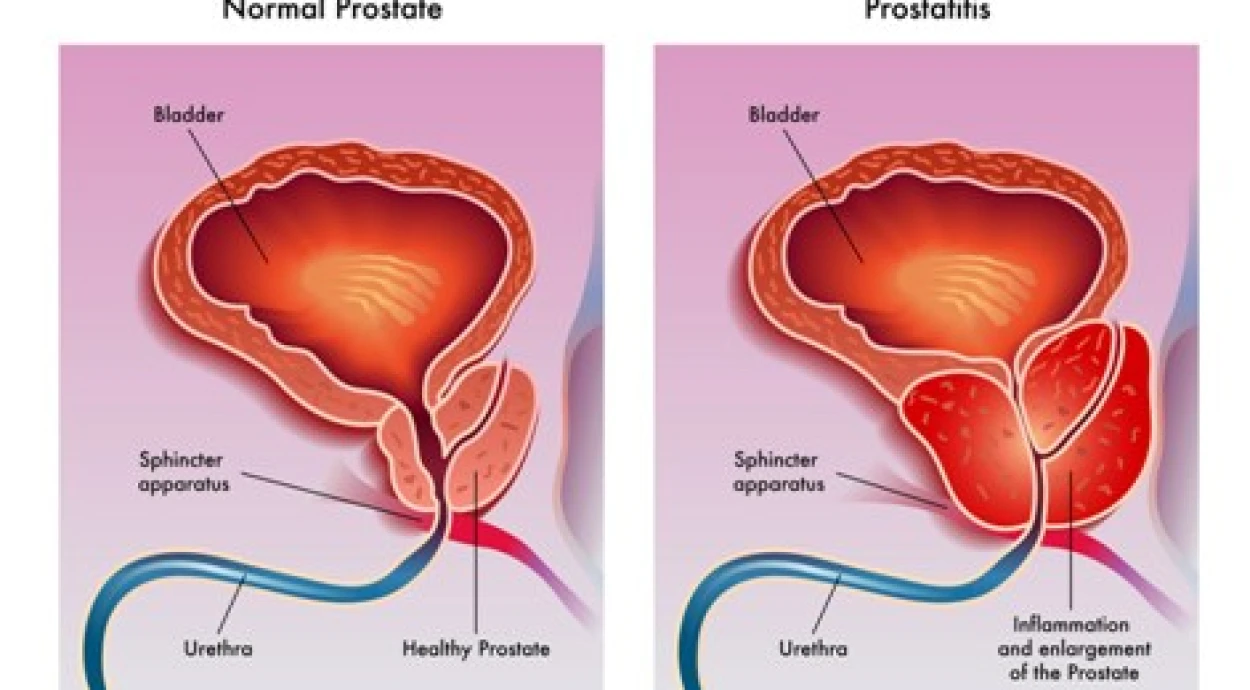
Prostatitis is an acute or chronic inflammation of the prostate gland. It ranks third among all urological pathologies in men. Prostatitis can develop only in men — the female body does not have a prostate gland. However, a man suffering from prostatitis may pose a certain risk to a woman who is his sexual partner.
Most often, men between the ages of 30 and 50 suffer from this disease. Specialists associate this with changes in lifestyle: sedentary work, low physical activity, unbalanced diet, and other lifestyle factors. However, these are only risk factors — the causes are bacterial infections, developmental anomalies of the reproductive organs, injuries, endocrine and autoimmune diseases, and other pathologies.
Prostatitis is dangerous because it can remain asymptomatic for a long time. In addition, the symptoms of prostatitis are nonspecific, and a man may not recognize them for a long time, attributing them to stress or general fatigue. In the absence of treatment, prostatitis can progress, become chronic, and provoke the development of complications.
Symptoms of prostatitis may include frequent urination, weak urine stream, decreased libido and rapid ejaculation, discomfort in the genital area, and blood in the urine.
Consequences of prostatitis in men
The prostate is an external secretion gland located in men beneath the urinary bladder. It plays an important role in certain functions of the genitourinary system, including ejaculation, urination, and protection against infections.
Inflammation of the prostate gland is called prostatitis. It initially develops in an acute form — symptoms are more pronounced. If treatment is not provided at this stage, prostatitis can turn into a chronic form, which is characterized by a sluggish and often asymptomatic course of the disease.
Chronic prostatitis can cause the following complications:
-
sexual dysfunction;
-
urination disorders (frequent urges, weak stream, etc.);
-
prostate adenoma — benign enlargement of prostate tissue;
-
vesiculitis — inflammation of the seminal vesicles;
-
prostate abscess;
-
cysts in the prostate gland;
-
infertility — develops when the infection spreads to the ejaculatory ducts and seminal vesicles.
How prostatitis affects sexual life
According to various studies, approximately 30% of men with chronic prostatitis experience problems in their intimate life. The disease leads to decreased potency, premature ejaculation, and erectile dysfunction. It can also cause pain during and after sexual intercourse. All of this may result in loss of interest in intimacy, tension, and misunderstandings in family life.
Prostatitis can also cause fertility problems and, as a result, infertility.
How dangerous is a man with prostatitis for a woman’s health?
Depending on the cause of the disease, prostatitis can be infectious or non-infectious. The latter is not transmitted sexually and does not pose a danger to a woman.
In the case of infectious prostatitis, the infection that caused the disease can enter the woman’s body during sexual intercourse. This may lead to diseases of the genitourinary system. This risk can be prevented by using barrier protection methods.
With chronic prostatitis, a man may not notice symptoms for a long time and may not seek medical help. However, if the disease is infectious in nature, infection of the sexual partner is possible even in the absence of obvious symptoms.
What should a woman do if her partner has prostatitis?
If a man has prostatitis, it is recommended that a woman protect her health by engaging in sexual intercourse only with the use of barrier contraceptives. This significantly reduces the risk of infection transmission.
The development of prostatitis is often associated with stress and psycho-emotional tension. Many men are embarrassed by this problem, avoid visiting a doctor, and hope that the issue will resolve on its own. In this situation, the woman’s role is to gently explain to her partner the danger of the disease and the importance of proper treatment.
Methods of treating prostatitis vary depending on the type and stage of the disease. If it is acute, treatment usually takes several weeks. Specialists prescribe medication therapy and physiotherapy. Treatment of chronic prostatitis is longer, so it is important to consult a urologist at the first signs of the disease.