Contents:
- What is urticaria
- What urticaria looks like in adults and children
- What causes urticaria
- Is urticaria contagious
- How long does urticaria last
- How to treat urticaria
- What you can eat with urticaria
- When you should see a doctor
The sudden appearance of itchy rashes on the skin that resemble a nettle burn is a characteristic sign of urticaria. Such elements can change shape and size, merge with each other, and disappear without a trace within a few hours. This very transience often misleads patients and makes it harder to understand the cause of the condition.
Urticaria is not an independent infectious disease, but a manifestation of the body's reaction to a certain internal or external factor. In different cases, the triggering mechanism may be allergens, medications, infections, or physical factors, so the approach to treatment should always be individualized.
In this article, we will consider what urticaria is, what it looks like in adults and children, what causes it, and which therapy methods are used depending on the cause of its development.
What is urticaria
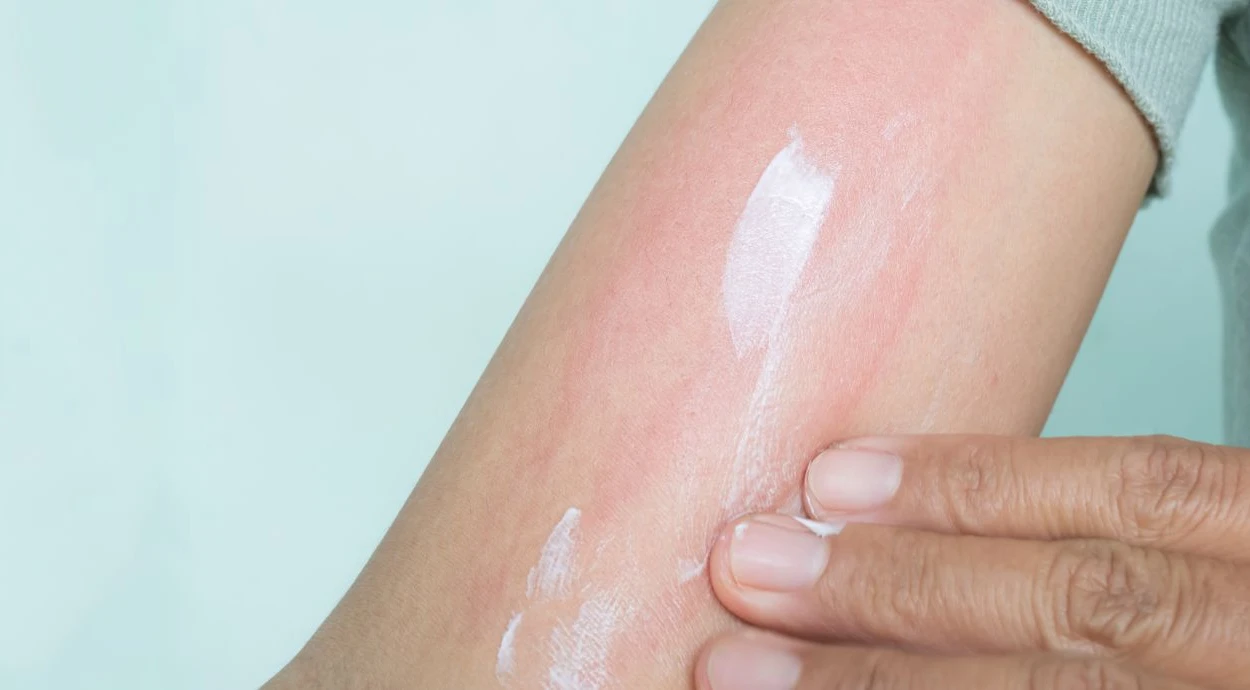
Urticaria is a skin reaction that manifests as the appearance of itchy wheals of various sizes. They may be pink or reddish, slightly raised above the surface of the skin, and cause intense itching, burning, or a feeling of discomfort.
The main feature of urticaria is its sudden onset and variability. The rash can appear literally within a few minutes, change shape, merge into larger areas, and then disappear without a trace. However, this does not always mean that the reaction has ended: new elements may occur again as long as the body continues to react to a certain factor.
Urticaria is not an infectious disease and is not transmitted from person to person. It is an individual response of the body to an external or internal irritant. Sometimes the cause can be identified quickly, but in some cases additional examination is needed.
What urticaria looks like in adults and children
.jpg)
Urticaria has characteristic external manifestations that help distinguish it from other types of rashes. The most typical signs include:
- wheals raised above the skin surface, of various sizes;
- pink or reddish color of the elements with a paler center;
- pronounced itching, sometimes a burning sensation;
- rapid changes in the shape and size of the rash;
- merging of individual wheals into larger areas;
- disappearance of elements without scarring or pigmentation.
In adults, the rash is more often localized on the trunk, limbs, and sometimes on the face. The elements may appear and disappear within a day, but the overall period of rashes may last longer due to the appearance of new wheals.
In children, urticaria often develops faster and manifests with more intense itching. Swelling of the eyelids, lips, or cheeks occurs more often. The child may be restless, tearful, complain of severe itching, or refuse food due to discomfort.
Unlike infectious rashes, urticaria does not involve persistent spots, scaling, or crusts, and the general condition usually remains satisfactory if swelling does not develop. It is the transience and “migration” of the rash that is its most characteristic feature.
What causes urticaria
Urticaria occurs when the body overreacts to a certain irritant. In response to this factor, immune system cells are activated, which leads to the release of substances that cause swelling and itching of the skin. The provoking factor may be external exposure as well as internal processes in the body.
Sometimes the connection with a trigger is obvious—for example, after eating a new product or taking a medication. In other cases, the reaction occurs without an apparent cause, which complicates the search for the source of the problem and requires a more detailed examination.
Main causes of urticaria in adults
In adult patients, the following causes are most often identified:
- food allergens—nuts, seafood, eggs, strawberries, chocolate;
- medications—antibiotics, pain relievers, nonsteroidal anti-inflammatory drugs;
- infectious processes—viral or bacterial diseases;
- physical factors—cold, heat, sunlight, pressure, or friction;
- chronic stress and pronounced emotional strain;
- autoimmune or endocrine disorders.
In some patients, urticaria may have a chronic course without a clearly defined trigger. In such cases, it is important to rule out systemic diseases and thyroid dysfunction.
What can cause urticaria in children
In children, the mechanism of development is similar, but the list of provoking factors has its own characteristics. Most often, the reaction is caused by:
- new foods in the diet or dietary violations;
- viral infections, in particular respiratory diseases;
- insect bites;
- a reaction to medications;
- overheating, sweating, or sudden temperature changes.
A child's body reacts more actively to irritants, so the rash may appear faster and be more pronounced. In most cases, urticaria in children is acute and resolves after elimination of the provoking factor.
Is urticaria contagious
Urticaria is not contagious and is not transmitted from person to person. It is impossible to “catch” it through touch, shared dishes, bedding, or being in the same room. Urticaria is an individual reaction of the body to a certain irritant, not an infectious process.
At the same time, sometimes urticaria develops against the background of a viral infection. In that case, it is the viral illness that can be transmitted, but not the skin reaction as such. That is, another person may become ill with an infection, however this does not mean that they will necessarily develop urticaria. That is why the answer to the question of whether urticaria is transmitted is unequivocal: no, it is not a contagious condition.
How long does urticaria last
The duration of urticaria depends on its form and the cause of its occurrence. In some cases, the rash resolves within a few days; in others, it may recur or persist for a long time.
Acute urticaria usually lasts up to six weeks. Most often it is associated with a specific trigger—a food product, medications, an infection, or another factor. After eliminating the cause and properly selected therapy, symptoms gradually disappear and do not recur.
If the rash persists for more than six weeks or regularly returns without an obvious provoking factor, a chronic form is diagnosed. In such a situation, periods of improvement may alternate with exacerbations, and the process itself requires a more detailed examination.
It is important to understand that even if individual wheals disappear within a few hours, the overall episode of urticaria may last longer due to the appearance of new rashes. That is why, with recurrent or prolonged symptoms, you should not postpone a doctor's consultation.
How to treat urticaria
The approach to treating urticaria depends on the form of the disease, the frequency of exacerbations, and the intensity of symptoms. The main tasks of therapy are to reduce itching and swelling, stop the appearance of new rashes, and, if possible, eliminate the factor that provokes the reaction.
The first stage is identifying the trigger. This may be a food product, a medication, physical exposure, or an infectious process. If it is difficult to determine the cause on your own or the rash recurs, a doctor's consultation is necessary to assess the clinical picture, determine the scope of examinations, and form an individual action plan.
General principles of treatment include:
- eliminating or limiting contact with the likely irritant;
- taking medications to control itching and swelling;
- correcting concomitant conditions if they sustain the reaction;
- dynamic follow-up in prolonged or chronic cases.
In the acute form, symptoms usually respond well to therapy. However, if the rash lasts a long time or has a wave-like course, treatment may require stepwise selection of medications and regular monitoring of the condition.
How to treat urticaria
When urticaria occurs, how to treat it is one of the first questions that concerns the patient. The choice of therapy depends on the cause of the reaction, the duration of symptoms, and their severity. The basis of therapy is modern antihistamines, which reduce itching, redness, and swelling of the skin. They are used in a course at the dosage recommended by the doctor, and in most cases allow symptoms to be controlled.
In cases where antihistamines do not provide sufficient control of symptoms, the doctor may prescribe a short course of glucocorticosteroids to reduce pronounced swelling and inflammation. In chronic urticaria that does not respond to standard therapy, medications that affect the immune response may be used, including biologic therapy or immunomodulatory agents. The specific regimen of urticaria treatment is determined individually after assessment of the clinical picture and examination results.
How to treat urticaria in children
.jpg)
Treating urticaria in children requires caution and clear medical recommendations. Medication dosages are calculated according to age and body weight, and the choice of agent depends on the severity of symptoms and the child's overall condition.
In addition to medication therapy, it is important to properly organize the home regimen during an exacerbation. Parents are advised to:
- ensure a cool temperature in the room, as overheating increases itching;
- dress the child in light clothing made of natural fabrics that does not rub the skin;
- avoid hot baths—preference should be given to a short warm shower;
- not allow scratching of the rash to prevent irritation and infection of the skin;
- temporarily exclude new foods from the diet if a food trigger is suspected;
- monitor what exactly precedes the appearance of the rash (food, medications, physical exertion, contact with animals, etc.).
Immediate medical care is needed if swelling of the lips, tongue, eyelids, or difficulty breathing appears. Such symptoms may indicate the development of angioedema.
If episodes recur or last longer than a few days without improvement, the child should be examined by a pediatric dermatologist to rule out other dermatological diseases and determine further treatment tactics.
Timely consultation with a specialist and adherence to recommendations allow the child's condition to be stabilized quickly and reduce the risk of recurrent reactions.
What you can eat with urticaria
Nutrition in urticaria should be gentle, especially during an exacerbation. Even if the cause of the rash is not directly related to food, some foods can increase itching and sustain the inflammatory reaction. That is why doctors often recommend temporarily following a hypoallergenic diet.
During the period of rashes, the following are usually allowed:
- water-based cereals (buckwheat, rice, oatmeal);
- boiled or baked lean meat (turkey, chicken, rabbit);
- stewed or boiled light-colored vegetables;
- fermented dairy products without additives;
- baked apples, pears;
- a sufficient amount of clean water.
It is temporarily advisable to limit or exclude foods that more often provoke reactions: citrus fruits, chocolate, nuts, seafood, smoked foods, spicy dishes, fast food, products with colorants and preservatives.
It is important not to introduce several new foods at once, especially for children. If a food trigger is suspected, it is advisable to keep a food diary and record the body's reaction.
Dietary restrictions should not be excessive or prolonged without medical grounds. After the condition stabilizes, the list of foods is gradually expanded.
When you should see a doctor
In most cases, urticaria does not pose a threat to life; however, there are situations when medical care is mandatory. Delays can lead to complications or a prolonged course of the disease.
You should seek help immediately if the following appear:
- swelling of the lips, tongue, eyelids, or throat;
- difficulty breathing, hoarseness;
- sudden weakness, dizziness;
- decreased blood pressure;
- rapid spread of swelling throughout the body.
Such symptoms may indicate the development of angioedema and require urgent medical assessment.
A scheduled allergist consultation is necessary in cases if:
- the rash does not disappear within a few days;
- episodes recur without an obvious cause;
- symptoms persist for more than six weeks;
- urticaria occurred in a young child;
- treatment does not produce the expected effect.
Timely consultation with a specialist makes it possible to determine the cause of the reaction, adjust therapy, and reduce the risk of recurrent exacerbations.
The information in the article is provided for ознакомления and is not a guide to самостоятельной diagnosis and treatment. If symptoms of the disease appear, you should consult a doctor.
Sources: