


The information in this article is provided for informational purposes only and is not a guide to self-diagnosis or treatment. If symptoms of a disease appear, you should consult a doctor.
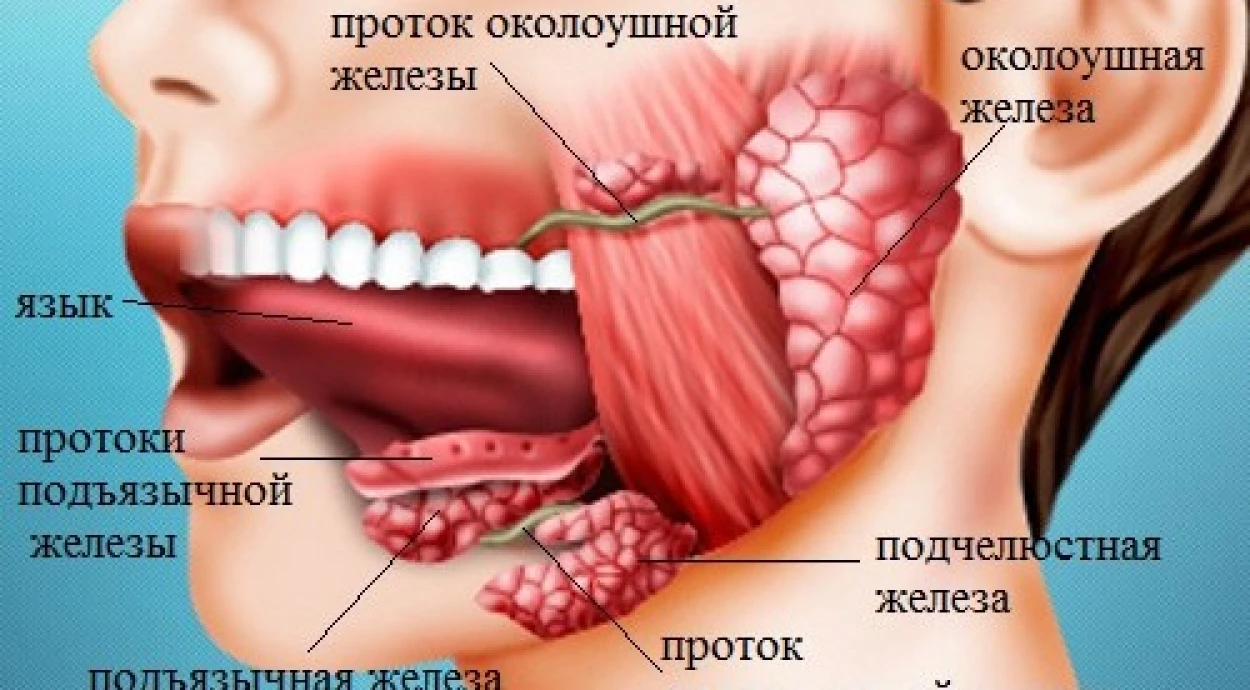
Salivary glands are responsible for producing and secreting saliva into the oral cavity—a transparent, colorless fluid that moistens and cleanses the mouth. Saliva is important for digestion (it contains enzymes), taste perception, and protection of the teeth from microorganisms (saliva has bactericidal properties).
Salivary glands can be large—there are three symmetrical pairs: parotid, sublingual, and submandibular glands. In addition to them, there are numerous small salivary glands located in the mucous membranes of the cheeks, lips, and palate.
Inflammatory and volumetric processes of varying intensity can occur in the salivary glands, and in some of these cases, surgical treatment is the only effective option.
INDICATIONS FOR REMOVAL OF SALIVARY GLANDS
A salivary gland is subject to removal in the following cases:
-
duct obstruction;
-
cyst formation;
-
development of benign tumors;
-
salivary gland cancer.
Obstruction of the salivary gland duct occurs when calcium deposits in the duct form an adhesion (“stone”) that prevents the outflow of the gland’s secretion. As a result, the patient feels pain in the area of the inflamed gland, and its size increases. A secondary infection may join the inflammatory process.
A cyst is a capsule filled with fluid content that develops at the site of a salivary gland. The manifestations of a cyst are similar to those of a blocked salivary gland duct. A characteristic feature of salivary gland cysts is their tendency toward progressive growth.
Benign tumors, usually an adenoma of the salivary gland, also tend to grow and can reach such large sizes that they deform the face’s contour, leading to noticeable cosmetic defects in appearance. A growing tumor compresses surrounding tissues, which may cause functional problems.
Cancer (adenocarcinoma) of the salivary gland is very dangerous to health because it tends to grow rapidly, invade adjacent organs, and produce metastases.
SURGICAL TREATMENT OF SALIVARY GLAND DISEASES
In cases of salivary gland obstruction by calculi, endoscopic removal of the stone and preservation of the gland may be possible in some instances. This procedure does not require hospitalization and is performed under local anesthesia. Most often, duct blockage by a stone occurs in the submandibular salivary gland.
However, in most cases, extraction of the calculus is impractical, and therefore either part of the gland (partial parotidectomy) or the entire gland along with the duct, adjacent tissues, and nerves (radical parotidectomy, usually performed in cases of cancerous tumors) is removed. The operation is performed under general anesthesia.
Removal of the submandibular and sublingual salivary glands takes less than an hour, while removal of the parotid gland takes from one to two hours. This is because removal of the parotid gland, through which the facial nerve passes, is a more complex operation. Damage to the facial nerve, or more precisely its lower branch located in the surgical area, is unacceptable, as it may lead to impaired innervation of part of the face.
If the gland with a tumor is being removed, surgeons try to excise the surrounding tissues as well to ensure that no tumor cells remain that could lead to recurrence. The tissue obtained as a result of removal is sent to the laboratory for histological analysis. This allows determination of whether the tumor was benign or malignant.
REHABILITATION AFTER SALIVARY GLAND REMOVAL
Patients after removal of a salivary gland may stay in the hospital for one day. To relieve postoperative pain, painkillers are prescribed in the form of tablets, intramuscular, or intravenous injections. After surgery, the patient should rest, avoid physical exertion, and refrain from visiting a sauna or bathhouse for two weeks. Following these recommendations promotes rapid wound healing.
If the facial nerve was affected during surgery, the patient may experience “drooping” of the corner of the mouth on the side of the removed gland. Regular exercises over several weeks help restore innervation, although in some cases paresis remains.
If the surgeon determines during the operation that the tumor has affected the facial nerve, complete removal of the nerve is performed to prevent further spread of the malignant tumor. In such patients, paralysis of part of the facial muscles remains.
Patients who have undergone removal of the parotid salivary gland may experience temporary numbness of the auricle on the side of the removed gland. In such cases, it is important to protect the ear from cold to avoid frostbite.
Surgical removal of one of the salivary glands does not cause a noticeable feeling of dryness in the mouth.
At the Oxford Medical clinic, operations to remove salivary glands are performed by qualified maxillofacial surgeons in modern operating rooms. Rehabilitation takes place in comfortable wards designed for one or two patients.
Sources:
US National Library of Medicine
Scielo
NCBI