The information in the article is provided for informational purposes and is not a guide to self-diagnosis or treatment. If symptoms of illness appear, you should consult a doctor.
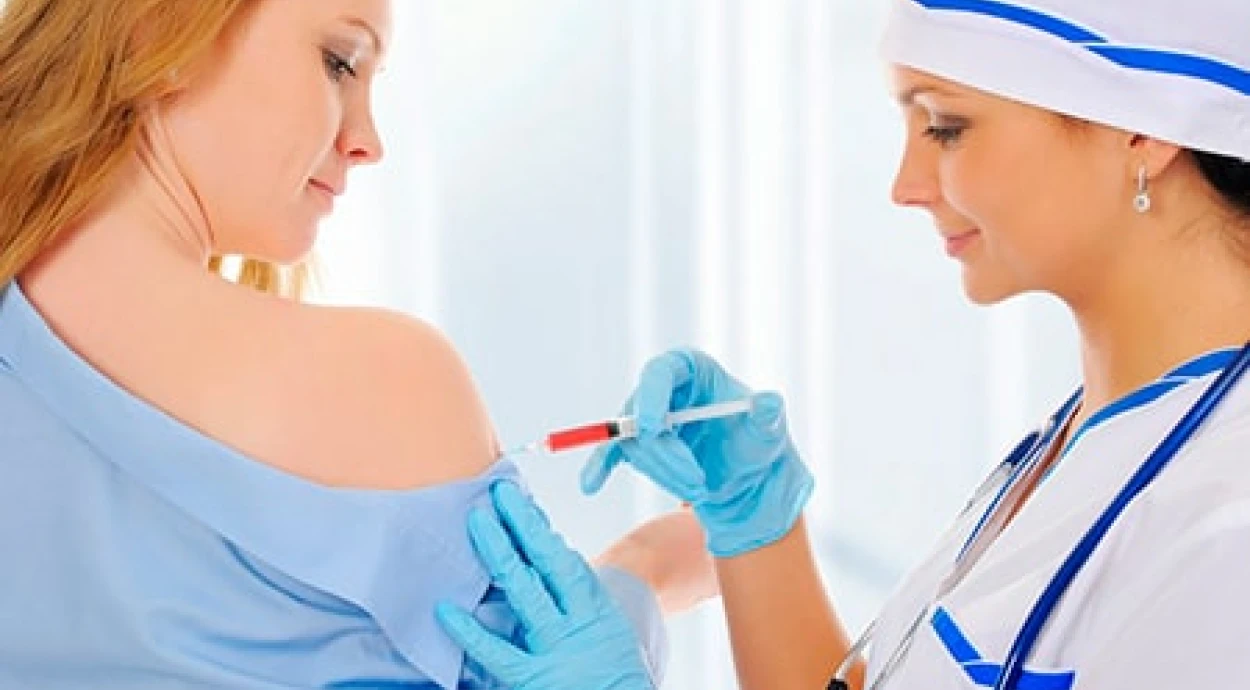
Vaccination is the most effective way to protect against dangerous infections. Thanks to it, immunity is formed to the pathogens of various diseases. When in contact with a pathogenic microorganism, a vaccinated person does not become infected (in more than 90% of cases) or experiences the illness in a mild form and without complications.
In most countries, as well as in Ukraine, there is a mandatory vaccination program. Basic vaccinations are given to children from birth to 18 years. But some need to be repeated in adulthood, as immunity weakens over time.
How does vaccination work?
The development of an infectious disease occurs as a result of the penetration of pathogenic (disease-causing) microorganisms – bacteria and viruses – into the body. In response to the appearance of a pathogen, the immune system is activated, beginning the production of antibodies (immunoglobulins), which neutralize the infectious agent.
Antibodies are aimed at antigens – certain substances contained in a bacterial cell or virus. By interacting with the antigen, antibodies independently neutralize the pathogen or activate other components of immunity.
The antibodies produced by the body belong to different classes. Some of them are produced only in the acute phase of the disease, while others circulate in the blood for a longer time, providing long-term protection. When the infection re-enters the body, such antibodies quickly destroy the "familiar" pathogens, preventing the disease from developing. In most cases, these processes occur unnoticed by the person.
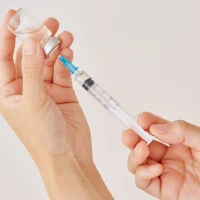
During vaccination, immunity is formed in the same way. A small amount of previously weakened bacteria or viruses, their particles, or toxins is introduced into the body. They do not cause the development of the disease but provoke an immune system response and the formation of immunity against the illness. When the pathogen enters the vaccinated body, it is quickly suppressed by the body's defenses.
What diseases do vaccinations protect against?
In Ukraine, vaccination against the following diseases is mandatory:
-
tuberculosis;
-
hepatitis B;
-
poliomyelitis;
-
measles;
-
rubella;
-
mumps;
-
Haemophilus influenzae infection;
-
pertussis;
-
diphtheria;
-
tetanus.
These vaccinations are given to children according to the state or individual schedule.
Additionally, vaccination can be done against influenza, pneumococcal, rotavirus and meningococcal infections, chickenpox and shingles (these diseases are caused by the same virus), hepatitis A, tick-borne encephalitis, diphtheria, papillomavirus, and some other diseases. Many of these vaccinations are given in adulthood. In particular, influenza vaccination is recommended annually, since the virus mutates quickly.
Types of vaccines
There are several types of vaccines. They differ in the "material" used. The most common types are:
-
"live" – live strains of viruses or bacteria are added, which are previously weakened;
-
inactivated – based on microparticles of pathogens grown on a special culture and deactivated by thermal exposure or with the help of a cellular poison;
-
toxoid – based on weakened toxins that form in the body during infection;
-
subunit – contains certain components of pathogenic microorganisms or viruses;
-
conjugate – contains bacterial components whose antigens are coated with polysaccharides.
Children's vaccination schedule
According to the state vaccination schedule, the first vaccinations are given in the maternity hospital. Then, up to 1.5 years, another 6 are given. After that, there is a break until 6 years of age, when revaccination begins.
Official vaccination schedule for children up to 18 years:
If necessary, the pediatrician will create an individual schedule for the child.
When should adults be vaccinated?
If all vaccinations are given in childhood, a person develops lifelong immunity to most infections. But against some diseases it protects for only 1, 5, or 10 years. In particular, every 10 years the mandatory vaccination against diphtheria and tetanus (ADS) is repeated. The first time it is given to an adult at the age of 26. It is also recommended to vaccinate against pneumococcal infection every 5 years. Influenza vaccination can be done annually, usually in the first half of autumn, before the start of seasonal illnesses.
If some vaccinations were missed in childhood, they can be done in adulthood. To do this, you need to consult a therapist or family doctor, who will create an individual schedule.
If information about past vaccinations has not been preserved, the presence of immunity can be checked with a blood test for antibodies.
Vaccination may also be required before traveling abroad. When planning a trip, you need to check which diseases are common in the chosen country and get the appropriate vaccinations. Often, the list of mandatory vaccinations is indicated on the website of the Ministry of Foreign Affairs of the state. Vaccinations should be done in advance. Immunity to different diseases is formed from 2 to 8 weeks.
Is vaccination safe?
All vaccines are carefully tested for several years before being released to the mass market. Their effectiveness and safety are first checked in laboratory conditions, then in clinical trials with animals, and later with humans.
Ukraine conducts centralized procurement of vaccines, so the Ministry of Health guarantees their safety. All drugs undergo detailed verification and certification.
According to WHO, vaccinations save 2–3 million children's lives annually. At the same time, another 1.5 million could be saved by increasing vaccination coverage.
What complications can vaccinations cause?
Complications from vaccines are rare. They may be related to individual characteristics of the body, low quality of the vaccine, or non-compliance with storage and vaccination rules.
"Oxford Medical" uses only certified vaccines and strictly controls compliance with all transportation and storage rules, the so-called cold chain. The clinic uses special containers for transportation and separate refrigerators and freezers for storing different vaccines, where the temperature is always monitored.
Most vaccines must be stored at a temperature from 0 to +8ºC. But some, for example against measles and mumps, require lower temperatures – from -25 to -15ºC. Compliance with the light regime is also important. Vaccines are stored in darkness.
After vaccination, the following complications are possible: allergic reaction, anaphylactic shock, infection development, seizures, damage to internal organs, suppuration at the injection site, and others. However, mild redness at the injection site or a slight increase in temperature is a natural body reaction during the formation of the immune response, not a complication.
Acute conditions that may threaten life usually occur in the first minutes or hours. This applies, in particular, to anaphylactic shock. Therefore, after vaccination, a child or adult remains in the clinic for at least an hour. After that, the doctor conducts a repeated examination and, in the absence of side effects, lets the patient go home.
What reaction can the body have to vaccination?
After vaccination, some patients experience mild malaise.
The following symptoms are considered normal:
-
slight redness, swelling, and pain at the injection site;
-
slight increase in temperature;
-
weakness, drowsiness, loss of appetite;
-
isolated rash spots.
The listed symptoms may appear not immediately, but after 2–3 days when inactivated vaccines are used or after 5–15 days when "live" vaccines are used.
If the condition worsens significantly, high fever, nausea, vomiting, or other symptoms appear, you should urgently consult a doctor. Often, they are not related to vaccination but are manifestations of a viral or other illness contracted later.
In which countries does Ukraine purchase vaccines?
Since 2015, vaccines for Ukraine have been purchased by UNICEF (United Nations Children's Fund). With state funds, vaccines are purchased against the 10 most dangerous diseases, vaccinations against which are mandatory.
The polio vaccine is supplied by France and Belgium, the tuberculosis vaccine – by Bulgaria, the hepatitis B vaccine – by South Korea, the measles, mumps, and rubella vaccine – by Belgium and the USA, and the Haemophilus influenzae, pertussis, diphtheria, and tetanus vaccines – by India. The quality of these vaccines is confirmed by the World Health Organization and the US Food and Drug Administration.
How should adults and children prepare for vaccination?
No special preparation for vaccination is needed. The main requirement is that the child or adult must be healthy for at least 2 weeks before vaccination. Acute illnesses and chronic conditions in the period of exacerbation are considered temporary contraindications.
Before vaccination, the patient is necessarily consulted by a pediatrician or therapist. In the case of chronic diseases, a consultation with a narrow specialist may also be required. Tests before this are not necessary, but they can be done if desired.
Contraindications to vaccination
Contraindications to vaccination occur in only 1% of people. They can be absolute or temporary. Absolute ones include immunological diseases (HIV and others) and oncological pathologies, as well as complications after previously given vaccinations or a strong allergic reaction.
Temporary contraindications are:
-
teething in infants;
-
acute illnesses (cold, flu, and others);
-
exacerbation of a chronic disease;
-
recent injuries or surgeries.
In these cases, vaccination is temporarily postponed. It is important to know that for most chronic diseases, vaccination is not contraindicated. They are carried out during remission, when the condition is stable.
At "Oxford Medical," both adults and children can be vaccinated. We purchase only high-quality vaccines from trusted manufacturers. Thanks to this, we can guarantee their quality and safety.
Related services:
-
Vaccination
Sources:
Ministry of Health of Ukraine
NCBI
PubMed