What should you do when moving your arm or leg causes unbearable pain, and the issue is not with the muscles but with worn-out joints? Massages, injections, shock-wave therapy — you’ve tried everything, yet there is no effect. Then it is time to consider arthroplasty.
Orthopedic traumatologist of the highest category, head of the traumatology department at the "Oxford Medical" clinic, Oleksandr Martynchuk, told Channel 24 what modern surgery is capable of.
When Joint Replacement Is Needed
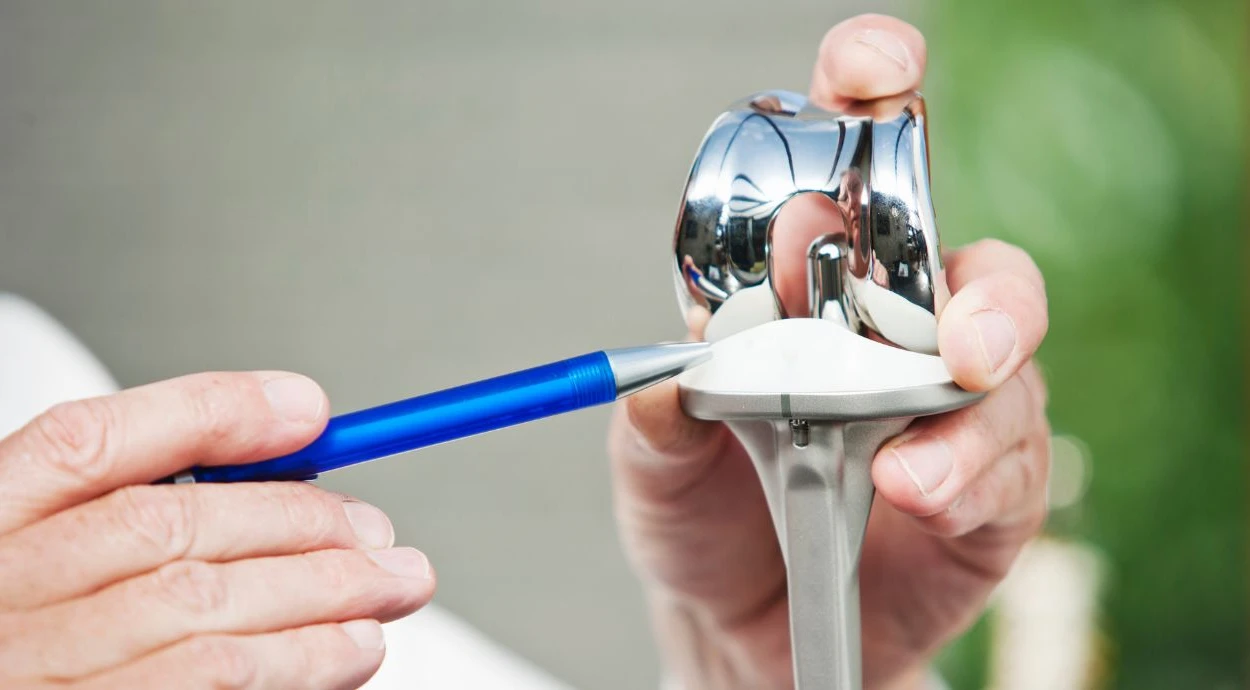
Arthroplasty (joint replacement surgery) involves replacing a damaged joint with an artificial one. Such an operation is performed only when other methods are ineffective.
With age or due to negative factors such as injuries or diseases, cartilage changes its form: it wears down, erodes — and thus a pain syndrome develops, significantly limiting movement. Therefore, the indications for arthroplasty are degenerative-dystrophic changes in the joints that cause pain.
Oleksandr Martynchuk:
"In recent years, patients with arthrosis have become significantly younger. A common cause of this is bone destruction as a result of COVID-19. During coronavirus disease, small blood vessels become thrombosed, and comprehensive bone necrosis develops. The process is rapid — in three months the joints are destroyed, leading to the need for arthroplasty even at a young age."
What is the essence of the operation?
The surgeon removes the damaged parts of the cartilage, partially with bone, and transplants artificial components in their place.
Which Joints Most Often Need Replacement
Most often, knee joints are replaced, a smaller percentage involves hip joints, and then others follow: shoulder, elbow, wrist, hand, etc.
In systemic diseases such as rheumatoid arthritis or gout, sometimes all joints are affected, but only certain ones are replaced through arthroplasty. The only indication for surgical intervention in arthrosis is persistent pain syndrome that requires constant analgesic intake.
Oleksandr Martynchuk:
"Now it is possible to replace practically any joint. Such complex operations require preliminary preparation. There are a number of contraindications. But the most important thing to understand is that after surgical intervention, you must carefully listen to your doctor and follow all recommendations. After all, endoprostheses are artificial components, not a living organism."
According to the doctor, any material has a certain working lifespan. Usually, prostheses are designed for 15–20 years, but no one can predict how the bone will react to the endoprosthesis or how existing chronic diseases — of the kidneys, liver, or endocrine system — will affect it over time.
Types of Joint Prostheses
Depending on whether the prostheses are being installed for the first time or for the second time, they are divided into primary fixation and revision (secondary). Revision prostheses are more difficult to implant because, to replace or adjust the old prosthesis, it must first be removed, the bone destroyed and cleaned, and then a new component selected for size, considering material compatibility. If the patient lacks bone tissue, the issue of attaching the artificial joint must be resolved.
Accordingly, prostheses differ by fixation method — mechanical or cement. In the first case (press-fit cementless fixation), the prosthesis is driven into the femur, then the head is placed on the femoral component, an insert is made into the hip component, thereby eliminating artificial dislocation. The result: the person begins to walk either on the day of the operation or the next day. Press-fit is usually used for younger patients with strong bone tissue.
The cement fixation method is more suitable for elderly people with osteoporosis. Mechanical placement of the prosthesis may cause a fracture of the hip socket or femur. Then the artificial joint is held in place with cement, which creates a new bed for the components.
By size of replacement, prostheses can be partial or total (a completely artificial joint). By material — metal (titanium, cobalt-chromium alloys), ceramic, or combined.
What Examinations Are Necessary to Determine the Prosthesis
There are several main examinations:
-
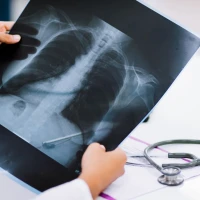
First of all, X-ray evaluation — artificial components are selected based on images. Usually, their size is determined with 90% accuracy. A 10% error occurs if the focal length is not set radiologically or if the patient provides an image made on a small film.
-
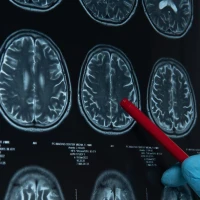
CT or MRI also helps determine the shape and size of the artificial joint.
-
To determine the fixation method, special coefficients are calculated regarding the presence of osteoporosis.
-
If there are doubts about bone density, a type of X-ray — densitometry — is performed. This is the only adequate study that shows whether osteoporosis is present.
Cost of Joint Replacement
Joint replacement is an expensive surgery. If we are talking about large joints (knee, hip), the price can range from 70 to 200 thousand hryvnias, depending on the type of prosthesis, complexity of the surgery, medical institution, and city.
However, there is a Ministry of Health program in the country that annually purchases and provides free endoprostheses. For this, you need to provide copies of your passport, identification code, an extract from the CNAP about place of registration, and an electronic referral from a family doctor for consultation with the traumatology department that will perform the arthroplasty. Within a year to a year and a half, the person receives the endoprosthesis. In Kyiv, there is an additional program for city residents that supports and strengthens the ministry’s program.
But if aseptic necrosis develops, severe pain arises. This disease puts a person on crutches within just a few months. Then it is impossible to wait for your turn.
Who Cannot Have Joint Replacement
There are absolute and relative contraindications for arthroplasty. Absolute contraindications strictly prohibit such surgical intervention. These include:
-
Severe cardiovascular pathology.
-
Severe liver failure.
-
Renal failure.
-
Skin damage, wounds, chronic ulcers that do not heal for a long time.
Relative contraindications are reversible conditions of the body. For example, at the time of examination, a person has a stomach ulcer. First, the ulcer or erosion must be treated to complete healing, otherwise, the pathology may cause postoperative gastrointestinal bleeding and significantly complicate the life of both patient and doctors.
The same applies to vascular thrombosis — you need to consult a vascular surgeon in advance, perform surgery if necessary, and only then proceed to arthroplasty.
In diabetes mellitus, there is a high probability of complications. Elevated sugar provides a breeding ground for active infection development in the body, so there is a risk of hematogenous spread of infection. It enters the weakest places, for example, the site of prosthesis implantation or pacemaker. Therefore, the orthopedic traumatologist advises first normalizing blood sugar, at least to 7 mmol/L, and only then scheduling surgery.
Arthroplasty is a serious surgical intervention, so the patient is carefully prepared for it in advance.
Rehabilitation and Factors Affecting Prosthesis Longevity
In each case after surgery, the traumatologist provides individual recommendations regarding lifestyle and physical activity. They advise following a certain number of movements, instruct on how to safely place the leg, what must be done, and what must be strictly avoided. The list is quite long, but these conditions ensure long-term use of the artificial joint.
Oleksandr Martynchuk:
"It must be understood that life with a prosthesis must become different. If the orthopedic surgeon’s recommendations are not followed, the prosthesis will serve only 2–3 years instead of 15–20. Therefore, the specialist explains in detail how to behave correctly so that the joint does not loosen, because replacing the prosthesis with a revision one is a rather difficult process."
As for recovery after surgery, there are patients who walk the very next day. Elderly people need assistance — rehabilitation treatment to restore muscle strength and mobility.
In certain categories, especially those with chronic diseases or excess weight, the course of recovery is much harder, and rehabilitation is more difficult.
Orthopedists note: after prosthetics, a person becomes 99% healthy, so only a small 1% remains — learning to live with the endoprosthesis. Currently, joint replacement is recognized as the world’s number one surgery in terms of effectiveness and quality.
What Is Arthroscopy and Why It Should Not Be Confused with Arthroplasty
Oleksandr Martynchuk:
"These are fundamentally different types of surgical interventions. Arthroplasty is performed as a last resort when nothing can be done with the knee, hip, or shoulder joint except replacing it."
Arthroscopy is a minimally invasive surgical intervention, including for diagnostic purposes. MRI is not always an accurate method of diagnosis: if the doctor has doubts, they recommend performing diagnostic arthroscopy.
Through small incisions, a camera is inserted intra-articularly. A capsule pumps in water to expand the joint cavity so that the specialist can freely assess its condition. If problems are detected, the orthopedist immediately performs the necessary manipulations (resection, plastic surgery) with the meniscus, ligaments, tendons, or joint membranes.
Oleksandr Martynchuk:
"During arthroscopy, the doctor works with bones indirectly. For example, in Keller’s disease, cartilage detachment occurs, so the orthopedist can fix it using this method. If detachment progresses, resection of the cartilage within healthy tissue can be performed so as not to damage it but to remove only the damaged part."
So, in simple terms: arthroscopy is the initial stage of attempting to restore joint mobility, while arthroplasty is the final one when there is no other way out.
You can read the full version of the article here: link