These symptoms are manifestations of gastroesophageal reflux disease. Almost half of the working-age population suffers from this chronic recurrent disease.
Why reflux disease occurs, how it can be mistaken for other conditions, and how to get rid of unpleasant symptoms is explained by gastroenterologist of the “Oxford Medical” clinic, Oleksandr Kovchun.
What is GERD
Translated from Latin, “gastro” means stomach, “esophagus” means esophagus, and “reflux” means the reverse throwing of hydrochloric acid into it. Thus, chemical irritation of the esophageal lining by hydrochloric acid causes such reactions as bloating, nausea, heartburn, belching, etc.
GERD is quite a common chronic disease: according to statistics, in developed countries it is detected in 45–50% of the adult population. Due to ignoring symptoms or an asymptomatic course, this condition threatens serious complications: the formation of ulcers or malignant tumors in the esophagus, as well as the development of anemia due to impaired iron absorption and bleeding.
The disease significantly affects quality of life. In addition to the above-mentioned symptoms, people may complain of poor sleep, since GERD symptoms worsen at night, chest pain, hoarseness, or a dry exhausting cough, frequent rhinitis, otitis, and even tooth decay.
Causes
The cause of unpleasant symptoms is the weakness of the lower sphincter in the esophagus, whose task is to prevent stomach contents from moving backward.
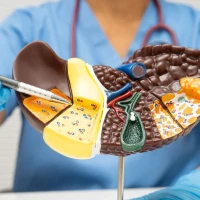
A little anatomy for better understanding of the problem. When swallowing food, saliva, or water, a wave of esophageal contractions is triggered from the mouth to the stomach. When food is pushed down, the valve between the esophagus and stomach—the lower esophageal sphincter—activates. It first opens to let food into the stomach and then closes.
If the valve does not close completely (this is controlled by the muscle, the cardiac fold, which can be compared to a spring), food or liquid residues along with hydrochloric acid can be thrown back into the esophagus. Its mucosa then becomes irritated, which leads to spasm. In other words, a protective reaction occurs—peristalsis upward: the acid acts on the mucosa like a chemical burn, causing heartburn, nausea, and bad breath.
Provocateurs
Factors leading to incomplete sphincter closure vary. For example, physiological ones such as pregnancy, when intra-abdominal pressure increases, mechanically squeezing stomach contents upward.
Other causes are any changes in the body that create conditions for the lower esophageal sphincter to open and allow hydrochloric acid into the esophagus.
The most common factors:
-
gaining excess weight;
-
overuse of carbonated drinks, both sweet and alcoholic;
-
overeating;
-
intense physical activity after eating—bending forward or lifting heavy objects;
-
smoking;
-
medications that relax the lower esophageal sphincter, increase hydrochloric acid secretion, and irritate the esophagus;
-
after surgery, when one has to remain lying down for a long time.
What Diseases Can Be Confused with GERD
The most common manifestations of the disease are gastrointestinal, such as heartburn and discomfort when swallowing. But there are atypical symptoms, so sometimes people cannot find explanations for their problems for years, for example regarding dental pathologies—severe caries, enamel damage, mucosal lesions, or oral cavity dysbiosis, bad breath.
Other atypical (extra-esophageal) symptoms:
-
otolaryngological—hoarseness, chronic pharyngitis, frequent nasal congestion, sore throat. If an ENT doctor does not find causes of chronic pathology—dysbiosis or pathogenic bacteria—he should examine the area below the vocal cords: inflammation there is a sign of reflux disease;
-
bronchopulmonary—bronchial asthma, recurrent pneumonia, chronic cough, sometimes sleep apnea;
-
cardiac—chest pain, arrhythmia.
An experienced doctor will distinguish GERD manifestations from other diseases, but self-diagnosis and self-prescription are inappropriate. Of course, there is the concept of “symptomatic treatment” if reflux disease symptoms occur rarely. For example, after dietary mistakes, heartburn appears (remember the effects of champagne drunk on New Year’s). Then it is possible to take Gaviscon or Almagel symptomatically. But when symptoms recur and appear after eating any food, this signals the need to see a specialist.
Oleksandr Kovchun: “In case of heartburn after every meal and while lying down, as well as nausea, sore throat or coughing, or nasal congestion, unpleasant sensations in the sternum, one should see a doctor to decide on endoscopic examination and further treatment tactics.”
Diagnostic Methods
The gold standard for GERD diagnosis is endoscopy. The expert notes that in the civilized world, this procedure is performed only under sedation to avoid psychological trauma and allow the endoscopist to conduct a high-quality examination.
Of course, at the first appointment the gastroenterologist first collects anamnesis: finds out the patient’s age, duration of pain and discomfort, connection of symptoms with lying position or physical exertion, food intake, whether there is shortness of breath, cough, etc. Then abdominal palpation is performed.
Additional tests the specialist prescribes:
-
complete blood count, since GERD belongs to chronic acid-dependent diseases that can affect iron absorption. Therefore, hemoglobin levels should be checked;
-
Helicobacter test, since it is a factor that increases the likelihood of disease complications;
-
patients with a risk of cardiac pathology must undergo an electrocardiogram to exclude heart pathology.
Treatment
General Recommendations:
-
First of all—dietary adherence: it is necessary to maximally limit consumption of products that stimulate acid production, reduce sphincter tone, increase intragastric pressure (see table).
-
Do not overeat, therefore eat 4–5 times a day in small portions. Do not drink coffee on an empty stomach, do not smoke before eating (better to quit this harmful habit altogether).
-
Increase protein intake, which, unlike fat, raises sphincter tone.
What not to eat/drink
-
Food that reduces sphincter tone: chocolate, mint, milk, fatty meat and fish, coffee, strong tea.
-
Food that irritates esophageal mucosa: citrus fruits, onion, garlic, tomatoes, fried foods.
-
Food that increases intragastric pressure, stimulates acid production in the stomach: beer, champagne, carbonated mineral water, legumes.
-
Very cold or hot, with many chemical additives, coarse, spicy.
What can be eaten
-
Bread, premium flour products—dried or from the previous day.
-
Low-fat meat dishes, turkey, chicken fillet, skinless fish, eggs (quail—raw, chicken—omelet, steamed).
-
Fresh non-sour sour cream, processed cheese, up to 30 g of butter.
-
Well-boiled cereals: semolina, buckwheat, oatmeal, rice.
-
Boiled or steamed vegetables: potatoes, cauliflower, carrots, green peas, beets.
-
Pureed soups, dairy, light meat broth.
-
Sweets: jelly, puree, kissel, mousse, baked apples without skin, honey, pastila, jam from sweet berries, sugar, marshmallow.
-
Sauces on sour cream, milk, or egg-butter.
-
Parsley, dill.
-
Rosehip decoctions, weak tea with cream or milk, wheat bran drink.
-
If overweight, work on reducing it.
-
Avoid activities and sports involving bending forward, e.g., Pilates. If you need to bend forward, only 2 hours after eating. Also, get used to lifting objects (no more than 8–10 kg) without bending down, simply squatting.
-
Do not lie down immediately after eating, and avoid food 3–4 hours before sleep; sleep with elevation (15º) to prevent nighttime acid reflux.
-
Do not wear corsets, bandages, tight belts that increase intra-abdominal pressure.
Medication therapy involves taking drugs that reduce acidity—proton pump inhibitors. Their dosage depends on the stage of the disease, duration, and complications. There are different generations of drugs, but the essence of action is the same—to control the amount of acid produced by the stomach.
The most important thing for a person to understand: treatment will not be limited to 3–5 days. Therapy will last from 3–4 weeks to a year, or even several years, if the esophagus has 3rd–4th degree chemical burns.
The expert emphasizes that GERD, established and confirmed endoscopically, belongs to chronic acid-dependent recurrent diseases. It can only be brought into clinical remission, and for some time it will not bother the patient. However, if diet or lifestyle is violated, the same symptoms as before therapy will appear. Therefore, unfortunately, it is impossible to completely cure and remove this diagnosis.