Contents:
- Is it necessary to remove hair in the bikini area
- Why hair becomes ingrown in the bikini area
- How to get rid of an ingrown hair in the bikini area
- What to do to prevent hair from becoming ingrown in the bikini area
Ingrown hair is a problem familiar to many women who regularly remove hair in the intimate area. After shaving or other methods of depilation, redness and irritation may appear on the skin. This is often associated with the appearance of an ingrown hair, which cannot break through the surface layer of the skin and begins to grow underneath it.
An ingrown hair in the bikini area can cause discomfort, itching, and even inflammatory processes. That is why it is important to understand why this problem occurs, how to remove an ingrown hair in the bikini area, and what to do to reduce the risk of its recurrence.
Is it necessary to remove hair in the bikini area
Hair removal in the intimate area is primarily a matter of personal comfort and body care. From a medical point of view, there is no need to remove hair in the bikini area. Many women choose depilation or epilation for aesthetic reasons or for a greater sense of comfort, especially in warm weather, during sports activities, or while отдыхing on the beach.
At the same time, the skin in this area is quite sensitive, and the hair often has a dense structure. That is why after shaving, waxing, or other procedures, ingrown hair in the bikini area sometimes occurs.
To reduce the risk of such problems, it is important to choose the appropriate hair removal method, properly care for the skin after the procedure, and avoid depilation too frequently. The right approach helps keep the skin in the bikini area healthy and reduces the likelihood of an ingrown hair appearing.
Why hair becomes ingrown in the bikini area
The intimate area is one of the most sensitive areas of the skin. The hair here is often coarse and dense in structure, so after shaving or depilation it may sometimes change its direction of growth.
The most common reasons why hair becomes ingrown in the bikini area are:
- regular shaving against the direction of hair growth;
- using a dull or worn blade;
- a dense stratum corneum of the skin;
- wearing tight underwear;
- individual особенности of hair growth.
If a hair cannot break through the surface layer of the skin, it begins to grow underneath it. As a result, redness, inflammation, or small lumps may appear on the skin.
How to get rid of an ingrown hair in the bikini area
If a hair has already become ingrown, it is important to act carefully so as not to injure the skin or worsen the inflammation. Most often, an ingrown hair in the bikini area appears after shaving, waxing, or sugaring, when the hair changes its direction of growth and begins to grow under the skin.
In most cases, the problem can be resolved with proper skin care.
What may help:
- Warm compress. A warm damp cloth applied for 5–10 minutes helps soften the skin and makes it easier for the hair to come to the surface.
- Gentle exfoliation. Delicate scrubs or products with acids (AHA, BHA) help reduce the density of the stratum corneum and promote the hair’s emergence.
- Temporary avoidance of depilation. If you continue removing hair, the inflammation may worsen. It is better to give the skin a few days to recover.
- Soothing products. Creams with panthenol, aloe, or other anti-inflammatory components help reduce irritation.
- Less friction. Loose underwear reduces skin irritation and promotes healing.
If the hair is close to the surface, it can sometimes be carefully freed with sterile tweezers after first treating the skin with an antiseptic. At the same time, it is important not to try to damage the skin deeply or squeeze an inflamed element, since this may lead to worsening inflammation or the appearance of pigmentation.
If severe pain, pronounced redness, swelling, or purulent elements appear, a doctor’s consultation is needed, since such symptoms may indicate the development of an inflammatory process or the addition of an infection. In such cases, professional treatment may be required to eliminate the inflammation and prevent complications.
What is the best way to remove hair in the bikini area so that it does not become ingrown
There are several of the most common ways to remove hair in the intimate area, and each of them has its own features.
- Shaving. This is one of the most common ways to remove hair. During shaving, the hair is cut at skin level, so new hair grows back quite quickly. Because of the sharp edge of the cut hair, the risk of ingrown hair sometimes increases, especially if shaving is performed against the direction of hair growth or if a dull blade is used.
- Wax depilation. During this procedure, the hair is removed together with the follicle. The result lasts longer than after shaving. However, with regular treatment, skin irritation or a change in the direction of hair growth may sometimes occur, which can also contribute to ingrown hair.
- Sugaring. This is a type of depilation in which hair is removed using sugar paste. The procedure is considered gentler on the skin because the hair is removed in the direction of its growth. However, with thick or coarse hair, the risk of ingrown hair may also remain.
- Hair removal with an electric epilator. Home electric epilators pull the hair out by the root. This method allows the skin to remain smooth for longer, but it can sometimes cause irritation or the appearance of an ingrown hair, especially if the skin is prone to inflammatory reactions.
That is why, in cases of regular ingrown hair in the bikini area, many specialists recommend paying attention to hardware hair removal methods that act directly on the hair follicle and gradually reduce the intensity of hair growth. Such procedures can significantly reduce the risk of an ingrown hair appearing and make care of the skin in the intimate area more comfortable.
Professional removal of an ingrown hair
If the problem recurs, it is advisable to consider professional hair removal methods that influence hair growth and help reduce the risk of further ingrown hairs. The following procedures are most often used for this purpose:
- Electrolysis. A method in which each hair is removed individually by applying an electric impulse to the follicle. The procedure can be effective, but it requires more time, especially when treating large areas.
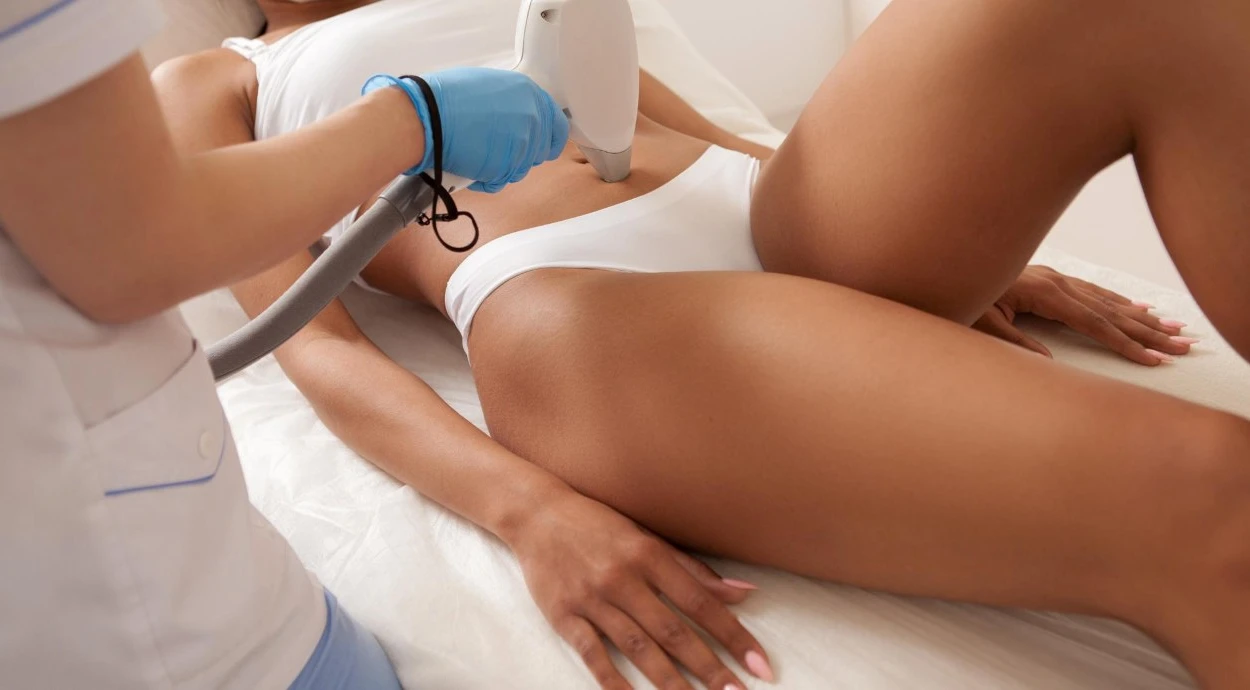
- Laser hair removal. A modern method that allows work with a large number of hairs in the bikini area at once. During the procedure, laser energy acts on the hair follicles, gradually reducing their activity. As a result, the hair becomes finer, grows back much less often, and after a course of procedures most hairs stop growing back. Thanks to this, the skin in the bikini area remains smooth for a long time.
The most effective method of preventing ingrown hair today is considered to be deep bikini laser hair removal. Its advantage lies in the fact that the procedure affects the very mechanism of hair growth. Under the action of the laser, the number of active follicles gradually decreases, so the hair grows back less often, becomes softer and finer, and eventually disappears completely.
Laser hair removal is performed as a course, since it is impossible to affect all the hair at once in a single procedure. This is because hairs are in different phases of growth, and the laser works most effectively specifically with hair in the active growth phase. Therefore, to achieve a lasting result, a series of procedures with intervals determined by the specialist is required.
Laser hair removal can be performed at the center of aesthetic cosmetology “Oxford Esthetic,” where procedures are carried out using modern Candela GentleMax Pro equipment. This is an American-made laser system that combines two types of lasers — alexandrite and Nd:YAG — which makes it possible to work effectively with different skin phototypes. In addition, the dynamic cooling technology sprays a coolant onto the skin surface during the laser pulse. This helps reduce unpleasant sensations during the procedure and makes laser hair removal more comfortable.
What to do to prevent hair from becoming ingrown in the bikini area
To reduce the risk of ingrown hair, it is important not only to care for the skin properly, but also to choose the appropriate hair removal method. Most often, the problem arises after regular shaving or depilation, when the hair changes its direction of growth and begins to grow under the skin.
Specialists at “Oxford Esthetic” note that one of the effective ways to prevent this problem is laser hair removal, since it gradually reduces hair density and changes its structure. After a course of procedures, the hair grows back much less often, becomes finer and softer, and therefore the risk of ingrown hair is significantly reduced.
If you are still using other hair removal methods, it is worth following several simple rules:
- Use shaving gel or foam. This reduces friction between the blade and the skin and helps avoid microdamage.
- Use a sharp and clean blade. Old or dull blades injure the skin more often and increase the risk of ingrown hair.
- Do not perform depilation too often. The skin needs time to recover between procedures.
- Use soothing products after hair removal. Creams or lotions with panthenol or aloe help reduce irritation.
- Avoid tight underwear immediately after the procedure. Excessive friction can worsen skin irritation.
Following these recommendations helps reduce the risk of ingrown hair and keep the skin in the bikini area healthy and well cared for.
The information in this article is provided for informational purposes only and is not a guide to self-diagnosis or self-treatment. If symptoms of a disease appear, you should consult a doctor.
Sources:
StatPearls / National Center for Biotechnology Information (NCBI) — Laser Hair Removal
American Academy of Dermatology (AAD) — Laser Hair Removal: Overview