Contents:
- What does an X-ray of the cervical spine show
- In what cases is an X-ray of the cervical spine recommended
- How is an X-ray of the cervical spine done
- Which is better: ultrasound or an X-ray of the cervical spine
The cervical spine provides head mobility and supports its position. Important nerve structures and blood vessels pass through this area, so even minor changes in the vertebrae can cause neck pain, dizziness, or restricted movement. For the initial assessment of the condition of the bone structures, the doctor may prescribe radiography.
An X-ray of the cervical spine is an accessible and informative examination that allows assessing the shape and position of the vertebrae, as well as identifying traumatic or degenerative changes. The examination is performed quickly and usually does not require complex preparation. In this article, we will consider what exactly an X-ray of the cervical spine can show and how the procedure is performed.
What does an X-ray of the cervical spine show
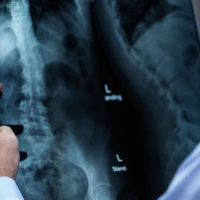
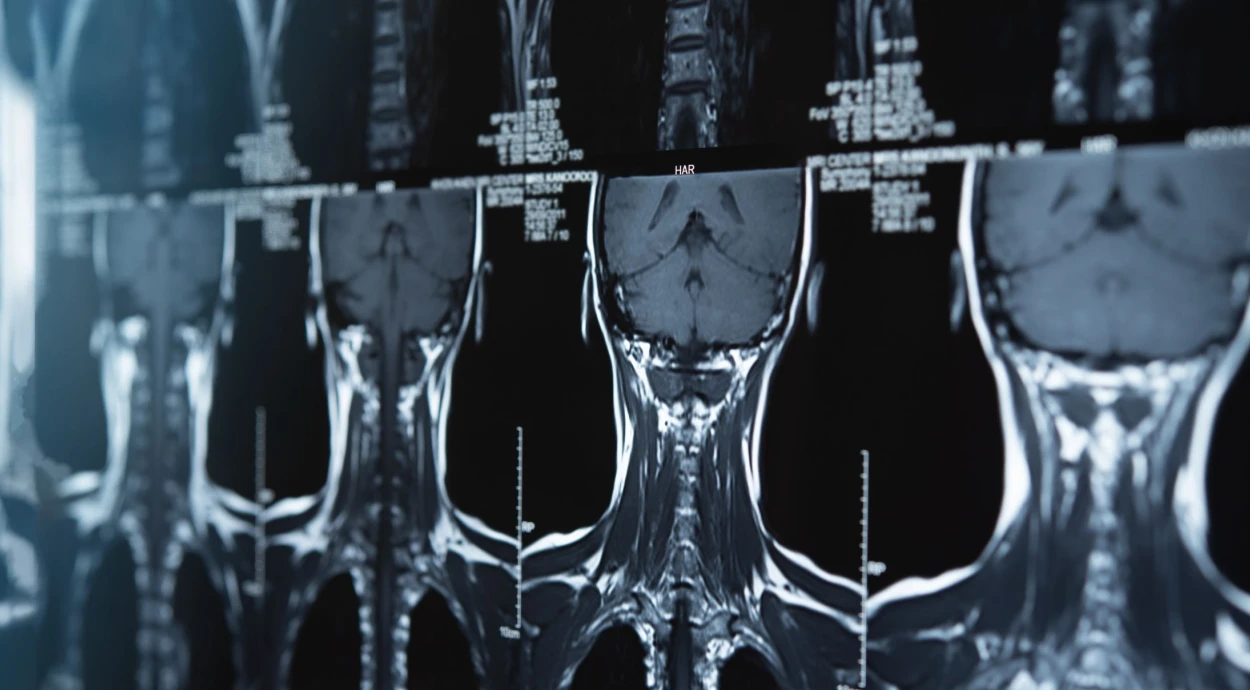
Radiography of the cervical spine allows assessing the condition of the bone structures in the upper part of the spine. During the analysis of the images, the doctor pays attention to the shape of the vertebrae, their height, position, and mutual arrangement, which helps identify traumatic, degenerative, and deformational changes.
The following may be identified on X-ray images:
- cracks, fractures, compression injuries of the vertebrae;
- displacement of the vertebrae relative to each other;
- disturbance of the physiological curvature of the cervical spine;
- bone growths (osteophytes);
- narrowing of the intervertebral spaces.
Such changes may be observed in various diseases and conditions of the spine, in particular after injuries, in degenerative-dystrophic processes, posture disorders, or age-related changes in bone tissue.
In particular, radiography helps identify bone changes characteristic of the disease osteochondrosis, which is accompanied by gradual wear of the spinal structures.
In what cases is an X-ray of the cervical spine recommended
An X-ray of the cervical spine is prescribed when it is necessary to assess the condition of the vertebrae after injuries or when symptoms appear that may indicate disorders in this area.
Most often, the examination is recommended in the following cases:
- injuries to the neck or upper back after a fall, blow, or road traffic accident;
- suspicion of fractures, displacement, instability of the cervical vertebrae;
- suspicion of spinal curvature or other deformities of the cervical spine;
- restricted neck mobility;
- neck pain that intensifies during movement or prolonged staying in one position;
- monitoring of the condition during treatment and after previous injuries.
The examination may also be prescribed if neck pain is combined with dizziness, headache, or a feeling of stiffness. The results of radiography help the doctor determine further diagnostic or treatment tactics.
How is an X-ray of the cervical spine done
Before the examination, the patient is asked to remove jewelry, glasses, and other metal objects from the neck area. Metal elements can create shadows on the images and affect the image quality.
After preparation, the patient takes the required position near the X-ray machine or on a special table. Depending on the purpose of the examination, the images may be taken in a standing or lying position.
Most often, an X-ray of the cervical spine is performed in frontal and lateral projections. In some cases, the doctor may prescribe an examination with functional tests — during flexion and extension of the neck. This allows assessing the mobility of the vertebrae and identifying possible instability.
During the creation of the image, it is important to remain motionless so that the image is clear. The X-ray radiation itself lasts only a few seconds, after which the image is transmitted to the computer for further analysis.
Which is better: ultrasound or an X-ray of the cervical spine
X-ray and ultrasound examination are used to assess different structures of the body, so these methods are not a complete alternative to each other.
Radiography allows assessing the condition of the bone structures — the shape of the vertebrae, their location, and the presence of possible injuries or deformities. That is why this method is used for the diagnosis of injuries, curvatures, or degenerative changes.
Ultrasound, in turn, is better suited for examining soft tissues, blood vessels, and ligaments. For example, with the help of an ultrasound examination, it is possible to assess the condition of the blood vessels of the neck or the adjacent soft tissues.
Thus, the choice of method depends on the clinical situation and the patient's symptoms. In many cases, radiography is the first stage of diagnosis, after which the doctor may recommend additional examinations to clarify the diagnosis.
The information in the article is provided for ознакомления and is not a guide
to self-diagnosis and treatment. If symptoms of the disease
appear, you should consult a doctor.
Sources: