


Sign up via call center
Department

Main indications for MRI

MRI allows you to obtain accurate information for establishing a diagnosis
or choosing further treatment tactics.

The study is prescribed in the following cases:
 

nervous system disorders - headache, dizziness, impaired coordination, sensitivity, vision or speech;

previous stroke, as well as diseases of the brain or spinal cord, including inflammatory, degenerative or tumor processes;

neck, back or lower back pain associated with changes in the spine, intervertebral discs or nerve roots;

diseases of the joints and soft tissues, in particular the consequences of injuries, chronic pain, limited mobility or inflammatory changes;

the need to clarify the nature of neoplasms, their size and prevalence in tissues or internal organs;

diseases of the abdominal cavity and pelvic organs, when ultrasound examination does not provide complete information;

assessment of the condition of the vessels of the head, neck or other areas - on the recommendation of a doctor;

monitoring the condition after surgical interventions or during monitoring of the course of the disease.

List of diseases

Preparing for an MRI scan

Before undergoing MRI, it is recommended to:

remove all metal objects — jewelry, watches, glasses, hearing aids, removable dentures, clothing with metal elements;

inform medical personnel in advance about the presence of implants, prostheses, medical clips or other installed structures;

if a contrast examination is planned, refrain from eating for 3–4 hours before the procedure;

in the case of a contrast study, inform the doctor about existing kidney diseases or provide the results of previous tests, if they were performed previously;

сome for the examination in comfortable clothing without metal elements.

How MRI Is Performed: Examination Stages

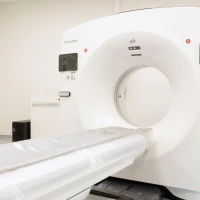
The procedure is carried out in an MRI room. The duration depends on the area being examined and the selected protocol (with or without contrast) and usually ranges from 20 to 40 minutes. During this time, it is important to remain still to avoid image distortion.

Stages of the examination:

Preparation and patient positioning

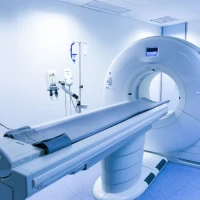
Before the examination begins, the patient receives brief instructions, after which they are positioned on the movable table of the MRI scanner. To obtain clear images, it is important to remain still throughout the entire scan. If necessary, special cushions or fixation devices are used to ensure a stable body position.

Scanning in the MRI scanner

The table with the patient slowly moves inside the scanner, where layer-by-layer scanning of the examined area takes place. During operation, the MRI machine produces characteristic rhythmic sounds — this is a normal feature of the equipment. Communication with medical staff is maintained throughout the entire examination.

Contrast-enhanced MRI (if indicated)

If the examination is performed with a contrast agent, it is administered intravenously before the start of the scan or during the procedure. Contrast enhancement allows for a more detailed assessment of blood vessels, tissues, and certain pathological changes.

Completion of the examination

After the scan is completed, the images are transferred to the radiologist. The specialist analyzes the images and prepares a written report based on the MRI results.

Advantages of magnetic resonance imaging at Oxford Medical

Modern equipment. Examinations are performed using an expert-class MRI scanner that provides high image quality and detailed visualization.

Experienced radiologists. The examination results are analyzed by specialists with appropriate qualifications and practical experience in diagnostic imaging.

Comfortable conditions for patients. The examination is conducted in a specially equipped room in compliance with safety and privacy standards, without haste or unnecessary stress.

Comprehensive approach. Patients can undergo the necessary medical consultations and further examinations within a single medical center.

Reviews
Антон 03.02.2026
Звертався для проходження МРТ хребта. Сподобалася організація процесу. Перед обстеженням відповіли на всі запитання, під час процедури почувався нормально. Обладнання сучасне, умови комфортні. Висновок підготували оперативно, що було важливо для подальшої консультації з лікарем.
Star Star Star Star Star
Марія 03.02.2026
Проходила МРТ, залишилися дуже хороші враження. Обстеження пройшло спокійно, спеціаліст уважно все пояснив перед початком процедури. У кабінеті комфортно, запис був на конкретний час, тож не довелося чекати. Результати отримала швидко, висновок зрозумілий і детальний. Загалом сервіс на високому рівні.
Star Star Star Star Star
Current information
All Articles

What Is MRI

Magnetic resonance imaging (MRI) is a diagnostic method that allows obtaining detailed layer-by-layer images of internal organs, soft tissues, nerve structures, and blood vessels without the use of ionizing radiation.

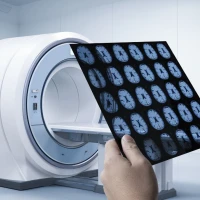
The principle of MRI is based on the use of a strong magnetic field that affects body tissues at the molecular level. The scanner records specific signals from tissues and, based on them, generates clear images of internal structures. The obtained data are processed by a computer system and transformed into a series of cross-sectional images, which makes it possible to assess the condition of the examined area in detail.

Due to its high accuracy and excellent visualization of soft tissues, magnetic resonance imaging is widely used to examine the brain and spinal cord, spine, joints, internal organs, and blood vessels. The examination can be performed without contrast or with contrast enhancement, depending on the clinical task and the physician’s recommendations.

What MRI Shows

Magnetic resonance imaging allows a detailed assessment of the condition of internal organs and tissues, including their structure, shape, size, and relative position. Layer-by-layer images make it possible to detect even minor changes that may not be visible with other diagnostic methods.

Using MRI, it is possible to detect:

  • structural changes of the brain and spinal cord, including inflammatory foci, circulatory disorders, and consequences of trauma;

  • pathologies of the spine, including spinal fractures, and intervertebral discs, including protrusions, hernias, and degenerative changes;

  • diseases of joints and soft tissues — ligaments, tendons, and muscles;

  • changes in the internal organs of the abdominal cavity and pelvis;

  • neoplasms of various origins, their boundaries, and structure.

Magnetic resonance imaging not only helps identify pathological changes but also allows assessment of their extent and nature, which is important for further treatment planning or dynamic monitoring.

Contraindications to magnetic resonance imaging

Magnetic resonance imaging is a safe diagnostic method; however, in certain cases MRI may be limited or impossible. This is due to the use of a powerful magnetic field that can interact with metal structures and electronic devices in the body.

Absolute contraindications:

  • presence of a pacemaker or implanted defibrillator;

  • cochlear implants;

  • ferromagnetic cerebral vascular clips;

  • metallic foreign bodies in the body, especially in the eye area;

  • certain types of implants or prostheses that are incompatible with a magnetic field.

There are also relative contraindications, in which the possibility of examination is determined individually. In particular, MRI is usually not performed without urgent need during the first trimester of pregnancy. Limitations may also include severe claustrophobia, inability to remain still during the examination, presence of tattoos or permanent makeup containing metal-based pigments, as well as implanted devices. When planning contrast-enhanced MRI, kidney function and possible individual sensitivity to the contrast agent are additionally taken into account.

Before the examination, the patient must inform the doctor about any implants, previous surgeries, and chronic diseases. This allows assessment of procedure safety and selection of the appropriate examination protocol.

Interpretation of Results

MRI results are interpreted by a radiologist after the examination is completed. The specialist analyzes the obtained layer-by-layer images, assesses the shape, size, and structure of the examined organs and tissues, and determines the presence or absence of pathological changes.

MRI reports may describe anatomical features, structural changes, signs of inflammation, degenerative processes, neoplasms, or other deviations from normal. If no pathological changes are detected, the conclusion indicates normal findings.

It is important to understand that an MRI report is not a final clinical diagnosis. For correct interpretation, the results must be correlated with the patient’s complaints, physical examination findings, and results of other diagnostic tests. Final conclusions and recommendations are provided by the physician who referred the patient for the examination.

Cost of Magnetic Resonance Imaging in Kyiv at the «Oxford Medical» Clinic

MRI prices in Kyiv at the «Oxford Medical» medical center depend on several factors, including the examined area, the number of regions studied, and the selected protocol (with or without contrast). You can check MRI prices in advance here.

At «Oxford Medical», MRI examinations are performed using modern expert-class equipment in compliance with quality and safety standards. High image detail allows obtaining informative results necessary for accurate assessment of the condition. Examinations are conducted in comfortable conditions and by prior appointment at a convenient time.

If you need to undergo magnetic resonance imaging, please book an examination by calling the phone number listed on the website.

Frequently asked questions

Where is the best place to get an MRI in Kyiv?

You can undergo MRI at the modern medical center «Oxford Medical» located at 7A Parkovo-Syretska Street in the Shevchenkivskyi district of Kyiv. The clinic is situated near the Dorohozhychi metro station, making it convenient to reach by public transport. For patients arriving by car, a large free parking area is available.

How often can MRI be performed?

The frequency of MRI examinations depends on the clinical situation and the physician’s recommendations. Since the procedure does not use ionizing radiation, it can be repeated when necessary. Most often, MRI is prescribed to уточнити the diagnosis or to monitor the condition over time, and the intervals between examinations are determined individually.

What is the difference between CT and MRI?

CT and MRI differ in their principles of operation and diagnostic capabilities. CT uses X-ray radiation and is well suited for assessing bone structures. MRI works based on a magnetic field and provides better visualization of soft tissues, the nervous system, and joints.

How long does an MRI take?

The duration of an MRI depends on the examined area and the selected protocol. On average, the examination takes between 20 and 40 minutes. If contrast enhancement is required, the time may increase slightly. Throughout the entire examination, it is important to remain still, as this directly affects image quality.

Can MRI be performed if there is metal in the body?

The possibility of performing MRI in the presence of metal in the body is determined individually. Some implants and prostheses do not interfere with the examination. However, pacemakers, certain clips, or large metal prostheses may be contraindications. Before the examination, it is essential to inform the doctor about all implanted devices.

Can MRI be done without a referral?

In most cases, the examination can be performed without a referral, at the patient’s own request. However, a physician’s recommendation helps accurately determine the area to be examined and the optimal protocol. If there is no referral, a brief clarification of symptoms and the purpose of the examination may be conducted beforehand to plan the procedure correctly.

Can MRI be performed during pregnancy?

During pregnancy, MRI is usually not performed in the first trimester without urgent necessity. In the second and third trimesters, the examination may be carried out if indicated, when the expected benefit outweighs possible risks. Non-contrast MRI is considered relatively safe, but the decision is always made by a doctor on an individual basis.

( Rating: 4.95 , Votes: 616 )
Sign up via call center
in the clinic
online
This site is protected by reCAPTCHA technology, and the Google Privacy Policy and Terms of Service apply.
Hello!
Let's take care
about your health:
Sign up via call center

We use cookies and other technologies to remember your preferences and find out exactly how you use and interact with the site.

By using our site, you also agree to the terms of the "User Agreement" and "Regulation on the processing and protection of personal data". By clicking "I AGREE", you consent to the processing of your data.
