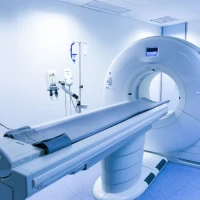
During the examination, the patient lies on their back on a special tomograph table. The head is comfortably fixed with soft rollers so that it remains still — this is necessary to obtain clear images.
The table smoothly moves inside the machine, after which the scanning begins. During operation, the tomograph produces rhythmic sounds — this is a normal feature of the procedure. The examination is painless and does not cause discomfort.
The examination usually lasts 15–20 minutes. If the administration of a contrast agent is necessary, a series of images is first taken without the agent, then the contrast is administered and the scanning continues. In this case, the procedure may last up to 30–40 minutes.
An MRI of the pituitary gland for a child is performed in the presence of someone close to them. This usually makes it easier for the child to undergo the examination and lie still during the scanning.
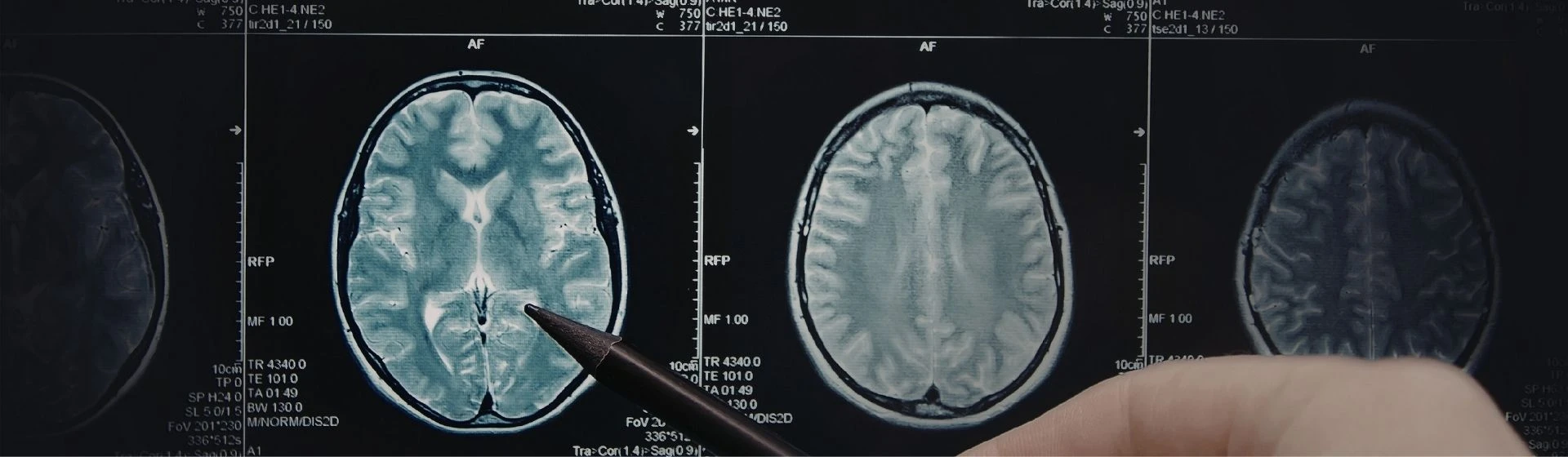
After the scanning is completed, the radiologist analyzes the obtained images and prepares a written report. It describes the structure of the pituitary gland, its size, and the detected changes. If no pathological abnormalities are detected, it is indicated that the findings correspond to a variant of the norm. The results are given to the patient for further consultation with the doctor.