Sign up via call center
Department
Fibroadenoma treatment at the private clinic Oxford Medical Kyiv

Treatment of fibroadenoma

A lump in the breast often causes concern, even if it does not hurt and does not change for a long time. One of the common causes of such changes is fibroadenoma of the mammary gland. Usually, it has a benign nature, but it requires examination, because it is impossible to accurately determine the type of formation and choose the correct tactics based only on external signs.

If you have noticed a nodule in the breast or changes that were not there before, consult a doctor. At the «Oxford Medical» medical center in Kyiv, you can undergo the necessary diagnostics and receive individual recommendations regarding further observation or treatment. To make an appointment for a consultation, use the online appointment form on the website or call the contact center.

What Is a Fibroadenoma

A fibroadenoma — is a benign formation that consists of the glandular and connective tissues of the mammary gland. Most often, it occurs in young women, has clear boundaries, and moves easily during palpation. Usually, such a nodule does not hurt, but it can increase under the influence of hormonal changes. Its benign nature can be confirmed only after an examination by a doctor.

Types of Fibroadenoma

According to the WHO classification, depending on the structural features, a fibroadenoma can be:

  • intracanalicular — connective tissue grows inside the ducts, compresses them, and changes their shape;
  • pericanalicular — connective tissue grows around the ducts, which retain a rounded shape;
  • mixed — combines the features of the intracanalicular and pericanalicular types.

Doctors at «Oxford Medical» note: it is important to distinguish a phyllodes adenoma, which is also called a phyllodes tumor, from an ordinary fibroadenoma. It may have similar signs, but differs in structure and growth pattern. Such a formation can increase rapidly and reach significant sizes, so it requires thorough diagnostics and appropriate treatment tactics.

Causes of Fibroadenoma

The exact causes of the appearance of fibroadenoma in the breast have not been definitively established. Its development is associated with increased sensitivity of breast tissue to estrogen and other hormonal changes. That is why such formations are most often detected in adolescents and women of reproductive age.

Factors that may influence the appearance or growth of fibroadenoma include:

  • the period of puberty;
  • young reproductive age;
  • hormonal changes during pregnancy and breastfeeding;
  • hormone replacement therapy after menopause.

During pregnancy, breastfeeding, or hormone therapy, an already existing nodule may increase, and after menopause — decrease. At the same time, breast injuries, physical exertion, and wearing tight underwear are not considered direct causes of fibroadenoma.

Fibroadenoma: Symptoms

Usually, the neoplasm does not cause noticeable symptoms and may be accidentally
detected during self-examination or a preventive examination by a mammologist.
Most often, a woman notices a dense, rounded nodule in the breast with clear
boundaries that moves easily under the fingers.

Characteristic signs may include:

a smooth and elastic surface;

mobility relative to the surrounding tissues;

absence of pain when pressed;

slow increase in size.

List of diseases

Tenderness is not typical, but sometimes discomfort intensifies before menstruation. Large formations may change the shape of the breast or cause a feeling of pressure.

Doctors at «Oxford Medical» warn: it is impossible to independently determine the nature of the lump based on external signs. If the nodule appeared recently, is increasing, or is accompanied by changes in the skin or nipple, it is necessary to consult a mammologist and undergo an examination.

Diagnosis of Fibroadenoma

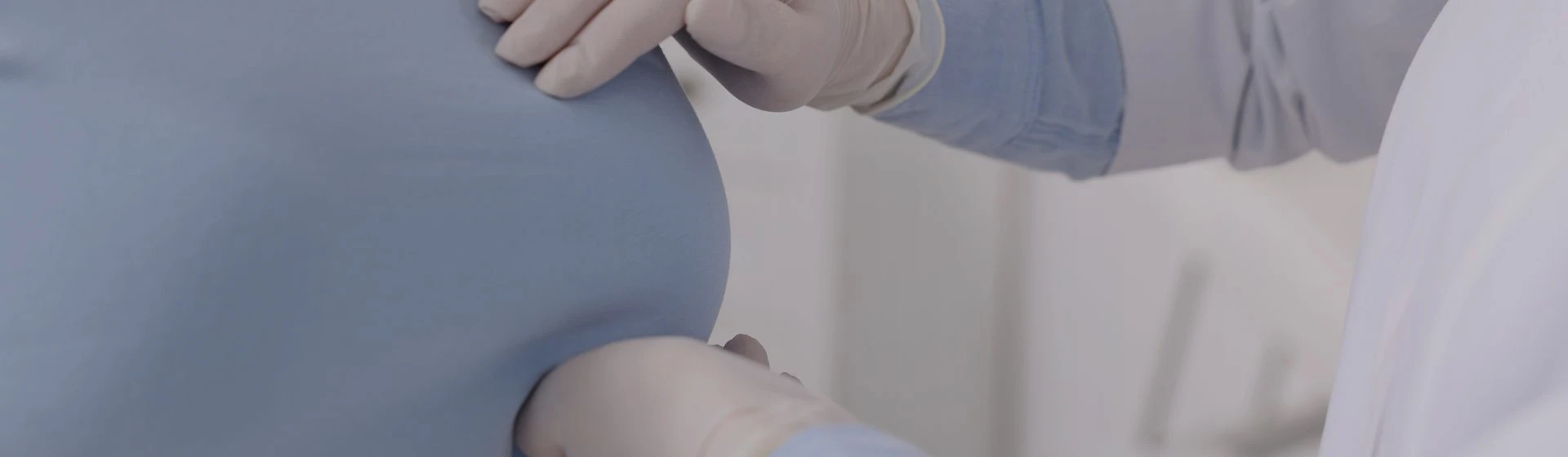
Diagnosis begins with a consultation with a mammologist. The doctor examines and palpates the mammary glands, after which the necessary scope of examinations is determined.

In accordance with the recommendations of the American College of Radiology, the following may be prescribed to establish the diagnosis:

  • ultrasound of the mammary glands — helps determine the size, location, contours, and structure of the nodule;
  • elastography — an ultrasound examination method that makes it possible to assess the stiffness of the tissues of the formation and supplements data about its structure and nature;
  • mammography — makes it possible to examine the tissues of the mammary glands in more detail (it is more often prescribed to women over 40 years of age);
  • core needle biopsy — involves taking tissue samples for histological examination (it is performed if the formation has atypical signs, increases rapidly, or the imaging results do not provide an unambiguous answer);
  • hormone tests — may be recommended in cases of menstrual cycle disorders or other signs of hormonal changes.

Not all of the listed examinations are required in every case. The doctor determines the diagnostic approach individually based on the results of the examination and the initial assessment.

Methods of Fibroadenoma Treatment

In most cases, a confirmed fibroadenoma does not require treatment. Most often, an observation approach is chosen. Surgical treatment of breast fibroadenoma is performed only when there are appropriate indications.

Conservative Treatment

Conservative tactics involve monitoring the condition of the fibroadenoma. The first follow-up ultrasound is usually performed after 6 months. If the size and structure of the nodule do not change, subsequent examinations may be scheduled after 12 and 24 months.

If the diagnosis is confirmed by a core needle biopsy, and the results of the histological examination correspond to the ultrasound or mammography data, frequent follow-up examinations may not be necessary. In this case, it is sufficient to undergo routine screening according to age.

If hormonal disorders are detected, the doctor may prescribe their correction. The treatment regimen is selected individually based on the results of tests and a consultation with the appropriate specialist. If the nodule has begun to increase or discomfort has appeared, it is necessary to consult a doctor without waiting for the next scheduled examination.

Surgical Treatment

Surgery may be recommended if:

  • the fibroadenoma is more than 3 cm in size and continues to increase;
  • the size of the formation is 5 cm or more and causes noticeable deformation of the mammary gland;
  • the data from repeated ultrasound examinations confirm that the nodule is growing rapidly;
  • the formation causes pain or constant discomfort;
  • atypical cells have been detected in tissue samples;
  • it is impossible to confidently distinguish a fibroadenoma from a phyllodes tumor.

Most often, enucleation is performed — the fibroadenoma is removed while preserving the healthy tissues of the mammary gland as much as possible. If the formation has atypical signs or there is a suspicion of a phyllodes tumor, a sectoral resection may be required — removal of the nodule together with part of the surrounding tissues.

The operation is performed under local or general anesthesia. The type of anesthesia is chosen taking into account the size, number, and location of the nodules, as well as the extent of the intervention. The removed tissues are necessarily sent for histological examination for final confirmation of the diagnosis.

Surgical treatment of fibroadenoma at «Oxford Medical» is performed by experienced doctors in a modern inpatient facility. Preference is given to organ-preserving methods that make it possible to remove the formation while preserving the healthy tissues and natural shape of the mammary gland as much as possible. Patients are provided with full medical support — from preparation for the operation and histological examination to follow-up examinations during the recovery period.

Postoperative Period After Fibroadenoma Removal

After fibroadenoma removal, the patient usually remains under the supervision of medical staff for several hours and, in the absence of complications, returns home on the same day. After a more extensive intervention, a stay in the inpatient facility until the following day may be required.

During the first days, moderate pain, swelling, a small bruise, and reduced skin sensitivity near the incision are possible. These are normal postoperative manifestations that gradually decrease. To relieve pain, the doctor prescribes pain-relieving medications.

Primary tissue healing usually lasts 2–4 weeks, but the exact period depends on the extent of the operation and the individual characteristics of the body. The scar gradually becomes softer and lighter over the following months.

Recommendations After Fibroadenoma Removal

During the recovery period, it is recommended to:

  • take the prescribed medications according to the established regimen;
  • care for the postoperative area in accordance with the surgeon’s recommendations;
  • wear a comfortable supportive bra without underwires;
  • avoid lifting heavy objects and intense physical activity for 2–4 weeks;
  • not visit a swimming pool or sauna and not take a bath until the tissues have healed;
  • undergo a follow-up examination in a timely manner.

The surgeon determines the time for returning to sports and the usual level of physical activity, taking into account the extent of the operation and the course of recovery.

Possible Complications After Fibroadenoma Removal

Complications after fibroadenoma removal occur rarely. Possible consequences of the operation include:

  • bleeding or hematoma formation;
  • accumulation of fluid in the intervention area;
  • infection or slow wound healing;
  • prolonged reduction in skin sensitivity;
  • formation of a noticeable scar;
  • a slight change in the shape of the mammary gland after removal of a large nodule.

It is necessary to consult a doctor if pain or swelling intensifies, the skin becomes red and hot, discharge or blood appears from the wound, or the body temperature rises.

At the «Oxford Medical» medical center, operations are performed by experienced surgeons in compliance with modern medical protocols. The inpatient facility is equipped with expert-class equipment, which helps ensure the safety of the intervention and minimize the risk of postoperative complications.

Prevention of Fibroadenoma Formation

To maintain breast health and prevent fibroadenoma, it is recommended to:

  • perform breast self-examination every month, preferably 5–7 days after the start of menstruation;
  • undergo a preventive examination by a mammologist once a year;
  • consult a gynecologist in cases of menstrual cycle disorders and other signs of hormonal changes;
  • not take hormonal medications without a doctor’s prescription;
  • undergo breast ultrasound or mammography according to age and the doctor’s recommendations;
  • follow the schedule of follow-up examinations when fibroadenoma has been detected.

Doctors at «Oxford Medical» note: if a lump, changes in the shape of the breast or nipple, discharge, or other unusual symptoms are detected during self-examination, it is necessary to consult a mammologist without waiting for a scheduled examination.

How Much Does Breast Fibroadenoma Removal Cost in Kyiv at the Private Clinic «Oxford Medical»

The price of fibroadenoma removal depends on its size, the location of the formations, the selected method of surgery, the type of anesthesia, and the duration of the stay in the inpatient facility. The need for surgical intervention and its method are determined by the doctor after diagnostics have been performed.

You can review the prices for doctors’ consultations here in advance. Make an appointment with a mammologist at «Oxford Medical» at a time convenient for you through the online appointment form or by calling the contact center.

The information is for informational purposes and does not replace a doctor’s consultation.

Sources:

Frequently asked questions

Is Fibroadenoma Visible on Ultrasound?

Yes. Ultrasound makes it possible to detect the formation and determine its size, shape, boundaries, structure, and blood supply. If it has atypical or suspicious signs, a biopsy is performed to establish an accurate diagnosis.

How Does a Phyllodes Fibroadenoma Differ From an Ordinary One?

A phyllodes tumor can increase rapidly and, unlike a fibroadenoma, can be benign, borderline, or malignant. The type of formation can be definitively determined after histological examination.

Can Fibroadenoma Be Removed During Menstruation?

Menstruation is not a contraindication to fibroadenoma removal. However, in cases of heavy discharge, low hemoglobin, or poor well-being, the planned operation may be postponed.

How Does a Cyst Differ From a Fibroadenoma?

A fibroadenoma — is a dense benign tumor, while a breast cyst — is a hollow neoplasm filled with liquid contents. They may feel similar to the touch, so the type of formation can be accurately determined only with the help of ultrasound.

Does the Breast Become Smaller After Fibroadenoma Removal?

After removal of a small fibroadenoma, the breast size usually does not change. If the formation was large, a slight change in the volume or contour of the mammary gland is possible. The surgeon assesses this risk before the operation.

Can Fibroadenoma Be Removed During Pregnancy?

If there are indications, the operation can be performed during pregnancy. It is considered in cases of rapid growth of the neoplasm, pronounced symptoms, or doubts regarding the diagnosis. If there is no urgency, the fibroadenoma is monitored, and removal is postponed until the postpartum period.

( Rating: 4.79 , Votes: 53 )
Our services
Consultations
Consultation with an oncologist (mammologist)
1100.00 ₴
Order
Consultation with a leading oncologist (mammologist)
1989.00 ₴
Sign up by the call center
Online consultation with an oncologist (mammologist)
1100.00 ₴
Sign up by the call center

Our doctors

Pukhlikov Oleksiy Alexandrovich
4.96
rating (49)
14+
Years of experience
Online consultation
Mammologist, oncologist
14+ Years of experience
Consultation 1100
Kyiv, Hlybochytska St., 40x
Make an appointment
Kulay Alina Anatolyevna – mammologist at the private clinic “Oxford Medical Kyiv”
0
rating (0)
6+
Years of experience
Mammologist
6+ Years of experience
Make an appointment
Zakharchuk Sofia Viktorivna
4.95
rating (40)
10+
Years of experience
Mammologist, oncologist, oncosurgeon
10+ Years of experience
Consultation 1100
Kyiv, Knyaziv Ostrozkyh St., 46/2
Make an appointment
Tarasenko Yevgeny Georgievich - mammologist at the private clinic Oxford Medical Kyiv
4.92
rating (12)
3+
Years of experience
Mammologist
3+ Years of experience
Consultation 1100
Make an appointment
All doctors
Reviews
Ольга 07.08.2026
Була у Євгенія Георгієвича на плановій консультації з результатами мамографії. Лікар уважно переглянув знімки, провів огляд і детально відповів на мої запитання. Сподобалося делікатне ставлення та те, що все пояснює просто, без складних термінів.
Star Star Star Star Star
Татьяна 02.08.2026
Захарчук Софія Вікторівна-це лікар від Бога ! Велика їй подяка 🙏 за людяність, уважність, це так важливо у наш нелегкий час . На узі молочних залоз ходжу лише до неї! Дуже дякую ❤️
Star Star Star Star Star
Current information
All Articles
Sign up
in the clinic
online
This site is protected by reCAPTCHA technology, and the Google Privacy Policy and Terms of Service apply.
Hello!
Let's take care
about your health:
Sign up via call center

We use cookies and other technologies to remember your preferences and find out exactly how you use and interact with the site.

By using our site, you also agree to the terms of the "User Agreement" and "Regulation on the processing and protection of personal data". By clicking "I AGREE", you consent to the processing of your data.