


periodic intense joint pain
It develops against the background of an acute or chronic infectious disease of any localization (tonsillitis, pneumonia, urethritis, etc.).

 Adults Adults Adults Adults Adults Adults Adults Adults Adults
  Children Children Children Children


 Hotline:
 Adults Adults Adults Adults Adults Adults Adults Adults Adults Children Children Children Children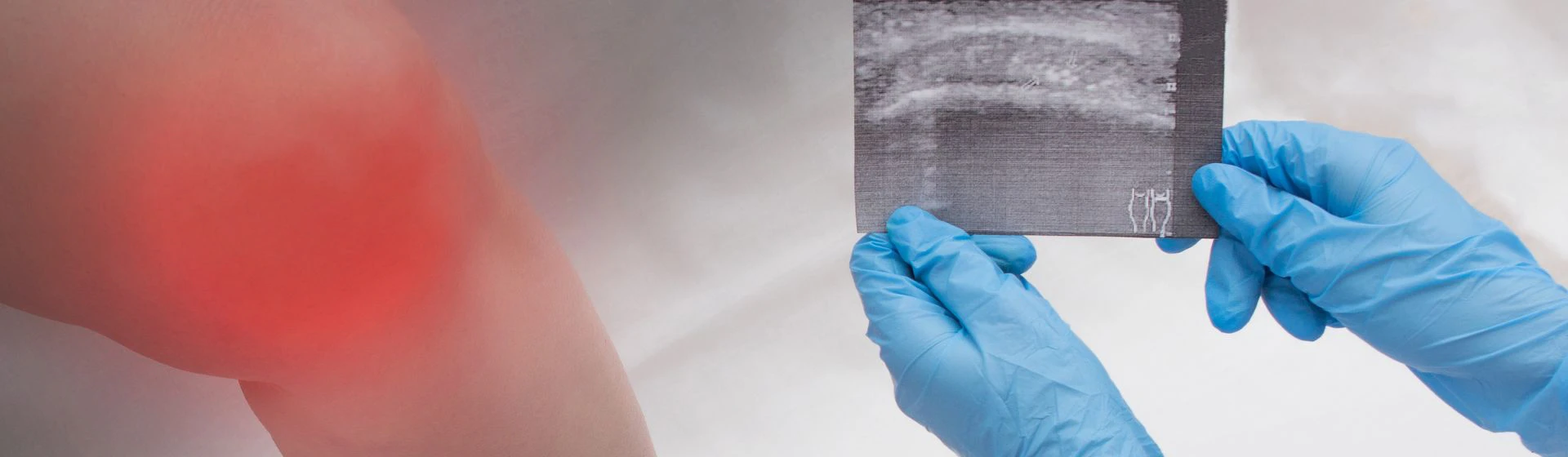
Polyarthritis is an inflammation of the joints that develops simultaneously or sequentially in different parts of the body. It can be an independent disease or a complication of other pathologies.
The main symptoms of polyarthritis are joint pain, swelling and redness of the skin, and as it progresses, limited mobility. Without timely therapy, the disease can progress to a chronic stage and lead to joint deformation and the development of arthrosis.
Oxford Medical employs experienced specialists and has installed new expert-class equipment. Thanks to this, all conditions have been created for comprehensive diagnostics and effective treatment of polyarthritis. The clinic also conducts physiotherapy procedures and surgical treatment, which may be necessary for complicated forms of the disease.
Polyarthritis can develop as an independent disease, but is more often a consequence of other disorders in the body.
The causes of multiple joint inflammation can be:
The main signs of polyarthritis are:


periodic intense joint pain
increased pain in the morning and at night, as well as during movements
swelling and redness of the skin around the joints
crunching in the joints
decreased joint mobility
fever and general weakness

The development of polyarthritis begins with inflammation of the periarticular capsule, which gradually spreads to the cartilage tissue, as well as the surrounding ligaments and tendons. This leads to the appearance of pain and other symptoms of the disease. If treatment is not carried out at this stage or it is not effective enough, the disease can progress to a chronic stage, which is characterized by joint deformation and limited mobility.
Acute polyarthritis is accompanied by pronounced symptoms. When the disease becomes chronic, pain and other signs of inflammation subside, but it continues to develop in a sluggish form, provoking irreversible changes in the joint tissues.
Depending on the provoking factor, the following types of polyarthritis are distinguished:
It develops against the background of an acute or chronic infectious disease of any localization (tonsillitis, pneumonia, urethritis, etc.).
It occurs in autoimmune diseases, metabolic disorders, etc.
It is additionally classified as:
It has an unknown etiology, progresses rapidly and becomes chronic, and is accompanied by a high risk of complications.
Each of these types of polyarthritis can occur in:
Polyarthritis begins as an acute disease and can be completely cured if treated early. In the absence of therapy, the disease often progresses to a chronic stage, which is characterized by the development of complications.
The main ones are:
If polyarthritis is autoimmune in nature, there is also a high risk of developing anemia, scarring of tissues in the lungs, and heart pathologies such as myo- and pericarditis, cardiomyopathy, thromboembolism, and myocardial infarction.
Polyarthritis can develop in both adults and children. Most often, it is a complication of other bacterial or viral diseases. Inflammation of the joints can be provoked by tonsillitis, pneumonia, intestinal infections, etc. In many children, symptoms appear 2-4 weeks after the development of an acute disease, and if in adults they are mainly local in nature, then in children they are accompanied by general intoxication of the body - fever, weakness, drowsiness, etc.
With timely treatment to a doctor, infectious polyarthritis in children is well treatable and does not cause complications.
Rheumatoid polyarthritis is also common in childhood. It develops against the background of autoimmune disorders and, as a rule, is accompanied by myocarditis and pericarditis. Unlike infectious, this form of the disease is associated with a higher risk of joint deformation.
To reduce the risk of negative consequences, the child should be shown to a doctor at the first symptoms.
During the consultation, the doctor assesses the patient's complaints, examines the joints and studies the medical history. After that, he determines which examinations are necessary to clarify the exact diagnosis.
For the diagnosis of polyarthritis, the following are used:
When diagnosing, it is important to confirm inflammation of the joints and determine the stage of the disease, as well as establish the main cause of its development. This allows you to choose the most effective treatment.
Conservative methods are most often used to treat polyarthritis.
The therapy program may include:
During treatment, patients are recommended to regularly visit a doctor to assess its effectiveness and correct prescriptions.
In chronic polyarthritis, accompanied by joint deformation and chronic pain, surgical treatment may also be recommended.
Oxford Medical employs experienced doctors of various specialties and has expert-class equipment for the diagnosis and treatment of polyarthritis and other joint diseases.
In our clinic, operations are performed in a high-tech surgical hospital. It has all the conditions for performing arthroscopy and other minimally invasive procedures and open surgeries.
To make an appointment with a doctor, call our contact center or write to the chat on the website.

Acute infectious polyarthritis is treatable when diagnosed early. According to statistics, more than 90% of patients achieve a full recovery.
To reduce the risk of complications, experts recommend not to refuse visits to the doctor even after improvement. In particular, with rheumatoid polyarthritis, examinations are prescribed 1-3 months after the start of therapy, and after achieving stable remission - once every 6-12 months.


Highly qualified doctors
New equipment
Possibility of conducting all examinations in one clinic
Application of modern treatment methods
Availability of a high-tech surgical hospital and conditions for minimally invasive surgeries
Loyalty program for all patients


 4.9
4.9  17+
17+ 
 17+ Years of experience
  Kyiv, Mykhayla Hryshka St., 1
 4.84 36+ 36+ Years of experience m. Irpin vul. University, 2/1, building 3
  0 3+
0 3+  5 20+ 20+ Years of experience
 in the clinic
  online
  Hello!


