Sign up via call center
Department
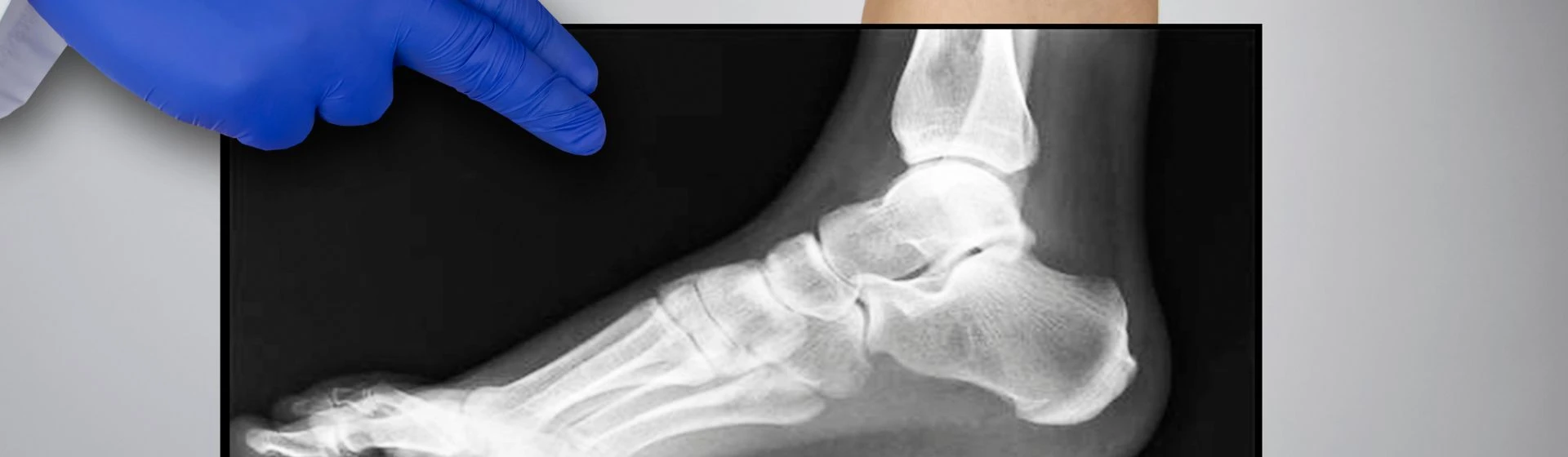
Foot X-ray at the private clinic Oxford Medical Kyiv

Ankle fracture

An ankle fracture is an injury to the ankle joint that occurs as a result of twisting the foot, a fall, or a direct impact to the ankle area. Damage to the ankle immediately disrupts joint stability, which is why a fracture is accompanied by pain, swelling, and an inability to bear weight on the affected leg.

If an ankle fracture is suspected, it is important to seek medical attention as soon as possible. At the medical center «Оксфорд Медікал» in Kyiv, a 24/7 emergency trauma unit is available, where patients can promptly undergo a medical examination and have an X-ray performed. Timely diagnosis makes it possible to determine the type of fracture and select the optimal treatment to restore ankle joint function and prevent complications.

You can schedule an appointment by phone or via the online booking form on the website.

Types of ankle fractures

An ankle fracture is a common injury of the ankle joint that occurs due to twisting of the foot, a fall, or a sudden load on the foot. The ankle bones play a stabilizing role by keeping the joint in the correct position during movement, which is why their injury directly affects the ability to stand, walk, and bear body weight.

In traumatology, several main types of ankle fractures are distinguished. The type of fracture determines the treatment strategy, the need for surgical intervention, and the duration of recovery.

Main types of ankle fractures:

  • Аnkle fracture without displacement — the bone fragments remain in the correct anatomical position, and the joint retains relative stability. Such fractures are usually treated conservatively using a cast or an orthosis, and the risk of complications is minimal if medical recommendations are followed;

  • Аnkle fracture with displacement — bone fragments shift from their normal axis, leading to instability of the ankle joint. These fractures more often require surgical treatment to accurately realign the fragments and restore proper joint anatomy;

The type of fracture affects not only the need for surgery but also the duration of immobilization, the timeline for restoring mobility, and the risk of long-term complications.

Symptoms of an ankle fracture usually appear immediately after the
injury and can vary in intensity depending on the type of fracture,
the presence of displacement of fragments, and damage to the ligamentous apparatus.

Signs of a fracture in the ankle area:

sharp or increasing pain in the ankle joint area, which intensifies when attempting to move or bear weight on the leg;

rapid development of swelling around the ankle, sometimes spreading to the foot or lower leg;

inability or significant limitation in bearing weight on the injured leg;

change in joint shape, a feeling of instability, or an abnormal position of the foot in complex fractures.

List of diseases

Even in the absence of obvious deformity, an ankle fracture cannot be ruled out without X-ray examination. Therefore, if these symptoms occur, medical attention is required.

Ankle fracture: injury treatment

The treatment strategy for an ankle fracture depends on the type of fracture, the presence or absence of bone fragment displacement, the stability of the ankle joint, and the condition of the surrounding soft tissues. The main goal of treatment is to ensure proper bone healing, preserve joint anatomy, and restore weight-bearing and motor function. The choice of treatment method is made by the physician after a clinical examination and instrumental diagnostics, primarily X-ray imaging.

Conservative treatment

Conservative treatment is used for stable fractures without fragment displacement or when the correct anatomical alignment of the bones is preserved. In such cases, it is important to prevent secondary displacement and create safe conditions for healing.

Treatment includes:

  • immobilization of the ankle joint using a plaster cast or a modern orthosis that securely fixes the joint in the correct position;

  • restriction of load on the injured leg — from complete non-weight-bearing to gradual partial weight-bearing as recommended by the physician;

  • medication-based pain relief to reduce pain and inflammatory response;

  • regular medical follow-up to assess the condition of soft tissues, swelling and circulation, as well as the progress of bone healing.

The duration of immobilization is determined individually and usually lasts several weeks, after which the patient is gradually transitioned to the rehabilitation stage.

Surgical treatment

Surgical intervention is indicated for fractures with displacement of fragments, instability of the ankle joint, two- or three-bone fractures, as well as in the case of intra-articular damage. In such clinical situations without surgery, there is a high risk of malunion, joint deformation and the development of chronic pain syndrome. That is why, within the scope of orthopedic surgery, surgical methods are used aimed at restoring the anatomy and stability of the joint.

During surgery, the physician performs:

  • anatomical realignment of bone fragments;

  • fixation of the bones using metal structures (plates, screws, or other fixation devices);

  • restoration of ankle joint stability.

After surgical treatment, immobilization is also mandatory. A cast or orthosis is used to protect the fracture area, reduce load, and create optimal conditions for bone healing. The duration of fixation and the timing of weight-bearing are determined by the physician based on fracture complexity and recovery progress.

Properly selected treatment for an ankle fracture is a decisive factor in preserving joint mobility, restoring normal gait, and preventing long-term complications.

Recovery after an ankle fracture

Recovery after an ankle fracture is an essential part of treatment, as even after bone healing the ankle joint requires a gradual return to full function. Prolonged immobilization leads to reduced mobility, muscle weakness, and impaired coordination; therefore, rehabilitation begins as soon as the fracture is stabilized and the restrictions set by the physician are lifted.

A comprehensive rehabilitation program usually includes:

  • gradual restoration of the range of motion in the ankle joint to prevent stiffness and contractures;

  • therapeutic exercise aimed at strengthening the muscles of the lower leg and foot, and restoring balance and joint stability;

  • controlled, progressive increase in weight-bearing on the leg, taking into account the fracture type and healing progress;

  • physiotherapy methods prescribed by the physician to reduce swelling and pain and to improve blood circulation.

Consistent adherence to the rehabilitation program helps restore a proper gait, reduce the risk of chronic pain, and prevent long-term complications associated with ankle joint instability or functional limitation.

Consequences of an ankle fracture

An ankle fracture is an injury that may lead to long-term consequences even after complete bone healing. This is especially true for complex intra-articular fractures or cases where treatment or rehabilitation was insufficient. The ankle joint is exposed to significant daily loads, so any disturbance of its anatomy or mobility can affect gait and overall quality of life.

The most common consequences of an ankle fracture include:

  • Restricted ankle joint mobility. Prolonged immobilization and damage to joint surfaces may reduce the range of motion, making walking, climbing stairs, and moving on uneven surfaces more difficult;
  • Chronic pain or discomfort during weight-bearing. Pain may persist during prolonged standing, walking, or physical activity due to post-traumatic changes in the joint or surrounding soft tissues;
  • Ankle joint instability. Damage to the ligamentous structures or incomplete restoration of ankle anatomy can cause a sensation of the foot “giving way” and increase the risk of recurrent injuries;
  • Development of post-traumatic osteoarthritis. Damage to the articular cartilage in intra-articular fractures can eventually lead to degenerative changes, pain, and gradual deterioration of joint function;
  • Reduced endurance and altered gait. Even in the absence of significant pain, patients may experience rapid fatigue, reduced walking distance, or subconsciously shift weight away from the injured leg, affecting overall movement biomechanics.

The risk of long-term complications is significantly reduced with timely diagnosis, an appropriate treatment strategy, and comprehensive rehabilitation. Regular follow-up with a trauma specialist helps detect functional impairments early and adjust the recovery process accordingly.

Private clinic services in Kyiv: price of ankle fracture treatment at Oxford Medical

If pain or swelling occurs after an injury, it is important not to delay an examination. The Oxford Medical Medical Center in Kyiv has a 24-hour emergency room. We have an experienced traumatologist in Poznyaki who conducts an initial examination, performs an X-ray examination if necessary, and determines the optimal treatment tactics depending on the type of fracture.

The cost of treatment for an ankle fracture depends on the type of injury, the presence of displacement of fragments and, accordingly, the chosen treatment tactics.

You can pre-read the prices for medical services in Kyiv at the private clinic "Oxford Medical" on our website.

More detailed information about the features of treatment and cost will be provided by the doctor after the examination. You can make an appointment for a consultation at a convenient time for you by phone or via the online appointment form.

Frequently asked questions

How to reduce swelling after an ankle fracture?

Swelling after an ankle fracture is a common occurrence and may persist for some time even after the cast is removed. To reduce swelling, it is recommended to keep the leg elevated, follow the prescribed load regimen, perform exercises recommended by the physician, and use elastic compression if necessary. It is important to avoid self-applying heat treatments without medical advice.

How long does an ankle fracture take to heal?

The healing time of an ankle fracture depends on the type of injury and the chosen treatment method. In most cases, the bone heals within 6–8 weeks. In complex fractures or when bone fragments are displaced, recovery may take longer and require additional medical monitoring.

How should you start bearing weight on the leg after an ankle fracture?

Weight-bearing should begin only with the physician’s approval after a follow-up examination. Initially, partial weight-bearing with crutches or an orthosis is recommended, with a gradual increase in load. It is important to avoid sudden movements and follow the rehabilitation program to prevent overloading the ankle joint.

How to stop limping after an ankle fracture?

Limping after an ankle fracture is usually associated with muscle weakness, limited joint mobility, or an altered walking pattern. To correct this, therapeutic exercises, coordination training, and proper foot placement exercises are required, along with a gradual increase in load. Rehabilitation should be carried out under the supervision of a physician or rehabilitation specialist.

When can you return to sports after an ankle fracture?

Returning to sports is possible only after complete bone healing and restoration of ankle joint function. The timing depends on the severity of the injury and the level of physical activity but usually occurs no earlier than 3–4 months after the fracture. The decision to resume sports activity is made by the physician based on joint condition and rehabilitation outcomes.

( Rating: 4.65 , Votes: 75 )
Our services
Consultations
Consultation with an orthopedic traumatologist
1100.00 ₴
Add Added
Consultation with a leading orthopedic traumatologist
1989.00 ₴
Add Added
Services
Applying a small plaster cast/splint (with cost of materials)
999.00 ₴
Sign up by the call center
Applying a medium plaster cast/splint (with cost of materials)
1189.00 ₴
Sign up by the call center
Applying a large plaster cast/splint (with cost of materials)
1689.00 ₴
Sign up by the call center
Applying a softcast/scotchcast bandage (without material cost)
1289.00 ₴
Sign up by the call center
Immobilization with plastic bandage, medium (without product cost)
1889.00 ₴
Sign up by the call center

Advantages of treatment of fractures at the private clinic “Oxford Medical” in Kiev

24/7 trauma care. Patients can seek medical assistance at any time.

Modern X-ray diagnostics. Immediate digital X-ray imaging allows for rapid diagnosis.

Experienced doctors. Skilled trauma doctors and surgeons provide care for all types of heel fractures.

Availability of surgical treatment. When necessary, patients with complex fractures can undergo surgical treatment.

Our doctors

Dralov Yaroslav Sergeevich
4.88
rating (16)
5+
Years of experience
Traumatologist
5+ Years of experience
Consultation 1100
Kyiv, Mykhayla Hryshka St., 1
Make an appointment
Fysyuk Anton Alekseevich
0
rating (0)
3+
Years of experience
Online consultation
Orthopedic traumatologist
3+ Years of experience
Consultation 1100
Make an appointment
Chuburov Mikhail Sergeevich
4.89
rating (18)
17+
Years of experience
Online consultation
Orthopedic and traumatologist of the II category
17+ Years of experience
Consultation 1100
Kyiv, Mykhayla Hryshka St., 1
Make an appointment
Kunakhov Sergey Ivanovich
4.84
rating (25)
36+
Years of experience
Orthopedic Traumatologist of the Second Category
36+ Years of experience
Consultation 1100
m. Irpin vul. University, 2/1, building 3
Make an appointment
All doctors
Reviews
Юлія 28.01.2026
Дуже професійний лікар. Уважно вислухав мої скарги на біль в стопі. Позадавав питання додаткові та встановив основну причину захворювання. Навіть особисто зробив устілки для мене і не потрібно нікуди ходити за ними. Я вражена. Рекомендую
Star Star Star Star Star
Катерина 26.01.2026
Звернулася після травми, дуже хвилювалася. Лікар усе спокійно перевірив, показав знімки й пояснив, що нічого критичного немає. Призначене лікування допомогло, рухатися стало легше. Дуже вдячна.
Star Star Star Star Star
News
All Articles
Sign up via call center
in the clinic
online
This site is protected by reCAPTCHA technology, and the Google Privacy Policy and Terms of Service apply.
Hello!
Let's take care
about your health:
Sign up via call center

We use cookies and other technologies to remember your preferences and find out exactly how you use and interact with the site.

By using our site, you also agree to the terms of the "User Agreement" and "Regulation on the processing and protection of personal data". By clicking "I AGREE", you consent to the processing of your data.