Sign up via call center
Department
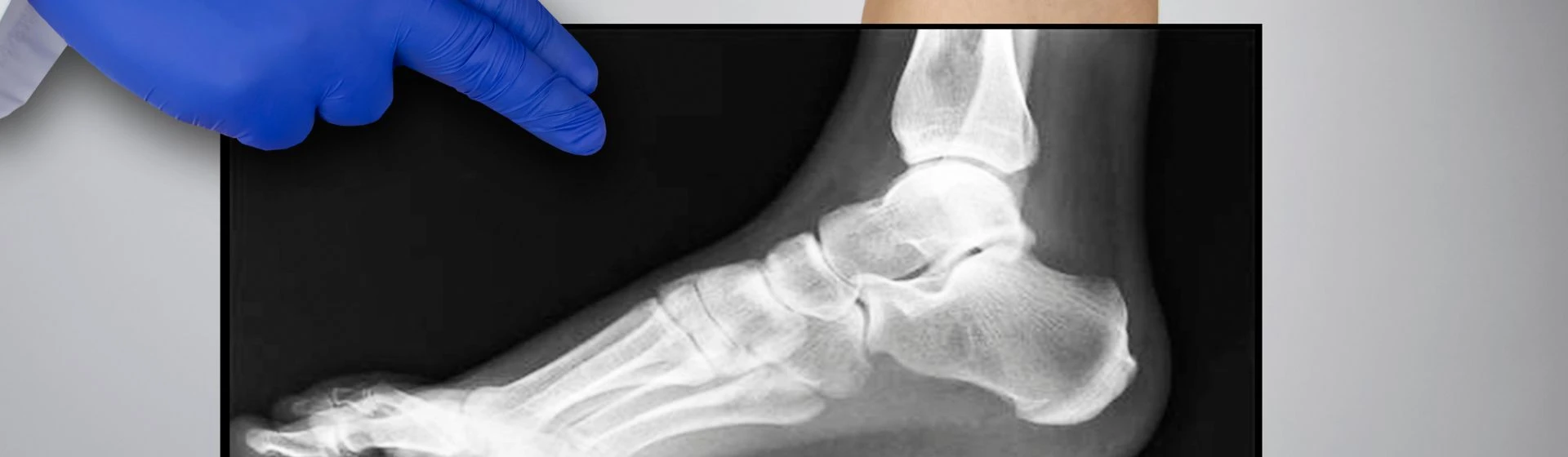
Foot X-ray at the private clinic Oxford Medical Kyiv

Heel fracture

A heel fracture is a fairly complex injury of the foot. The calcaneus is the largest bone of the foot and performs a key weight-bearing function, therefore any disruption of its integrity — a crack or a fracture — leads to pronounced pain and prolonged limitation of mobility.

In the event of a foot injury, it is important to consult a trauma doctor as soon as possible. At the medical center «Оксфорд Медікал» in Kyiv, a 24/7 traumatology department operates, equipped with modern digital X-ray imaging. This makes it possible to immediately confirm the presence of a fracture, determine its type and severity, and promptly start treatment in accordance with clinical protocols.

Timely diagnosis and a correctly chosen treatment strategy are crucial for restoring foot function and preventing complications. You can make an appointment by phone or via the online booking form on the website.

Causes of a Heel Fracture

The most common causes of a heel fracture include:

  • falls from height with landing on the heels;
  • road traffic accidents;
  • sports injuries associated with jumping or sudden landing;
  • occupational and household injuries;
  • falls related to impaired coordination or reduced bone density.

In some cases, the injury may be combined with fractures of the lower leg, spine, or other bones, which requires a comprehensive examination of the patient.

Heel Fracture: Symptoms and Signs of Injury

Clinical manifestations of a heel fracture are usually pronounced and appear
immediately after the injury. The severity of symptoms depends on the type of fracture, the presence of fragment displacement, and involvement of joint surfaces.

The main symptoms of a heel fracture are:

severe pain in the heel area that intensifies when attempting to stand on the foot;

swelling of the foot and ankle joint, bruising that may spread to the lateral surfaces of the foot;

sharp limitation of weight-bearing or complete inability to walk;

deformation of the heel area in displaced fractures.

List of diseases

Even if the pain subsides some time after the injury, this does not rule out the presence of a fracture. Therefore, any suspicion of a leg fracture is a reason to seek immediate medical attention.

Diagnosis of a Heel Fracture

Examination for suspected heel fracture begins with an assessment by a trauma doctor. The physician evaluates the location of pain, degree of swelling, presence of deformity and bruising, as well as the ability to bear weight. At this stage, the nature and severity of the injury can already be suspected.

The main method for confirming the diagnosis is foot X-ray imaging. X-ray allows detection of the fracture, determination of its type, presence or absence of fragment displacement, and involvement of joint surfaces.

In complex clinical cases or when an intra-articular fracture is suspected, the doctor may order computed tomography (CT). This study enables detailed assessment of the fracture configuration and planning of further treatment strategy.

Timely and accurate diagnosis is a key condition for proper treatment of a heel fracture and for reducing the risk of long-term complications.

Private traumatology services at «Оксфорд Медікал» operate around the clock, so you can undergo X-ray imaging and receive medical assistance at any time.

Treatment of a Heel Fracture

The treatment strategy for a heel fracture is determined individually and depends on the type of fracture, presence of fragment displacement, involvement of joint surfaces, and the condition of soft tissues. The calcaneus has a complex anatomical structure and plays a crucial role in load distribution during walking; therefore, the main goal of treatment is not only bone union but also preservation of the foot’s weight-bearing and shock-absorbing functions.

Conservative Treatment

A conservative approach is used for non-displaced fractures or when bone fragments remain stable. This treatment aims to create conditions for proper bone healing and prevent secondary displacement.

Treatment includes:

  • immobilization of the foot and ankle joint using a plaster cast or orthosis to secure the fracture area;
  • complete exclusion of weight-bearing on the injured leg for the period specified by the doctor;
  • medication-based pain control;
  • prevention of thromboembolic complications, especially in cases of limited mobility.

The duration of immobilization depends on the type of fracture and individual patient characteristics and usually lasts several weeks, followed by a gradual transition to rehabilitation.

Surgical Treatment

Surgical intervention is indicated for fractures with fragment displacement, comminuted fractures, and cases involving the joint surfaces of the calcaneus. In such situations, without surgical correction there is a high risk of foot deformity and persistent functional limitations.

The main objectives of surgery are:

  • anatomical alignment of bone fragments;
  • restoration of joint surfaces;
  • reliable and stable fixation for proper bone healing.

Depending on the clinical situation, osteosynthesis with metal hardware or other methods of surgical stabilization are used. After surgery, immobilization of the foot and ankle joint is also mandatory — usually with a plaster cast or a special orthosis. This is necessary to protect the fracture site, reduce load, and create conditions for proper bone healing.

The duration of immobilization and the timing of weight-bearing are determined individually by the doctor, taking into account the type of fracture, extent of surgical intervention, and recovery dynamics.

Rehabilitation After a Heel Fracture

Rehabilitation after a heel fracture is a mandatory and lengthy stage of treatment, directly affecting restoration of the foot’s weight-bearing function and the ability to walk without pain. Even after proper bone healing, without systematic rehabilitation there may be persistent limitations in mobility, discomfort, and gait disturbances.

The duration and scope of rehabilitation measures depend on the type of fracture, treatment method (conservative or surgical), duration of immobilization, and individual patient characteristics.

Early Rehabilitation Stage

Begins during the immobilization period. The main goal is to prevent complications associated with limited mobility.

At this stage, the following are recommended:

  • keeping the limb elevated to reduce swelling;
  • controlled movements in the knee joint and toes (with the doctor’s permission);
  • breathing exercises and general strengthening therapeutic exercises;
  • pain control and prevention of thromboembolic complications.

These measures help reduce the risk of complications, support the patient’s general condition, and prepare the body for further recovery.

Main Rehabilitation Stage

Begins after removal of the cast or orthosis. During this period, the focus is on gradual restoration of ankle mobility and muscle strength.

Rehabilitation includes:

  • therapeutic exercises to mobilize the joint and strengthen the muscles of the foot and lower leg;
  • gradual partial weight-bearing using crutches or orthopedic aids;
  • massage and physiotherapy procedures as recommended by the doctor;
  • training in proper load distribution during walking.

This stage is key for forming correct foot support and gradually returning to independent movement without overloading the injured area.

Late Rehabilitation Stage

Aimed at returning to daily activities and forming a proper gait.

At this stage:

  • load on the foot is gradually increased;
  • exercises are performed to restore coordination, balance, and endurance;
  • orthopedic insoles may be prescribed if necessary to reduce load on the heel area;
  • the patient returns to the usual level of physical activity under medical supervision.

Regular follow-up visits with a trauma doctor allow assessment of recovery progress, timely adjustment of the rehabilitation program, and reduction of the risk of long-term complications. Adherence to specialist recommendations is a key condition for full recovery after a heel fracture.

Consequences of a Heel Fracture

A heel fracture is an injury that may have long-term consequences even after bone union. Their severity depends on the type of fracture, involvement of joint surfaces, timeliness of treatment, and completeness of rehabilitation. Intra-articular fractures require particular attention, as they directly affect foot biomechanics.

Possible consequences of a heel fracture include:

  • chronic pain in the heel or ankle area, which may worsen during walking or prolonged load;
  • limited mobility of the ankle joint, making normal walking difficult and reducing endurance;
  • foot deformity with impaired weight-bearing function and uneven load distribution;
  • development of post-traumatic arthritis of the subtalar or ankle joint;
    limping after a heel fracture caused by impaired gait biomechanics and insufficient recovery;
  • decreased tolerance to physical activity and rapid fatigue of the leg.

The risk of complications increases with delayed medical consultation, premature loading of the foot, or failure to follow rehabilitation recommendations. Adherence to an individual treatment plan and regular follow-up with a trauma doctor significantly reduce the risk of long-term consequences and help preserve foot function in the future.


Private clinic services in Kyiv: price of heel fracture treatment at "Oxford Medical"

The cost of heel fracture treatment depends on the severity of the injury. Pricing is influenced by the scope of required diagnostics and the chosen treatment strategy, including the need for surgical intervention and inpatient observation.

You can review prices in advance and learn which medical services in Kyiv are provided by the private clinic "Oxford Medical" on our website.

More detailed information about the treatment program and its cost will be provided by the trauma doctor after examination, assessment of the fracture type, and review of diagnostic results.

You can book a consultation at a convenient time by phone or via the online booking form. If necessary, you may also contact the admissions department or the 24/7 emergency trauma unit.

Frequently Asked Questions

How can you tell a heel fracture from a bruise?

With a bruise, pain usually decreases gradually, partial weight-bearing remains possible, and there is no deformity. With a heel fracture, pain is sharp and persistent, swelling increases rapidly, bruising appears, and attempting to stand on the foot is often impossible. A definitive distinction between a fracture and a bruise can only be made after a medical examination and X-ray imaging.

How long does a heel fracture take to heal?

Healing of a heel fracture usually takes 8 to 12 weeks. In complex or intra-articular fractures, this period may extend to 3–4 months. Full restoration of foot function often requires a longer rehabilitation period.

How long does swelling last after a heel fracture?

Swelling may persist for several weeks after the injury and even after cast removal. In some patients, mild swelling appears with load for several months, which is considered acceptable during the recovery period.

How long does heel pain last after a fracture?

Pain is most intense during the first weeks after injury. After bone union, pain usually decreases, but discomfort during walking or load may persist for several months, especially after complex fractures.

How should the leg be exercised after a heel fracture?

Rehabilitation exercises after a heel fracture begin only with the doctor’s permission. They include therapeutic exercises to restore ankle mobility, exercises to strengthen the muscles of the foot and lower leg, and gradual increase of load. Independent or excessively intensive exercises may lead to complications.

When can you put weight on the leg after a heel fracture?

The timing of weight-bearing is determined individually. In uncomplicated fractures, partial weight-bearing may be allowed after 6–8 weeks following a follow-up examination. Full weight-bearing is usually possible only after confirmed bone union and on the doctor’s recommendation.

( Rating: 4.65 , Votes: 75 )
Our services
Consultations
Consultation with an orthopedic traumatologist
1100.00 ₴
Add Added
Consultation with a leading orthopedic traumatologist
1989.00 ₴
Add Added
Services
Applying a small plaster cast/splint (with cost of materials)
999.00 ₴
Sign up by the call center
Applying a medium plaster cast/splint (with cost of materials)
1189.00 ₴
Sign up by the call center
Applying a large plaster cast/splint (with cost of materials)
1689.00 ₴
Sign up by the call center
Applying a softcast/scotchcast bandage (without material cost)
1289.00 ₴
Sign up by the call center
Immobilization with plastic bandage, medium (without product cost)
1889.00 ₴
Sign up by the call center

Advantages of treatment of fractures at the private clinic “Oxford Medical” in Kiev

24/7 trauma care. Patients can seek medical assistance at any time.

Modern X-ray diagnostics. Immediate digital X-ray imaging allows for rapid diagnosis.

Experienced doctors. Skilled trauma doctors and surgeons provide care for all types of heel fractures.

Availability of surgical treatment. When necessary, patients with complex fractures can undergo surgical treatment.

Our doctors

Dralov Yaroslav Sergeevich
4.88
rating (16)
5+
Years of experience
Traumatologist
5+ Years of experience
Consultation 1100
Kyiv, Mykhayla Hryshka St., 1
Make an appointment
Fysyuk Anton Alekseevich
0
rating (0)
3+
Years of experience
Online consultation
Orthopedic traumatologist
3+ Years of experience
Consultation 1100
Make an appointment
Chuburov Mikhail Sergeevich
4.89
rating (18)
17+
Years of experience
Online consultation
Orthopedic and traumatologist of the II category
17+ Years of experience
Consultation 1100
Kyiv, Mykhayla Hryshka St., 1
Make an appointment
Kunakhov Sergey Ivanovich
4.84
rating (25)
36+
Years of experience
Orthopedic Traumatologist of the Second Category
36+ Years of experience
Consultation 1100
m. Irpin vul. University, 2/1, building 3
Make an appointment
All doctors
Reviews
Юлія 28.01.2026
Дуже професійний лікар. Уважно вислухав мої скарги на біль в стопі. Позадавав питання додаткові та встановив основну причину захворювання. Навіть особисто зробив устілки для мене і не потрібно нікуди ходити за ними. Я вражена. Рекомендую
Star Star Star Star Star
Катерина 26.01.2026
Звернулася після травми, дуже хвилювалася. Лікар усе спокійно перевірив, показав знімки й пояснив, що нічого критичного немає. Призначене лікування допомогло, рухатися стало легше. Дуже вдячна.
Star Star Star Star Star
News
All Articles
Sign up via call center
in the clinic
online
This site is protected by reCAPTCHA technology, and the Google Privacy Policy and Terms of Service apply.
Hello!
Let's take care
about your health:
Sign up via call center

We use cookies and other technologies to remember your preferences and find out exactly how you use and interact with the site.

By using our site, you also agree to the terms of the "User Agreement" and "Regulation on the processing and protection of personal data". By clicking "I AGREE", you consent to the processing of your data.