Sign up via call center
Department
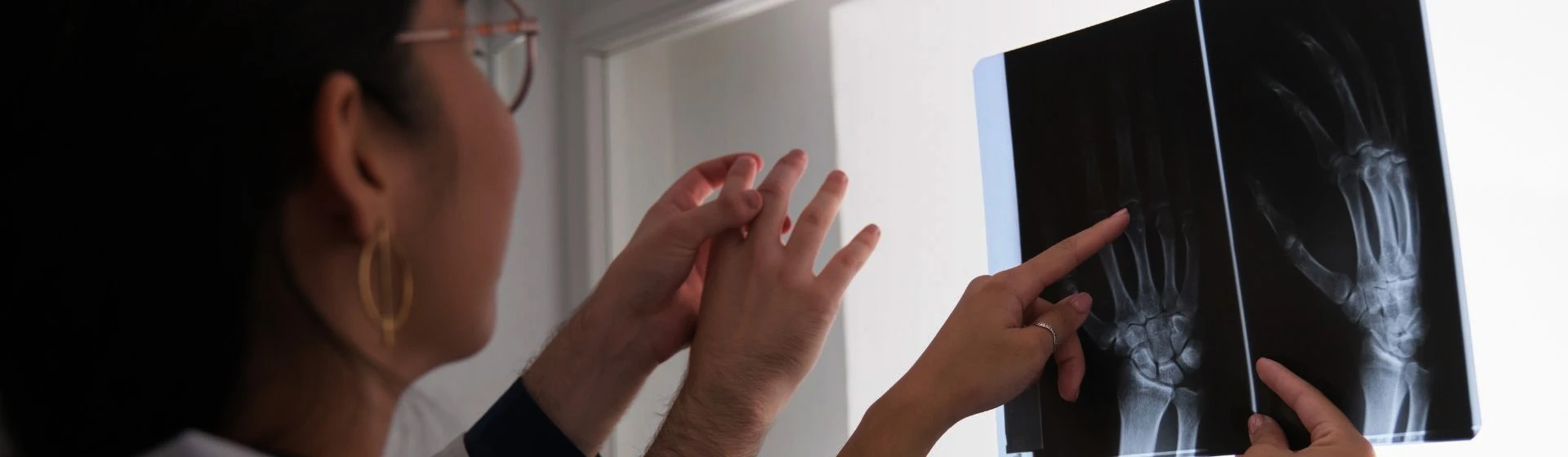
Hand X-ray at the private clinic Oxford Medical Kyiv

Arm fracture

An arm fracture is one of the most common injuries and can occur at any age and under various circumstances, ranging from everyday falls to sports-related and occupational injuries.

If a fracture is suspected, it is important not to delay seeking medical care. At Oxford Medical in Kyiv, a 24/7 orthopedics and traumatology department is available, where patients can promptly undergo a medical examination and digital X-ray imaging of the arm.

Timely diagnosis and an appropriately selected treatment strategy are crucial for full restoration of arm function and prevention of possible complications. You can schedule an appointment by phone or via the online booking form on the website.

Causes of an arm fracture

The nature of the injury depends on the force of the traumatic impact, the position of the arm at the moment of injury, and the condition of the bone tissue.

The main causes of an arm fracture include:

  • falling onto an outstretched hand;

  • direct impact or injury during road traffic accidents;

  • sports-related injuries during training or competitions;

  • occupational and household injuries;

  • reduced bone density, particularly in elderly patients.

In each of these cases, the risk of fracture increases when intense loading is combined with decreased bone strength, which requires timely diagnosis and appropriately selected treatment.

Types of arm fractures

In traumatology, arm fractures are classified according to several clinically important criteria. This classification allows the physician to accurately assess the nature of the injury, choose the optimal treatment strategy, and predict the timeline for recovery of limb function.

By location of injury

Depending on which part of the upper limb is affected, the following types are distinguished:

  • fractures of the humerus, which may limit movement in the shoulder and elbow joints;

  • fractures of the forearm bones (radius and ulna), often affecting the ability to flex, extend, and rotate the arm;

  • fractures of the wrist and hand, accompanied by impairment of fine motor skills and gripping function.

Each of these locations has its own characteristics in terms of course, treatment, and rehabilitation.

By nature of bone damage

Taking into account the condition of bone fragments and soft tissues, arm fractures are divided into:

  • non-displaced fractures, in which bone fragments retain proper anatomical alignment;

  • displaced fractures, which require closer monitoring or surgical intervention to restore bone anatomy;

  • closed fractures, where the skin over the injury site remains intact;

  • open fractures, involving damage to the skin and soft tissues, which increases the risk of infectious complications.

The type of fracture directly affects the treatment method, the duration of immobilization, and the scope of rehabilitation measures.

Arm fracture: symptoms and signs of injury

Clinical manifestations depend on the location of the fracture, its type, and the
presence of fragment displacement. An arm fracture is usually accompanied by pronounced
symptoms that appear immediately after the injury or rapidly intensify within the first hours.

The most common signs include:

sharp or gradually increasing pain at the site of injury, which worsens with movement;

swelling of the arm after a fracture, which may increase quickly and limit movement;

the appearance of bruising or subcutaneous hemorrhages in the injured area;

limited or complete loss of limb mobility, sometimes with visible deformity.

List of diseases

Even if the intensity of pain decreases over time, the presence of these symptoms warrants mandatory medical evaluation, as lack of treatment may lead to complications and impaired arm function.

Treatment of the arm after a fracture

Treatment of the arm after a fracture is aimed at proper bone healing, restoration of anatomical alignment, and preservation of limb function. The treatment strategy is determined individually by the physician after clinical examination, evaluation of arm X-rays, and consideration of fracture location, fragment displacement, and the patient’s general condition.

Conservative treatment

Conservative methods are used for stable fractures without displacement or when correct anatomical alignment of bone fragments is preserved. The main goal is reliable immobilization of the injured area and creation of optimal conditions for bone healing.

Conservative treatment includes:

  • immobilization of the arm using a cast or orthosis with fixation of adjacent joints;

  • limitation of load on the injured limb for a period specified by the physician;

  • medication-based pain relief and anti-inflammatory therapy;

  • monitoring of arm swelling after fracture and the condition of soft tissues;

  • dynamic follow-up with repeat X-ray examinations.

After completion of this stage, the physician assesses bone healing progress and determines further management, including the duration of immobilization, the possibility of gradual load increase, and the start of rehabilitation measures.

Surgical treatment

Surgical intervention is recommended for fractures with displaced fragments, unstable fractures, intra-articular injuries, or multiple fractures of the arm bones, when stable bone alignment cannot be achieved using conservative methods.

Surgical treatment may involve:

  • anatomical realignment of bone fragments;

  • fixation of bones using metal devices such as plates, screws, or pins;

  • restoration of limb stability and conditions for further bone healing.

After surgery, arm immobilization is mandatory, followed by a gradual transition to the recovery phase. Timely and appropriately selected treatment significantly reduces the risk of complications and provides a solid foundation for effective rehabilitation.

Recovery after an arm fracture

Recovery after an arm fracture begins once stable bone healing is achieved and the cast or orthosis is removed. The duration of the rehabilitation period depends on the fracture location, its complexity, the length of immobilization, and the chosen treatment method.

The main goal of rehabilitation is to restore full range of motion, muscle strength, and functional use of the upper limb without pain or limitations. The recovery process is gradual and includes:

  • progressive restoration of mobility in the affected joints, taking individual limitations into account;

  • arm rehabilitation after fracture through therapeutic exercises and specially selected physical therapy programs;

  • strengthening of the shoulder, forearm, and hand muscles to regain stability and endurance;

  • gradual return to daily, professional, and physical activities without overloading the arm.

Following medical recommendations, maintaining regular exercise, and monitoring recovery progress help reduce the risk of complications, prevent joint stiffness, and ensure full restoration of arm function.

Arm fracture: long-term consequences

Even after complete bone healing, an arm fracture may have long-term consequences, especially if the injury was complex, intra-articular, or accompanied by fragment displacement. The risk of complications also increases with delayed treatment or failure to follow rehabilitation recommendations.

Possible consequences include:

  • limited joint mobility, making everyday movements more difficult;

  • chronic pain or discomfort during physical load or weather changes;

  • reduced muscle strength in the affected limb;

  • impaired fine motor skills, particularly after fractures involving the wrist or hand;

  • limb deformity resulting from improper bone healing.

Timely diagnosis, appropriately selected treatment after an arm fracture, and comprehensive rehabilitation significantly reduce the risk of long-term complications and help restore upper limb function to the greatest extent possible.

Private clinic services in Kyiv: cost of arm fracture treatment at Oxford Medical

The cost of treatment depends on the complexity of the fracture and the need for surgical intervention.

You can review the prices for medical services in Kyiv at the private clinic Oxford Medical on our website.

More detailed information about treatment options and pricing will be provided by the physician during the consultation. You can schedule an appointment at a convenient time by phone or via the online booking form.

Frequently asked questions

How can you tell an arm fracture from a bruise?

After a bruise, pain usually decreases gradually, movements become easier over time, and there is no limb deformity. In the case of a fracture, the pain is often sharp and persistent, swelling increases quickly, bruising may appear, and movement can be limited or the arm may take an unnatural position. However, a fracture can be reliably distinguished from a bruise only after a medical examination and X-ray imaging, so with severe pain or restricted movement, diagnosis should not be delayed.

Can you apply heat to the arm after a fracture?

In the early period after a fracture, especially when swelling and pain are present, heating and hot procedures are not recommended, as heat can increase swelling and inflammation. Heat therapy may be prescribed later as part of rehabilitation, but only on a physician’s recommendation, when there is no active swelling and proper bone healing has been confirmed.


How can you straighten your elbow after an arm fracture?

Elbow extension after a fracture is restored gradually through physical therapy and exercises selected by a physician or rehabilitation specialist. It is important not to force the joint through pain or perform sudden movements, as this may injure tissues and cause complications. If the elbow joint was immobilized for a long time, recovery may take several weeks and require regular exercise.

How should you hold your arm in case of a fracture?

Before being examined by a doctor, the arm should be immobilized as much as possible and fixed in a comfortable position. Most often, it is supported in a bent position, held close to the body, using a sling or improvised means for fixation. If swelling is present, the arm should be kept elevated. It is important not to attempt to realign the bone or actively move the arm on your own.

When can you lift heavy objects after an arm fracture?

Returning to lifting heavy objects is possible only after bone healing has been confirmed and muscle strength has been restored. In most cases, significant loads are allowed no earlier than 2–3 months, and later after complex fractures. The exact timing is determined individually by the physician based on follow-up examinations and the progress of rehabilitation.

( Rating: 4.65 , Votes: 75 )
Our services
Consultations
Consultation with an orthopedic traumatologist
1100.00 ₴
Add Added
Consultation with a leading orthopedic traumatologist
1989.00 ₴
Add Added
Services
Applying a small plaster cast/splint (with cost of materials)
999.00 ₴
Sign up by the call center
Applying a medium plaster cast/splint (with cost of materials)
1189.00 ₴
Sign up by the call center
Applying a large plaster cast/splint (with cost of materials)
1689.00 ₴
Sign up by the call center
Applying a soft fixation bandage (with cost of materials)
719.00 ₴
Sign up by the call center
Applying a softcast/scotchcast bandage (without material cost)
1289.00 ₴
Sign up by the call center

Advantages of treatment of fractures at the private clinic “Oxford Medical” in Kiev

24/7 trauma care. Patients can seek medical assistance at any time.

Modern X-ray diagnostics. Immediate digital X-ray imaging allows for rapid diagnosis.

Experienced doctors. Skilled trauma doctors and surgeons provide care for all types of heel fractures.

Availability of surgical treatment. When necessary, patients with complex fractures can undergo surgical treatment.

Our doctors

Dralov Yaroslav Sergeevich
4.88
rating (16)
5+
Years of experience
Traumatologist
5+ Years of experience
Consultation 1100
Kyiv, Mykhayla Hryshka St., 1
Make an appointment
Fysyuk Anton Alekseevich
0
rating (0)
3+
Years of experience
Online consultation
Orthopedic traumatologist
3+ Years of experience
Consultation 1100
Make an appointment
Chuburov Mikhail Sergeevich
4.89
rating (18)
17+
Years of experience
Online consultation
Orthopedic and traumatologist of the II category
17+ Years of experience
Consultation 1100
Kyiv, Mykhayla Hryshka St., 1
Make an appointment
Kunakhov Sergey Ivanovich
4.84
rating (25)
36+
Years of experience
Orthopedic Traumatologist of the Second Category
36+ Years of experience
Consultation 1100
m. Irpin vul. University, 2/1, building 3
Make an appointment
All doctors
Reviews
Юлія 28.01.2026
Дуже професійний лікар. Уважно вислухав мої скарги на біль в стопі. Позадавав питання додаткові та встановив основну причину захворювання. Навіть особисто зробив устілки для мене і не потрібно нікуди ходити за ними. Я вражена. Рекомендую
Star Star Star Star Star
Катерина 26.01.2026
Звернулася після травми, дуже хвилювалася. Лікар усе спокійно перевірив, показав знімки й пояснив, що нічого критичного немає. Призначене лікування допомогло, рухатися стало легше. Дуже вдячна.
Star Star Star Star Star
News
All Articles
Sign up via call center
in the clinic
online
This site is protected by reCAPTCHA technology, and the Google Privacy Policy and Terms of Service apply.
Hello!
Let's take care
about your health:
Sign up via call center

We use cookies and other technologies to remember your preferences and find out exactly how you use and interact with the site.

By using our site, you also agree to the terms of the "User Agreement" and "Regulation on the processing and protection of personal data". By clicking "I AGREE", you consent to the processing of your data.