


The doctor begins by carefully collecting information about the complaints and may ask when the symptoms appeared, what factors could have provoked them, whether there were similar problems in the past. Particular attention is paid to possible allergic reactions, hereditary factors, and the presence of chronic diseases.
Sign up via call center 
 Adults Adults Adults Adults Adults Adults Adults Adults Adults
  Children Children Children Children
Department
Adults Outpatient department
Adults Outpatient department
Inpatient department
Adults Inpatient department
Aesthetic medicine
Adults Aesthetic medicine
Dentistry
Adults Dentistry
Plastic surgery
Adults Plastic surgery
Diagnostics
Adults Diagnostics
Analyzes
Adults Analyzes
Outbound services
Adults Outbound services
Children Outpatient department
Children Outpatient department
Dentistry
Children Dentistry
Diagnostics
Children Diagnostics

Kyiv


 Hotline:
 Request a call:


Department
Adults Outpatient department
Adults Outpatient department
Inpatient department
Adults Inpatient department
Aesthetic medicine
Adults Aesthetic medicine
Dentistry
Adults Dentistry
Plastic surgery
Adults Plastic surgery
Diagnostics
Adults Diagnostics
Analyzes
Adults Analyzes
Outbound services
Adults Outbound services
Children Outpatient department
Children Outpatient department
Dentistry
Children Dentistry
Diagnostics
Children Diagnostics

Dermatologist on Poznyaki
Dermatologist in Poznyaki in Kyiv
A dermatologist is a doctor who diagnoses, treats, and prevents various skin, hair, and nail diseases. His or her job is not only to eliminate existing problems, but also to help maintain the health and beauty of the skin.
The skin is the largest organ in the human body, which performs key functions: protection, thermoregulation, and immune support. The condition of the skin is often an indicator of the overall health of the body, so any changes may indicate internal disorders.
Dermatological diseases can be of different nature: infectious, allergic, hormonal, hereditary, or be a consequence of diseases of internal organs. Timely consultation with a dermatologist in Poznyaki helps to identify the cause of the problem and solve it before serious complications arise.
The Oxford Medical Medical Center in Poznyaki employs professional dermatologists who provide a comprehensive approach to diagnosis and treatment.
Sign up for a consultation today and take care of your skin health!

When to see a dermatologist in Poznyaki
Timely consultation with a dermatologist is the key to effective treatment and prevention of complications.
It is recommended to consult a specialist if you have the following symptoms:
- Rash and redness: the appearance of rashes, spots or redness on the skin that do not disappear for a long time.
- Itching and peeling: constant itching, dryness or peeling of the skin, which causes discomfort.
- Changes in moles: a change in the size, shape, color of moles or the appearance of new neoplasms.
- Problems with hair and nails: excessive hair loss, brittle nails or a change in their structure.
- Painful or purulent rashes: the appearance of painful nodules, abscesses or ulcers on the skin.
Ignoring these symptoms can lead to the progression of the disease and the development of complications. Therefore, it is important not to postpone a visit to a dermatologist. Poznyaki is a developed area where it is not at all difficult to find a doctor, and our medical center provides the opportunity to get a consultation at any convenient time.
By entrusting your health to the dermatologists of the Oxford Medical Medical Center in Poznyaki, you are choosing high-quality medical care, modern treatment methods, and an individual approach. Take care of your skin health — schedule a consultation today!
What does a dermatologist treat?
Our dermatology department in Poznyaki treats a wide range of skin, hair and nail diseases, including:
- Acne: an inflammatory disease of the sebaceous glands, manifested by rashes on the face and body.
- Eczema and dermatitis: inflammatory processes of the skin, accompanied by itching, redness and peeling.
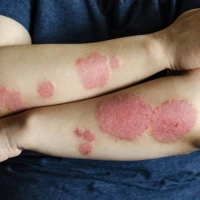
- Psoriasis: a chronic autoimmune disease characterized by the appearance of red plaques covered with silvery scales.
- Fungal infections: damage to the skin, nails or hair by pathogenic fungi.
- Viral skin diseases: herpes, warts, molluscum contagiosum and other viral infections.
- Pigment disorders: vitiligo, melasma and other skin color changes.
- Alopecia: pathological hair loss, which can have various causes.
In addition, a dermatologist conducts preventive examinations and provides recommendations for skin, hair, and nail care.
How is a consultation with a dermatologist?
A consultation with a dermatologist in Poznyaki includes several key stages:
Detailed patient interview
Overview of problem areas
A dermatologist will visually examine the skin, hair, or nails of the affected areas. If necessary, they will use special equipment, such as a dermatoscope, to more accurately analyze the condition of the skin or neoplasms.
Appointment of diagnostic procedures
If additional tests are needed to clarify the diagnosis, the doctor may suggest blood tests or microscopic analysis of a skin sample. A skin biopsy or other instrumental tests may also be ordered if indicated.
Establishing a diagnosis
During the same or subsequent (if additional examinations are required) consultation, the dermatologist makes a diagnosis and determines what exactly caused the problem.
Drawing up an individual treatment plan
На основі діагнозу лікар пропонує індивідуальний план лікування.
Він може включати застосування місцевих препаратів (мазі, гелі, креми), системну терапію (таблетки чи ін’єкції), апаратні процедури або рекомендації з догляду за шкірою та способу життя.
Diagnosis of dermatological diseases
Diagnosis of skin diseases is a multi-stage process that allows you to accurately determine the cause of the problem and develop an effective treatment plan. The Oxford Medical Center in Poznyaki uses modern research methods that ensure high accuracy of diagnosis.
Skin diseases often have similar symptoms. Only professional diagnostics allows you to establish the correct diagnosis and avoid ineffective treatment. At the Oxford Medical Center in Poznyaki, diagnostics are performed using modern equipment and advanced techniques, which ensures high accuracy of results.
Trust your skin to professionals - make an appointment with a dermatologist in Poznyaki today!
Depending on the indications, the patient may be prescribed:
Dermatoscopy
This method involves the use of a special optical device called a dermatoscope, which allows for a detailed examination of the structure of moles, neoplasms, pigment spots, and other skin elements. Dermatoscopy helps detect melanoma and other dangerous pathologies in the early stages.
Laboratory studies
- General and biochemical blood test: to assess the general condition of the body and possible inflammatory processes.
- Allergen analysis: helps determine the cause of allergic reactions.
- Bacteriological culture: to detect bacterial infections and their sensitivity to antibiotics.
- Microscopic examination of skin scrapings: used to diagnose fungal infections or demodicosis.
Skin biopsy
In cases where it is necessary to exclude or confirm serious diseases (for example, skin cancer), a small skin sample is taken for histological examination. This allows for a detailed study of the tissue structure under a microscope and an accurate diagnosis.
Allergy tests
Skin tests to identify specific allergens are recommended for patients with suspected allergic dermatitis or other allergic diseases.
Photographic documentation
Sometimes, for dynamic monitoring of the skin condition, the appearance of the lesions is recorded using photographs, which allows them to be assessed over time.
Treatment of dermatological diseases
Treatment of skin diseases is a complex process that is aimed not only at eliminating external manifestations, but also at combating the cause of the disease. Our dermatologists use modern methods of therapy that provide effective results.
Do not postpone solving skin problems - make an appointment today!
Depending on the diagnosis, the patient may be prescribed:
Drug therapy
- Topical treatment: The use of ointments, creams, gels, or sprays that are applied directly to the affected areas. They may contain antibiotics, hormones, antifungals, or moisturizers.
- Systemic treatment: In cases of severe or widespread disease, your doctor may prescribe medications in the form of pills or injections that affect the entire body. These may include antibiotics, antifungals, immunomodulators, or retinoids.
Physiotherapy treatment methods
- Laser therapy: a modern method used to treat acne, psoriasis, eczema, remove age spots or scars. The laser allows you to work precisely on the affected areas without damaging healthy skin.
- Phototherapy: the use of ultraviolet light to treat chronic diseases such as psoriasis, atopic dermatitis or vitiligo.
- Cryotherapy: the effect on the affected tissues with liquid nitrogen, which is effective in the treatment of warts, papillomas and other neoplasms.
Surgical methods
Removal of neoplasms: Oxford Medical doctors use safe methods, such as radio wave therapy or laser removal, to remove papillomas, warts, moles, and other growths.
Lifestyle and skin care tips
Often, the success of treatment depends on proper home skin care. Our dermatologists develop individual recommendations for nutrition, hygiene, and the choice of cosmetics.
Services by district
Clinic in Bereznyaki
Clinic in Irpen
Clinic in Obolon
Clinic in Osokorki
Clinic in Pechersk
Clinic in Poznyaki
Dermatologist in Poznyaki
Clinic near the city "Palace of Ukraine"
Clinic on the Left Bank
Clinic on Zhytomyrska
Dentistry on Chornaya Hora
Show more 

Advantages of dermatology at Oxford Medical in Poznyaki

Highly qualified specialists: our team consists of experienced dermatologists who are constantly improving their qualifications and possess modern diagnostic and treatment methods.
Modern equipment: the clinic is equipped with the latest diagnostic and therapeutic devices, which allows for high-level examinations and treatment
Individual approach: each patient is offered a personalized treatment plan taking into account the characteristics of the body and the specifics of the disease
Comprehensiveness of services: at the clinic in Poznyaki, patients can receive consultations from doctors of various specialties, take tests and undergo ultrasound, which provides a comprehensive approach to health
Convenient location: the clinic is located at: Mykhayla Hryshka St., 1, next to the Poznyaki metro station. If you are looking for a dermatologist on Hryhorenka, you can also make an appointment with us, because it is a neighboring street
Flexible working hours: the clinic is open daily from 8:00 to 20:00, which allows you to choose a convenient time for your visit
Show more 
Our doctors
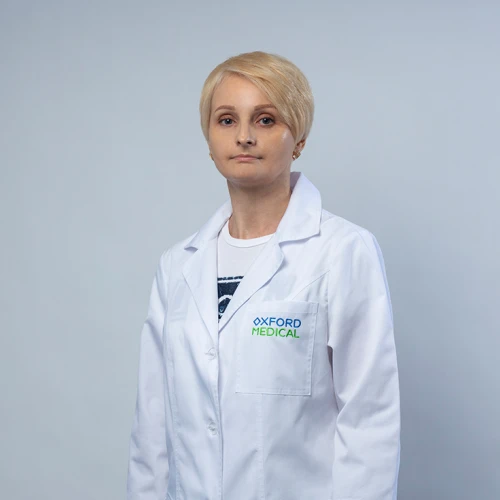
 4.92
4.92  18+
18+ Dermatovenereologist of the highest category
 18+ Years of experience
 Consultation 1100
 Kyiv, Mykhayla Hryshka St., 1
 4.75 4+
 Dermatovenereologist, pediatric dermatovenereologist
4+ Years of experience Consultation 1100
Kyiv, Mykhayla Hryshka St., 1 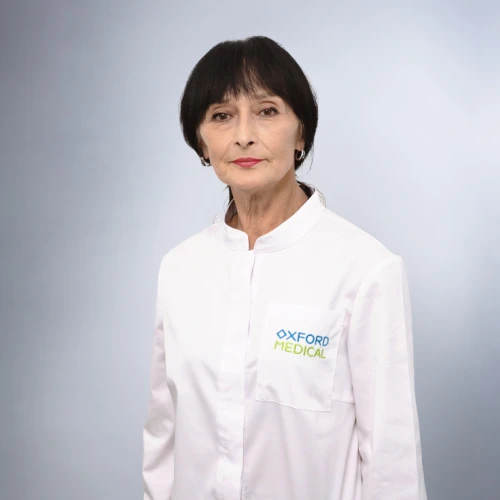 4.71 5+
 Dermatologist
5+ Years of experience Consultation 1100
Kyiv, Mykhayla Hryshka St., 1 
Reviews
Антон 25.08.2025
Велика подяка лікарю-кардіологу за професійний підхід. Прийом пройшов спокійно, без поспіху: усе пояснили доступно й відповіли на всі запитання. Обстеження та лікування підібрали індивідуально, і тепер мій стан значно покращився.

Валентина 25.08.2025
Залишилася дуже задоволена консультацією терапевта в. Лікар уважно вислухав, поставив багато уточнюючих запитань і чітко пояснив, які обстеження потрібно пройти. Завдяки детальним рекомендаціям я швидко почала лікування й відчула полегшення.
Current information

17 March 2026
What diseases are similar to psoriasis: how to distinguish different conditions
26 February 2026
What is hives: what does hives look like and how to treat it
25 February 2026
What is lichen: what it looks like and how it is treated
20 February 2026
How to identify nail fungus
Sign up
 in the clinic
  online

 Hello!
Let's take care
about your health:
Sign up via call center 
