


decreased visual acuity, blurriness or double vision;
A study of visual acuity using standard tables or electronic devices to identify disorders and the need for correction methods.

 Adults Adults Adults Adults Adults Adults Adults Adults Adults
  Children Children Children Children


 Hotline:
 Adults Adults Adults Adults Adults Adults Adults Adults Adults Children Children Children Children
An ophthalmologist is a doctor who performs diagnostics and treatment of eye diseases, as well as correction of visual impairments.
You should consult an ophthalmologist in Irpin not only when you notice a significant decrease in visual acuity, but also when “floaters,” fog in front of the eyes, redness, pain, dryness or rapid eye fatigue appear.
Experienced ophthalmologists work at the Oxford Medical medical center. Thanks to the clinic being equipped with expert-class devices, they perform full computer diagnostics and select the optimal method of correction or treatment of eye diseases.
Make an appointment with an ophthalmologist in Irpin at a time convenient for you!
It is recommended to make an appointment if you notice:


decreased visual acuity, blurriness or double vision;
appearance of “floaters,” fog or glare in front of the eyes;
dryness, burning, itching or pain in the eye area;
redness, eyelid swelling or excessive tearing.

A consultation with an ophthalmologist is necessary if any complaints related to the condition of the eyes appear. Most ophthalmic diseases develop gradually, so early consultation allows timely treatment and prevention of complications.
Regular preventive examinations are also important for patients over 45 years old, people with chronic diseases (in particular diabetes or hypertension), as well as those who work a lot at the computer or have a hereditary predisposition to eye diseases.
During the initial visit, the doctor clarifies information about complaints, the specifics of their appearance and possible risk factors, including heredity and concomitant diseases.
Next, a basic eye examination is performed: visual acuity is checked, and the superficial structures of the eye are examined. If this is not enough for an accurate diagnosis, the ophthalmologist may recommend additional tests. Their scope is determined individually and depends on existing symptoms and the clinical situation.
After the consultation, the patient receives a detailed doctor’s conclusion with recommendations on treatment, vision correction, eye care and preventive measures. If necessary, the ophthalmologist determines the optimal schedule for further visits or monitoring of vision.
At the Oxford Medical medical center in Irpin, modern diagnostics is performed, which allows identifying eye diseases and accurately determining the cause of symptoms.
The ophthalmology department uses the following methods:
A study of visual acuity using standard tables or electronic devices to identify disorders and the need for correction methods.
Computer analysis of refraction, which helps detect myopia, hyperopia and astigmatism.
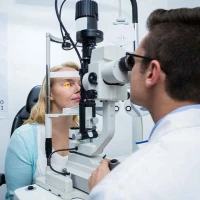
Examination of the anterior structures of the eye (cornea, iris, lens) using a slit lamp.
Non-contact measurement of intraocular pressure — one of the key methods for early diagnosis of glaucoma.
Examination of the fundus, which allows assessment of the retina, blood vessels and optic nerve.
Layer-by-layer scanning of eye tissues for diagnosing glaucoma, dystrophic changes, edema and retinal detachment.
At the Oxford Medical medical center in Irpin, treatment of ophthalmic diseases is carried out comprehensively and with consideration of the individual needs of each patient. The doctor determines the therapy strategy after the examination and diagnostics, taking into account the nature of symptoms, concomitant diseases and the general condition of the visual system.
Medication treatment is prescribed for inflammatory, infectious or allergic eye diseases. It may include anti-inflammatory, antibacterial or antiallergic drugs, as well as means for normalizing intraocular pressure. In cases of refractive disorders, the doctor selects optical correction — glasses or contact lenses, which provide clarity of vision and comfort in everyday life.
When conservative methods do not provide the necessary result or the disease has a progressive nature, surgical treatment is performed. Operations for cataracts, glaucoma, retinal detachment or neoplasms are carried out in a modern surgical unit in compliance with high safety standards.
Patients with chronic ophthalmic diseases are recommended regular examinations and monitoring in order to adjust treatment in time and prevent possible complications. This approach ensures stable vision and effective maintenance of eye health.
An ophthalmologist performs diagnostics and treatment of a wide range of eye diseases — both acute and chronic.
Unlike a regular clinic, at the Oxford Medical Medical Center in Irpin, you can undergo diagnostics using expert-class equipment and receive help with the most common ophthalmological conditions, including:
Mild myopia, moderate or high, hypermetropia and astigmatism, which lead to reduced image clarity at different distances.
Conjunctivitis, keratitis, blepharitis, stye — diseases that may be accompanied by redness, pain, tearing and photophobia.
Retinopathies, dystrophic changes, retinal detachment — conditions requiring thorough diagnostics and timely treatment.
Neuritis and other diseases that can affect visual acuity.
Cataract and glaucoma — common conditions that, without treatment, lead to progressive deterioration of vision.
Chalazion, atheroma, benign formations that require monitoring or removal.
An ophthalmologist provides care for mechanical, chemical and thermal injuries.
The cost of an initial ophthalmologist consultation in Irpin at the private Oxford Medical clinic can be found here. The full list of services of the private clinic in Irpin is available on the pricing page.
The price of comprehensive diagnostics may vary depending on the type and number of necessary examinations. The exact cost of medical services in Irpin at the ophthalmology department can only be determined by the doctor after examining and reviewing existing complaints and medical history.
If you need an experienced ophthalmologist in Bucha or Irpin and wish to undergo testing using modern equipment in comfortable conditions, make an appointment with an ophthalmologist at Oxford Medical. Our specialists will perform accurate diagnostics and help select the optimal treatment method for visual impairments.
To make an appointment at a convenient time, call our contact center or use the online booking form.
A sudden deterioration of vision may be a sign of serious ophthalmic conditions — from retinal detachment to acute disorders of the optic nerve or significant increase in intraocular pressure. In such a situation, it is important to seek medical help immediately. You should not wait or self-medicate, as timely diagnostics allow prevention of irreversible changes.
Adults are recommended to undergo a preventive examination by an ophthalmologist at least once a year. More frequently — every 6 months — people with chronic diseases (diabetes, hypertension), those with hereditary predisposition to eye diseases, and those who work extensively at the computer should be examined. After the age of 45, preventive examinations are advisable regularly regardless of symptoms.
The possibility of restoring vision through non-surgical methods depends on the specific diagnosis. Refractive disorders (myopia, hypermetropia, astigmatism) are corrected by selecting glasses or contact lenses. Some inflammatory and functional conditions respond well to medication. However, in cases of cataract, glaucoma or retinal detachment, restoration of vision is possible only through surgical intervention. The exact treatment option will be determined by the ophthalmologist after the examination.


Modern diagnostic equipment. The clinic uses expert-class instruments that allow detecting even minimal changes in the structure of the eye and accurately determining the cause of vision deterioration.
Experienced ophthalmologists. Consultations are provided by specialists with extensive practical experience who are proficient in modern diagnostic and treatment methods for eye diseases.
Comprehensive approach. Patients receive a full range of care — from the initial consultation and correction selection to medication or surgical treatment.
Comfortable conditions and convenient appointment scheduling. Consultations are held without queues, in a friendly atmosphere, with the possibility to book a suitable time by phone or through the online form.


 4.93
4.93  49+
49+  49+ Years of experience
  m. Irpin vul. University, 2/1, building 3
 0 6+ 6+ Years of experience m. Irpin vul. University, 2/1, building 3



 in the clinic
  online
  Hello!


