
The information in the article is provided for informational purposes only and is not a guide to self-diagnosis and treatment. If symptoms of the disease appear, you should consult a doctor.
Contents:
How to prepare for treatment?
-
Types of erosion
-
Causes of erosion
-
How does the disease manifest itself?
-
Diagnosis of cervical erosion
-
Treatment of cervical erosion
-
Treatment of erosion during pregnancy
-
What to do after the procedure?
-
Consequences of cervical erosion
-
Treatment of cervical erosion at “Oxford Medical”
-
Frequently Asked Questions
Cervical erosion is a benign disease that is accompanied by a change in the structure of the mucous membrane of the organ. Most often, it develops asymptomatically and is diagnosed during a preventive examination.
Up to 30% of women of childbearing age are diagnosed with this diagnosis. Some do not need treatment, while others need it immediately. The fact is that erosion can be different: it can be both a physiological feature and a serious disease.
Types of cervical erosion
The mucous membrane of the cervix consists of squamous epithelial cells and has a homogeneous structure. If it changes, it is called erosion. Depending on their nature, they are distinguished:
-
Congenital erosion - this is a physiological condition in which the boundaries of the flat and cylindrical epithelium (covering the inner walls of the cervix) are disturbed. At a young age, this condition is considered normal. By about 24 years of age, the correct boundaries between the tissues should be restored.
-
Ectopy, or false erosion - this is the spread of cylindrical epithelial cells covering the walls of the cervical canal to the outer side of the cervix. They do not have the necessary protective properties, which is why under the influence of vaginal microflora they begin to collapse and inflammation occurs.
-
True erosion - this is an inflammatory disease that manifests itself as small ulcers. It actively develops for several weeks and is accompanied by unpleasant symptoms, after which the condition of the mucous membrane normalizes or the disease becomes chronic.
Thus, congenital erosion may not require therapy until a certain age, while true erosion and ectopia are treated differently.

Causes of cervical erosion
There are many factors that provoke the development of the disease. The most common are:
-
hereditary predisposition;
-
damage to the mucous membrane of the cervix;
-
inflammatory and infectious diseases of the genital organs;
-
infection with the human papillomavirus;
-
early sexual contact;
-
complicated diabetes mellitus;
-
radiotherapy, etc.
The causes of true erosion are most often mechanical and chemical damage to the mucous membrane of the cervix. They can occur when using tampons and some contraceptives, as well as douching and medical procedures. Erosion can also develop as a complication of an infectious disease, diabetes mellitus, or radiation exposure.
Congenital erosion has hereditary causes and normally resolves on its own in girls under the age of 24. As for ectopia, it develops as a result of a complex of various factors.
How does the disease manifest itself?
Congenital erosion and ectopia develop asymptomatically in many people. A woman may not have any complaints and feel healthy until the disease leads to complications.
In rare cases, mainly with true erosion, the following symptoms may appear:
-
discomfort, pain during intercourse and light bleeding after;
-
bloody discharge in the middle of the menstrual cycle;
-
abundant mucous or purulent discharge with an unpleasant odor.
Sometimes, against the background of erosion, another inflammatory or infectious disease develops, which causes more pronounced symptoms and forces the woman to consult a gynecologist.
Diagnosis of cervical erosion
Cervical erosion is often diagnosed during a preventive appointment or when the patient visits a gynecologist for another reason. In the case of a pronounced process, during the examination, the doctor may notice redness and a characteristic change in the structure of the mucous membrane.
The diagnosis can be confirmed by extended colposcopy - an examination of the cervix through a magnifying device with subsequent application of a solution of vinegar or iodine to the mucous membrane. Under their influence, the changed area turns red, o allows you to accurately determine the boundaries of erosion.
For a comprehensive diagnosis, the gynecologist may also prescribe a cytological analysis of a scraping from the cervix. It allows you to more accurately assess the structure of the tissues and confirm or exclude pathological changes. The study is informative even in the early stages of the disease, when there are practically no symptoms and visual changes.
In addition, a general examination may require a vaginal smear for microflora, analysis for human papillomavirus (HPV) and common infections, ultrasound of the pelvic organs, and if a malignant process is suspected, a biopsy and histological analysis.
Treatment of cervical erosion
Treatment of erosion is prescribed individually. It depends on the exact diagnosis – erosion or ectopia, the area of the damaged area of the cervix, the presence of concomitant diseases, the woman's age and reproductive plans.
In the case of true erosion, drug treatment is often used. It may include drugs of local and systemic action. Drug therapy is also prescribed for infections, colpitis, cervicitis and some other diseases.
False erosion, or ectopia, is treated differently. To restore the normal structure of the cervical mucosa, it is necessary to remove atypical cells, in this case the cylindrical epithelium. Currently, the procedure is performed using minimally invasive techniques. They do not require hospitalization, cause minimal tissue damage and have a short rehabilitation period.
To remove the erosive area, a woman may be recommended:
-
radiowave coagulation – cauterization of the altered area of the mucous membrane using radio waves;
-
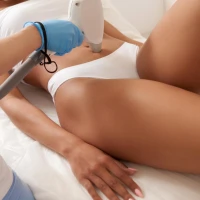
laser coagulation – removal of damaged tissue with a laser beam;
-
electrocoagulation – cauterization with electric pulses;
-
argonoplasma coagulation – tissue removal using high-frequency electromagnetic energy;
-
cryodestruction – treatment of the cervix with liquid nitrogen, which causes freezing of the tissue area with its subsequent death;
-
chemical coagulation – application of a drug to the mucous membrane, which gradually causes the destruction of the changed tissue area.
Each of the methods has its advantages and disadvantages, but the most effective and safest today are considered radio wave and laser coagulation. These are non-contact methods that allow you to quickly and painlessly cauterize erosion. Soon after the procedure, the mucous membrane of the cervix begins to heal, becoming covered with flat epithelium.
The gynecologist decides which procedure is best for the patient, taking into account all individual characteristics and the presence of contraindications. In particular, laser cauterization is not recommended for pregnancy, malignant tumors, polyps in the upper part of the cervix, acute inflammatory and infectious diseases, blood clotting disorders, and some diseases of the cardiovascular system.
Treatment of erosion during pregnancy
Specialists of “Oxford Medical” say that erosion can develop asymptomatically, so in some patients it is diagnosed during pregnancy during a comprehensive examination. In this case, if the condition does not threaten the health of the woman and the fetus, coagulation is not performed. In the case of a pronounced process with concomitant inflammation or infection, drug therapy may be prescribed.
It should be borne in mind that erosion can progress due to hormonal changes in the body, so 1-2 months after childbirth, you need to undergo an examination by a gynecologist. If the condition is not critical, treatment is carried out after the end of breastfeeding.
How to prepare for treatment?
Before coagulation, the patient is prescribed a comprehensive examination. It includes ultrasound, blood, urine, smear and scraping tests, as well as other procedures according to indications. Diagnostics allows you to make an accurate diagnosis and choose the optimal treatment method, excluding contraindications.
Immediately before the procedure, it is recommended:
-
Do not use vaginal suppositories for 3 days;
-
Do not douche for 2 days;
-
Abstain from intimate relations for 1 day;
-
Do not take blood-thinning drugs (aspirin, etc.) for 1 day.
What to do after the procedure?
During treatment erosion cauterizes the mucous membrane of the cervix, leaving a small wound. It may bleed slightly for a few days and cause mild pain or discomfort in the lower abdomen.
A day after the procedure, a thin crust forms on the cervix, which falls off after 7-10 days. After this, squamous epithelial cells develop on the mucous membrane and its normal structure is restored.
To ensure good healing, it is recommended to:
-
abstain from sexual intercourse;
-
do not douche;
-
do not use vaginal suppositories;
-
use only sanitary pads during menstruation;
-
do not visit baths, saunas, swimming pools;
-
do not perform heavy physical exertion;
-
come to the gynecologist for a check-up at the appointed time (usually 3-4 weeks after the procedure).
Consequences of cervical erosion
Despite the fact that the disease may be asymptomatic and not affect general well-being, it cannot be ignored. Without treatment, cervical erosion threatens the development of complications. Against its background, local immunity decreases and the risk of infection increases. As a result, colpitis and cervicitis may occur - inflammation of the vagina and cervix.
The most dangerous is the risk of developing dysplasia and cervical cancer. The likelihood of oncological pathology increases with hormonal disorders and the presence of other provoking factors.
During pregnancy, erosion increases the risk of infectious diseases, which can negatively affect the development of the fetus and lead to miscarriage or premature birth.
Treatment of cervical erosion at “Oxford Medical”
«Oxford Medical» employs experienced gynecologists and has installed expert-class diagnostic and treatment equipment. Thanks to this, all patients receive medical care in accordance with the highest quality standards.
In the clinic, you can get a consultation with a gynecologist, take tests, undergo colposcopy and other instrumental examinations. Treatment of cervical erosion is carried out using modern minimally invasive methods in a day hospital setting.
To make an appointment, call our contact center or write to the chat on the website.
Frequently asked questions:
Why does cervical erosion occur?
There are many factors that can provoke the development of cervical erosion. The main ones are hereditary predisposition, chronic inflammation or infection of the genitourinary system, mechanical damage to the mucous membrane, HPV infection, etc.
Can cervical erosion be cured with suppositories?
Treatment of cervical erosion is prescribed by a gynecologist after diagnosis. In case of true erosion accompanied by inflammation, he may recommend drug therapy – preparations for local (suppositories) and systemic use (tablets, injections). In case of congenital or false erosion (ectopia), when the cells of the flat epithelium are replaced by cylindrical ones, this approach is ineffective - it is necessary to remove the changed area. The procedure is performed using laser or radio wave coagulation, cryodestruction and other minimally invasive techniques.
How to determine if there is cervical erosion?
A gynecologist can diagnose cervical erosion. With a pronounced process, changes in the mucous membrane are noticeable during visual examination. The diagnosis can be confirmed by extended colposcopy. Cytological analysis may also be required.