The information in the article is provided for informational purposes and is not a guide to self-diagnosis or treatment. If symptoms of a disease appear, you should consult a doctor.
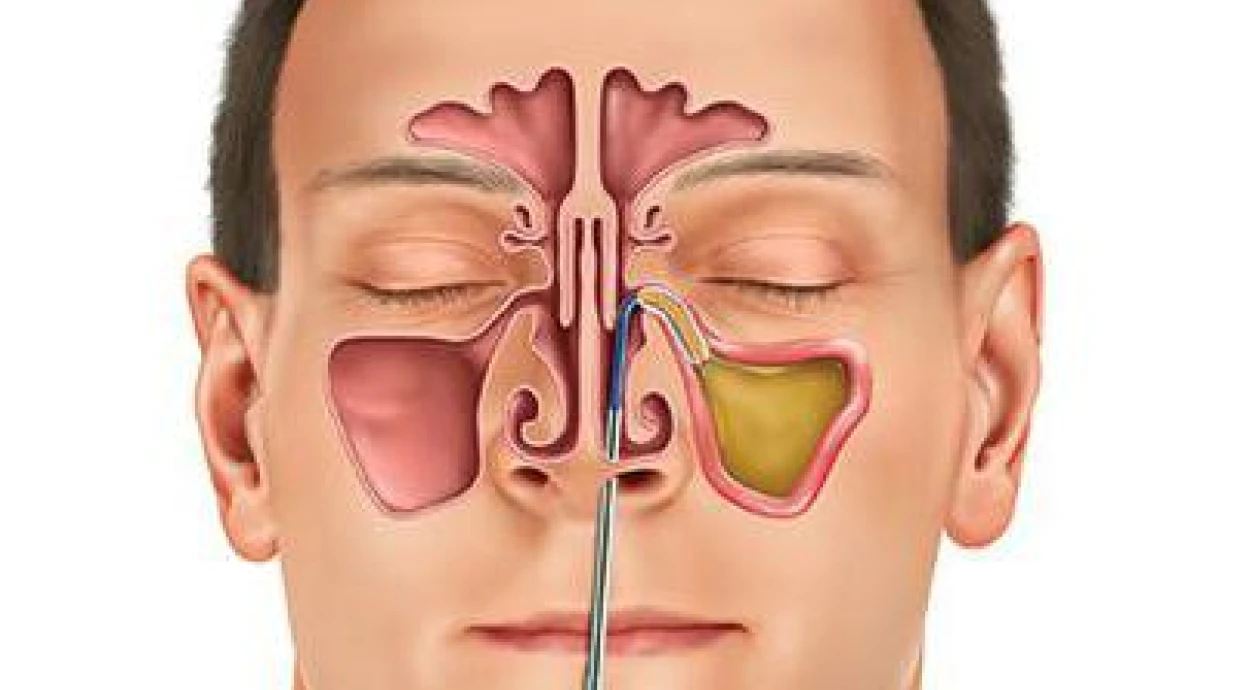
A maxillary sinusotomy is a surgical procedure involving the opening of the maxillary (antrum) sinus. It is necessary for patients with sinusitis who cannot be helped by more sparing medical or physiotherapeutic methods (such as lavage). During the operation, the surgeon gains access to the maxillary sinus and sanitizes it, clearing it of mucus, pathological contents, and foreign objects.
Indications for sinusotomy
Opening of the maxillary sinus may be indicated for patients with the following diagnoses:
-
chronic sinusitis not responsive to other treatments;
-
polypoid formations on the mucous membranes of the maxillary sinus;
-
benign tumors;
-
cysts in the upper jaw;
-
traumatic damage to the sinus walls.
Chronic sinusitis may require surgery if its exacerbations occur regularly (two to three times a year). Indications may also include complications of purulent sinusitis, which can be intracranial, orbital, or even lead to sepsis.
A separate indication for sinusotomy is the removal of foreign bodies that may enter the sinus, for example, during dental procedures. These can be root fragments, dental implants, blood clots, particles of filling material, or sinus-lifting material. Sinusitis caused in this way is called odontogenic.
If a malignant neoplasm is suspected, a biopsy is performed during the sinusotomy — tissue sampling for laboratory histological examination for malignant cells.
Refusal of sinusotomy with the above indications may provoke the development of meningitis, encephalitis, or sepsis.
Contraindications
Contraindications for planned sinusotomy may include:
-
pregnancy;
-
acute or chronic infectious disease in the stage of exacerbation;
-
decompensated anemia;
-
blood clotting disorders;
-
chronic pathologies of internal organs or metabolism in the stage of decompensation.
In such cases, it is necessary first to wait until the contraindication is eliminated (end of pregnancy, recovery from infection, etc.) and only then perform sinusotomy.
Types of sinusotomy
Opening of the maxillary sinus can be performed by several methods: microsurgical, endonasal, or radical. Access to the sinus may be achieved through the middle or lower nasal passages, the anterior wall of the sinus, the maxillary tuberosity, or the tooth alveolus. The choice of access is made by the attending physician, taking into account the patient’s health condition, individual anatomical features, and the clinical picture.
Radical sinusotomy (Caldwell-Luc)
The surgeon makes an incision in the oral cavity under the upper lip and an opening in the sinus wall, through which instruments are inserted. The sinus is cleared of polyps, cysts, contents, and foreign objects. The sinus is then rinsed, drainage is led into the nostril, and the mucosal incisions are sutured.
Microsurgical sinusotomy
Through the oral cavity (above the fourth or fifth tooth on the cheek side), a small (just a few millimeters) hole is made in the anterior wall of the sinus. A microscope and instruments are inserted, and the sinus is cleaned of pus, mucus, and other accumulated material. The cavity is rinsed with antiseptics and medical solutions.
Endonasal sinusotomy
The doctor enlarges the natural opening connecting the sinus with the nasal passage. Alternatively, an artificial connection can be created at the level of the middle or lower nasal passage.
Endonasal approaches are increasingly popular due to the following advantages:
-
minimal trauma, as surgeons try to enlarge existing openings;
-
no bruising or swelling after surgery;
-
convenience for the surgeon — a full and detailed view of the sinus from different angles;
-
low complication and recurrence rates after surgery;
-
quick rehabilitation and short recovery period.
Unlike radical sinusotomy, endonasal sinusotomy does not typically involve rare but possible complications such as trigeminal nerve damage, fistula formation, or heavy bleeding.
Transalveolar access (Zaslavsky-Neumann)
Access is created through the socket of an extracted tooth. This method is used less often because it limits the surgeon’s ability to view and manipulate the sinus. Most often, it is used to remove a tooth fragment remaining after extraction.
Preparation for sinusotomy
Treatment begins with an ENT consultation. If sinusotomy is deemed necessary, the patient is assigned a preoperative examination package to rule out contraindications. Tests include urinalysis, blood tests for HIV, hepatitis, syphilis, coagulation, and complete blood count.
The patient may also be referred to related specialists — a dentist and an anesthesiologist. Additional examinations include chest X-ray and electrocardiogram. A physician’s conclusion is also required.
These examinations ensure that the surgery will proceed successfully, with positive results and without complications.
Performing sinusotomy
The duration of the operation depends on the chosen access method, generally lasting about 30–60 minutes. It can be performed under local anesthesia or general anesthesia, depending on indications and the patient’s emotional tolerance.
The surgeon enters the sinus through the chosen access, cleanses, and rinses it. If necessary (for example, in case of bleeding), a tampon is placed in the sinus and removed through the nostril after the operation. The incision is sutured.
Rehabilitation after surgery
After sinusotomy, a tampon or drainage may remain in the sinus for 8 hours to 2 days, then removed through the nostril after anesthesia. Swelling of the cheek and upper lip may persist for up to a week.
Patients may experience pain, heaviness in the sinus, altered sensitivity of the nasal wings and upper lip skin, or temporary numbness of teeth near the operated sinus. Failure to follow postoperative instructions may cause nosebleeds, headaches, toothaches, mucus discharge, or nausea.
Endonasal sinusotomy usually allows quicker and easier rehabilitation, often requiring only painkillers.
It is essential for patients to maintain oral hygiene postoperatively: brushing teeth, rinsing the throat with antiseptics, and following medical advice. Proper oral care is critical because oral pathogens can enter the nasal passages and operated sinus, causing recurrence.
In the first days after surgery, patients must rest, avoid physical exertion, refrain from forceful nose blowing or swimming. Rinsing with herbal decoctions, saline, or medications may be prescribed to relieve swelling.
Advantages of surgery at Oxford Medical
Otolaryngological surgeries are performed at the private surgical inpatient facility of Oxford Medical Kyiv, located at 30B Berezniakivska Street. The modern surgical unit includes two operating rooms with advanced equipment.
If hospitalization is required, patients stay in comfortable single or double rooms with private bathrooms, functional beds, and Wi-Fi access.