The information in the article is provided for informational purposes and is not a guide to self-diagnosis or treatment. If symptoms of a disease appear, you should consult a doctor.
Contents:
- Which tendons are most often injured?
- Causes of strains and tears of the biceps, calf, and finger tendons
- Symptoms of tendon strains and tears
- First aid for tendon rupture
- Classification of tendon ruptures
- Diagnosis of injuries to the biceps, calf, and other tendons
- Treatment of tendon strains and tears
- Preparation for surgery
- Types of surgery for tendon rupture
- Rehabilitation period after tendon surgery
- Advantages of tendon repair at “Oxford Medical”
Tendons are fibrous tissues that surround the bones and joints and ensure their movement when muscles contract. They have high strength and withstand heavy loads. However, tendons are inelastic, so in injuries they often stretch and even tear, leading to partial or complete loss of mobility.
When a rupture occurs, the ends of the tendon separate and a gap forms between them. As a result, they cannot grow together on their own. To eliminate the consequences, surgery is required. It is desirable to perform it in the first few days or a week, since irreversible changes occur in the damaged tissues over time — they scar, thicken, adhere to nearby muscles, etc. In such cases, a more complex or two-stage operation is required.
Which tendons are most often injured?
The entire musculoskeletal system is permeated with tendons. Some of them withstand particularly strong loads, but these are also the ones most commonly injured.
The tendons most often affected are:
-
fingers;
-
hands;
-
biceps;
-
rotator cuff muscles of the shoulder;
-
calf (Achilles);
-
patella;
-
quadriceps of the thigh;
-
ankle.
Causes of strains and tears of the biceps, calf, and finger tendons
Strains and tears of tendons usually occur with injuries and excessive loads.
These may include:
-
deep cuts;
-
lifting heavy objects;
-
sports loads;
-
falls;
-
strong blows, etc.
In rare cases, damage can occur at home almost imperceptibly. Sometimes the finger flexors tear in this way, after which a person notices that they work worse.
The risk of injury is higher in elderly patients and in those with diseases of the musculoskeletal system, diabetes mellitus, renal failure, disorders of phosphorus-calcium metabolism, and other chronic diseases.
Symptoms of tendon strains and tears
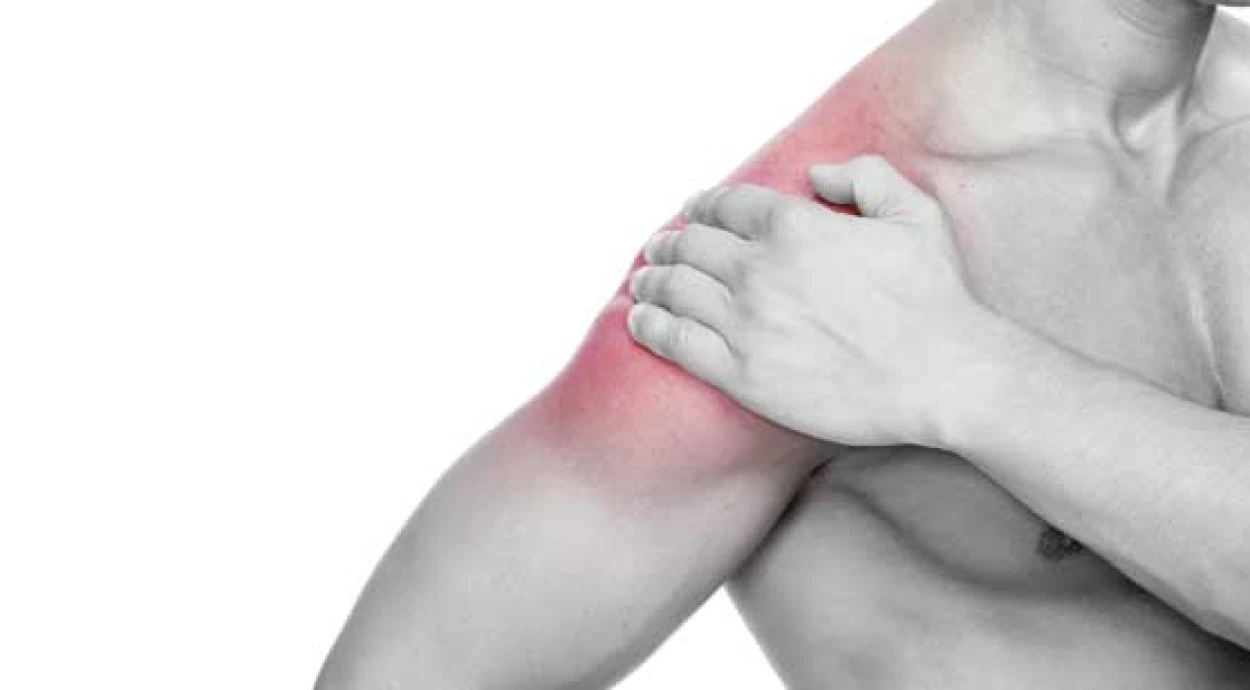
In an accident, a strain and a rupture of ligaments is accompanied by a sharp pain. Afterwards it may subside somewhat, intensifying with movement. The appearance of a hematoma, swelling, and limited mobility of the corresponding muscle is also characteristic.
Symptoms of tendon rupture include:
-
initially sharp, then less intense, aching pain at the site of the rupture;
-
increased pain during movement;
-
pain on palpation;
-
bruising and swelling of tissues at the site of injury;
-
the appearance of a depression and a bump (muscle bulge);
-
impaired mobility;
-
increased fatigue in the corresponding arm or leg;
-
the presence of a deep open wound.
Depending on the injured tendon, the symptoms may differ slightly. For example, with Achilles tendon injury, severe pain and limited mobility of the leg are rare, but the patient usually cannot stand on tiptoe. With injury to the quadriceps tendon of the thigh, instability in the knee appears and there are difficulties in bending and extending it.
First aid for tendon rupture
In case of injury and suspected tendon strain or rupture, it is recommended to:
-
immobilize the affected limb;
-
apply cold in the first 2 hours (if the wound is closed);
-
keep the leg or arm elevated to reduce swelling;
-
consult a doctor at the first opportunity.
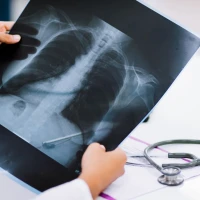
Without an X-ray or other diagnostics, it is impossible to accurately determine the consequences of an injury. The symptoms of a strain, ligament rupture, and even a fracture are similar, and in the latter two cases early medical care is very important to avoid complications.
Classification of tendon ruptures
To choose the optimal treatment method, it is necessary to accurately determine the degree of tendon damage. For this, a special classification has been developed.
By type of injury, a rupture can be:
-
open — accompanied by bleeding and damage to muscles and other tissues;
-
closed — the integrity of the skin is not violated.
Depending on the degree of rupture, it can be:
-
partial — only some fibers of the tendon are torn;
-
complete — the entire bundle is torn.
Also, by the size of the lesion, a rupture is defined as:
-
small;
-
medium;
-
large;
-
very large.
The site of tendon detachment is also important. Depending on this, a rupture may be:
-
tendinous;
-
bony;
-
subperiosteal;
-
muscular;
-
musculotendinous.
In addition, the time elapsed since the injury is taken into account. A rupture is considered:
-
fresh — if less than 3 days have passed;
-
early — from 3 to 14 days;
-
late — from 14 days to 1 month;
-
chronic — more than 1 month.
Diagnosis of injuries to the biceps, calf, and other tendons
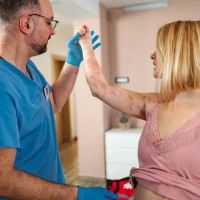
Diagnosis begins with a thorough examination by an orthopedic traumatologist or surgeon. The specialist carefully examines and palpates the area of damage, checks for the presence of hematoma, swelling, as well as a depression and a muscle bulge. Based on this, the specialist can make a preliminary diagnosis, but to confirm it and assess the degree of damage, instrumental studies are needed.
The doctor may prescribe:
-
ultrasound examination (US);
-
X-ray;
-
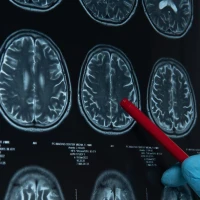
magnetic resonance imaging;
-
arthroscopy — a minimally invasive surgical procedure.
Specialists at “Oxford Medical” explain that the indications for these studies differ, so you should proceed to diagnostics only after consulting a doctor. In some cases, ultrasound is sufficient, while in others MRI with contrast is necessary. Sometimes functional tests are also performed — ultrasound or X-ray during flexion and extension of the limb.
The most complex and at the same time the most accurate diagnostic method is arthroscopy — a minimally invasive operation that allows the damaged tendons to be examined using a micro-camera. It is used when other methods are of low informativeness, when tendons are injured in the area of the joints, and when concomitant pathologies are suspected.
Treatment of tendon strains and tears
With strains and partial tendon tears, conservative treatment is possible. In such cases, it is usually recommended to immobilize the limb and fix it in a certain position so that the tissues can heal calmly. Medication therapy is prescribed, and sometimes cold, followed by warm compresses, are applied. During rehabilitation, massage, physiotherapy procedures, and therapeutic exercise are used.
With a complete rupture, only surgical treatment is effective. Since the ends of the torn tendon diverge, it will not heal on its own. The tissues may adhere to muscles and ligaments, losing their functions and depriving a person of normal mobility in the injured area. To avoid this, it is recommended to perform surgery in the first days after the rupture.
Preparation for surgery
Surgery is performed after thorough diagnostics. It is necessary to accurately determine the site of the tendon rupture, the condition of the torn ends, etc. This is necessary to select the surgical technique in order to achieve the best treatment results.
Classical preoperative preparation is also carried out before suturing the tendons. The patient is prescribed laboratory tests (complete blood count and urinalysis, blood biochemistry, blood glucose, tests for hidden infections, etc.), an electrocardiogram, fluorography, consultations with a therapist and an anesthesiologist, and, if necessary, other specialists. Such diagnostics allow contraindications to anesthesia to be excluded and the risk of complications to be reduced.
Types of surgery for tendon rupture
A torn tendon can be restored only by surgical means. During the operation, the surgeon sutures it so that the ends are connected. Depending on the location of the damaged tendon, the degree of rupture, and the condition of the tissues (which depends on the time since injury), different surgical tactics are used.
Types of tendon surgery:
-
tenorrhaphy — suturing the ends of a torn tendon;
-
tenolysis — removal of scars and adhesions that have formed on the tendons (they form if surgery is not performed in time);
-
tenodesis — suturing the tendon to the bone or fascia near a joint;
-
tenotomy — partial division of the tendon or its cutting (used mainly for joint pathologies that cause tendon shortening).
Operations are performed by classical or minimally invasive methods, depending on the indications.
Rehabilitation period after tendon surgery
After surgery, a cast or a tight bandage may be needed. They allow immobilization of the tendons so that they heal faster. In the first days, medication therapy is also prescribed to relieve pain, reduce swelling, and prevent complications.
At the next stage, massage, physiotherapy procedures, and therapeutic exercise are added. At first, very light exercises are performed, with the load gradually increased.
It is important to undergo rehabilitation under the supervision of a specialist and not try to speed it up. Early loading can lead to repeated stretching or rupture.
On average, recovery takes 3–6 months, but professional athletes may need up to a year to return to their previous form.
Advantages of tendon repair at “Oxford Medical”
At “Oxford Medical,” tendon repair surgeries are performed by a team of experienced specialists under the guidance of a board-certified orthopedic surgeon of the highest category. Thanks to the involvement of highly qualified doctors and modern technical equipment, our patients receive medical care that meets the highest quality standards.
Advantages of the surgery department at “Oxford Medical”:
-
equipment with new devices that allow complex minimally invasive operations to be performed;
-
a team of specialists with many years of experience;
-
a high-tech 24/7 surgical inpatient unit;
-
an intensive care unit equipped for monitoring and supporting vital functions.
For detailed information and to make an appointment for a consultation, call the clinic’s contact center and write in the chat on the website.
Related services:
Traumatology and orthopedics
Orthopedic surgeries
X-ray of the limbs
Sources:
US National Library of Medicine
SAGE Journals
ScienceDirect