Contents:
- Why MRI of the brain is performed
- How MRI of the brain is performed
- How long MRI of the brain lasts
- How to prepare for MRI of the brain
- Can you eat before MRI of the brain
- What MRI of the brain shows
- What is better: CT or MRI of the brain
- MRI of the brain: normal and pathology
- How long MRI of the brain is valid
Headache, dizziness, visual disturbances, memory or coordination impairments may be manifestations of various diseases and conditions. In such cases, to уточнення причини may be prescribed MRI of the brain — a modern diagnostic method that allows obtaining detailed layered images of brain structures and detecting pathological changes that are not always identified by other examination methods.
In this article, we will consider why MRI of the brain is prescribed, how the examination is performed, what exactly it shows and how to prepare properly.
Why MRI of the brain is performed
MRI of the brain is prescribed to уточнення причин neurological symptoms, assessment of structural changes and monitoring of the course of diseases.
Most often, the examination is recommended in cases of:
-
prolonged or intense headaches of unclear origin;
-
recurrent dizziness, loss of balance;
-
visual, hearing, speech disturbances;
-
episodes of loss of consciousness or seizures;
-
suspected neoplasm;
-
consequences of traumatic brain injuries;
-
suspected stroke or transient ischemic attack.
MRI is also used to monitor already established diagnoses, for example in multiple sclerosis, benign and malignant tumors, cysts or after neurosurgical interventions. The examination allows assessing the size, localization and dynamics of changes, which is important for further treatment tactics.
Thus, MRI of the brain — is not a preventive examination, but a method that is used according to clear medical indications to obtain максимально точной diagnostic information.
How MRI of the brain is performed
The examination is carried out using a magnetic resonance scanner. Before the procedure, the patient removes all metal objects — jewelry, watches, glasses, hearing aids and other items that may interact with the magnetic field.
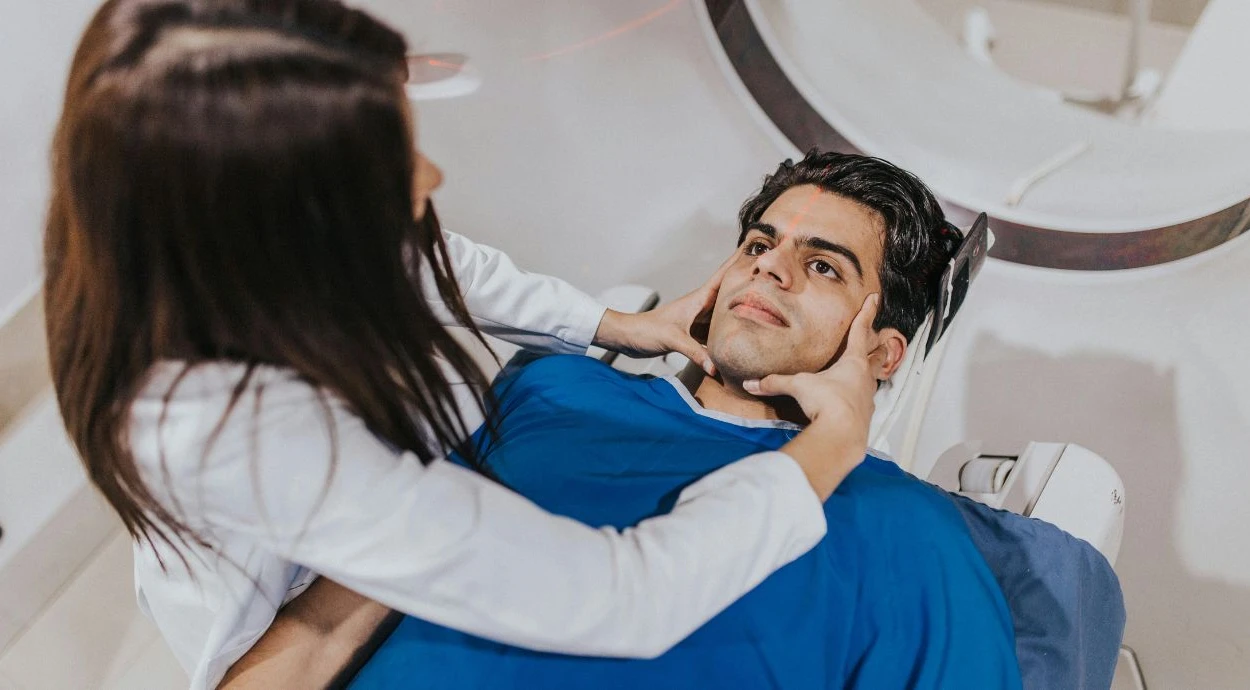
During the examination, the patient lies on a movable table that smoothly moves inside the device. The head is fixed with a special coil to ensure clear images. It is important to remain still throughout the entire scanning process, since even minor movements may affect the quality of the results.
A medical worker stays in an adjacent room and monitors the examination process. The patient has the possibility to maintain communication with him through a two-way communication system.
In some cases, MRI of the brain is performed with intravenous administration of a contrast agent. The contrast helps to assess vessels more clearly, detect neoplasms or уточнить the nature of pathological changes. The decision on its use is made individually depending on the clinical situation.
How long MRI of the brain lasts
On average, the procedure takes from 20 to 40 minutes. In case of use of a contrast agent, the duration increases, since time is added for its intravenous administration and additional scanning series. The total time spent in the room may be slightly longer than the examination itself, as it also includes preparation for the procedure.
How to prepare for MRI of the brain
Special preparation for MRI of the brain is usually not required. The examination is performed on an outpatient basis, without hospitalization. If administration of a contrast agent is planned, the doctor may recommend blood tests to assess kidney function.
Before the procedure, it is important to inform the doctor about the presence of implants, chronic diseases, allergic reactions and previous surgeries. Immediately before the examination, it is necessary to remove all metal objects — jewelry, watches, glasses, hearing aids.
Can you eat before MRI of the brain
In most cases, you can eat as usual. Restrictions may apply only to situations when contrast is planned. Then the doctor may recommend not eating for several hours before the procedure. If no special instructions are given, there is no need to change the diet before a standard MRI of the brain.
Can you drink before MRI of the brain
Drinking water is not prohibited. On the contrary, an adequate drinking regimen is normal. Restrictions may be established only according to individual medical indications or before administration of a contrast agent. In such a case, recommendations are provided separately.
Can MRI of the brain be performed with dental implants
Modern dental implants are made of non-magnetic materials, therefore they are usually not a contraindication to the examination. They do not shift under the influence of the magnetic field and do not pose a danger to the patient. In some cases, minor image defects are possible, but this does not affect the safety of the procedure.
Can MRI of the brain be performed with metal crowns
Metal crowns also in most cases are not a contraindication to MRI. They are securely fixed and do not interact with the magnetic field. As in the case of implants, minor image distortions in the adjacent area are possible. If the examination is performed to assess structures distant from the oral cavity, this usually has no diagnostic significance.
What MRI of the brain shows
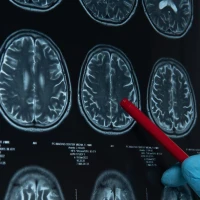
MRI of the brain allows a detailed assessment of the condition of brain tissue, vessels and membranes. The examination helps to detect both acute disorders and chronic changes, determine their localization, size and extent. The obtained images make it possible to objectively assess the nature of the pathological process and choose further treatment tactics.
Structural changes of the brain
MRI clearly visualizes the anatomical structure of the brain and allows detecting:
-
tumors and cysts;
-
benign and malignant neoplasms;
-
consequences of traumatic brain injuries;
-
congenital developmental anomalies;
-
signs of demyelinating diseases, in particular multiple sclerosis;
-
atrophic changes.
The method allows assessing the size of neoplasms, their borders, interaction with surrounding structures and the degree of impact on brain tissues.
Vascular disorders and consequences of stroke
MRI helps to detect acute and chronic disorders of blood circulation in the brain. The examination allows diagnosing ischemic and hemorrhagic strokes, determining the area of lesion and assessing the volume of tissue damage.
The method also allows detecting consequences of previous strokes, post-ischemic changes, small foci of ischemia, aneurysms and vascular malformations. In combination with angiographic modes, it is possible to assess in detail the condition of cerebral arteries and veins.
Inflammatory and infectious processes
MRI makes it possible to diagnose inflammatory and infectious lesions of the brain and its membranes. The examination helps to detect meningitis, encephalitis, abscesses, as well as to assess the extent of the inflammatory process. Due to high sensitivity, the method allows detecting changes even at early stages, which is important for timely initiation of treatment.
What is better: CT or MRI of the brain
The question of which method to choose arises quite often. In fact, there is no universal answer, since the choice depends on the clinical situation.
Usually CT of the brain is prescribed in emergency conditions — in case of suspected acute hemorrhage, skull fractures or severe traumatic brain injury. The examination is performed quickly and visualizes bone structures and fresh blood well.
MRI, in turn, is better suited for detailed assessment of soft tissues of the brain. It allows detecting tumors, foci of demyelination, small ischemic changes, inflammatory processes, consequences of previous strokes and other pathologies that may be less visible on computed tomography.
The main difference between CT and MRI of the brain lies in the principle of operation and imaging capabilities. CT uses X-ray radiation and shows bones and acute hemorrhages better, whereas MRI works on the basis of a magnetic field and more precisely reflects the structure of brain tissue.
Therefore, saying that one method is “better” than the other is incorrect. CT and MRI complement each other, and the optimal option is determined by the doctor depending on symptoms and the clinical task.
MRI of the brain: normal and pathology
After the examination, the patient receives a conclusion from the radiologist. It describes the detected changes or indicates their absence. It is important to understand that an MRI conclusion — is a description of images, and the final diagnosis is established by the doctor taking into account symptoms, examination results and other tests.
If no pathological changes are detected, the conclusion states that no structural disorders are identified. This is what a normal MRI of the brain looks like — absence of space-occupying lesions, foci of damage, cerebrospinal fluid circulation disorders or vascular anomalies.
If pathology is detected, the description may contain information about:
-
presence of tumors or cysts;
-
foci of ischemia or post-stroke changes;
-
demyelinating lesions;
-
signs of inflammation;
-
atrophic processes.
Interpretation of MRI of the brain should be performed by a профильный specialist — a neurologist or neurosurgeon. Independent interpretation of results may be erroneous, since certain changes require professional assessment.
How long MRI of the brain is valid
The MRI result does not have an “expiration date” in the literal sense, but its relevance depends on the clinical situation. The images reflect the condition of the brain at the time of the examination.
If the examination was performed for preventive monitoring or in case of a stable chronic disease, its result may remain relevant for a year or more. At the same time, in case of acute symptoms or progression of the condition, a repeat examination may be required even after several months.
The decision on repeat MRI is made by the doctor taking into account changes in the patient’s well-being and the course of the disease.