


dyspancreatism (pancreatic disorders)
Sign up via call center 
 Adults Adults Adults Adults Adults Adults Adults Adults Adults
  Children Children Children Children
Department
Adults Outpatient department
Adults Outpatient department
Inpatient department
Adults Inpatient department
Aesthetic medicine
Adults Aesthetic medicine
Dentistry
Adults Dentistry
Plastic surgery
Adults Plastic surgery
Diagnostics
Adults Diagnostics
Analyzes
Adults Analyzes
Outbound services
Adults Outbound services
Children Outpatient department
Children Outpatient department
Dentistry
Children Dentistry
Diagnostics
Children Diagnostics

Kyiv


 Hotline:
 Request a call:


Department
Adults Outpatient department
Adults Outpatient department
Inpatient department
Adults Inpatient department
Aesthetic medicine
Adults Aesthetic medicine
Dentistry
Adults Dentistry
Plastic surgery
Adults Plastic surgery
Diagnostics
Adults Diagnostics
Analyzes
Adults Analyzes
Outbound services
Adults Outbound services
Children Outpatient department
Children Outpatient department
Dentistry
Children Dentistry
Diagnostics
Children Diagnostics
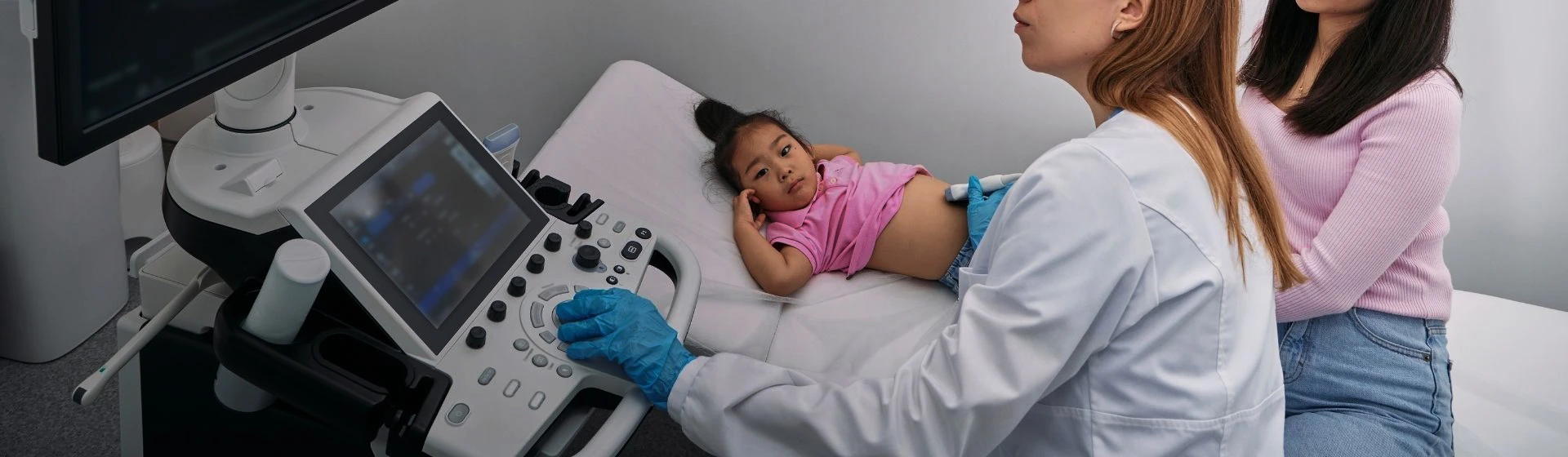
Abdominal ultrasound
Abdominal ultrasound
The standard abdominal ultrasound includes the examination of the condition of liver, pancreas, gallbladder and spleen. The ultrasound allows the diagnostician to determine the structure and sizes of these organs, the thickness of their walls, and, based on these data, the doctor can detect the presence of diseases in the child.
Indications for abdominal ultrasound
The pediatrician or pediatric gastroenterologist orders the ultrasound exam as per the results of the child’s examination or, based on his complaints, if the child is old enough to determine them. The matter is that little children cannot complain about what specifically bothers them – this ability appears in them, when they turn six.
The indications for abdominal ultrasound are:
- bad appetite;
- bowel disorders;
- bitter taste in the mouth;
- nausea, vomiting;
- pain in the right hypochondrium.
What does an ultrasound
of the abdominal organs show?
The abdominal ultrasound allows detecting different diseases of the digestive system:


dyskinesia of bile ducts
hepatic cysts
cholecystitis
gallstone disease

Child’s preparation for abdominal ultrasound
Before performing the ultrasound, the child should be prepared in order the results of the examination are precise. The main requirement – the ultrasound should be performed on the empty stomach (the child should not eat anything for 8-12 hours before the examination); that is why the ultrasound is usually scheduled for morning time, in order the fasting causes minimum discomfort in the child.
If the examination is performed not on the urgent basis, but is scheduled in advance, then for several days before the ultrasound, you should exclude from your diet the products, which cause flatulence (for example, legumes).
In case with nursing babies, it is enough to estimate the time of visit to the doctor, so that the ultrasound is performed before the next breastfeeding. This is due to the fact that the child’s organism absorbs milk much quicker.
The doctor also needs to know the height of the child, as when the child’s organism grows, the norms of sizes of internal organs change.
How is an abdominal ultrasound performed?
The ultrasound examination is a safe and painless procedure, which does not take much time. During the examination, the child lies on his back, and the doctor examines the condition of internal organs through the wall of the stomach by using the ultrasound sensor. In some cases, the doctor can turn the child on one side or ask him to take a deep breath or hold a breath – it is needed for better visualization of internal organs.
After performing the examination, the doctor establishes the diagnosis and prescribes treatment or, if necessary, recommends additional examinations.
In Oxford Medical clinic, the qualified specialists perform ultrasound on the expert class ultrasound scanner that allows obtaining maximally precise and reliable results.
You can make appointment for the abdominal ultrasound in Oxford Medical clinic by calling us or filling out the form on our website.

Our services
Consultations

Pediatrician consultation
1100.00 ₴
Add Added 

Benefits of having an ultrasound scan for your child at Oxford Medical Clinic

Comfortable atmosphere: we create a cozy and friendly environment so that the child feels at ease
Experienced specialists: our doctors have many years of experience working with children and know how to find an approach to each little patient.
Modern equipment: the clinics use high-precision equipment that provides accurate results
Speed and convenience: examination results are available immediately after the procedure, and an ultrasound appointment can be made at any time convenient for you.
Show more 
Our doctors

 5
5  17+
17+ Pediatric gastroenterologist, ultrasound doctor, pediatrician, candidate of medical sciences
 17+ Years of experience
 Consultation 1100
 m. Kyiv, Parkovo-Syretska St., 7A
Reviews
Марія 25.08.2025
Приводила сина на УЗД, і все пройшло чудово. Лікар вміє знайти підхід до дітей, обстеження зробили акуратно й безболісно. Результати отримали відразу, а лікар дав корисні поради. Рекомендую всім батькам цю клініку.

Антон 25.08.2025
Робили дитині УЗД у «Оксфорд Медікал» і залишилися дуже задоволені. Лікар був уважний і доброзичливий, усе пояснив зрозумілими словами. Обстеження пройшло швидко і без страху для дитини. Дуже комфортні умови та сучасне обладнання.
Sign up
 in the clinic
  online

 Hello!
Let's take care
about your health:
Sign up via call center 
