Sign up via call center
Department
Treatment of stomach cancer at the private clinic Oxford Medical Kyiv

Stomach cancer treatment

Stomach cancer treatment in Kyiv

Stomach cancer is a malignant neoplasm that develops from the cells of the inner lining of the organ. It ranks 2nd among all oncological pathologies after breast cancer in women and lung cancer in men. It is diagnosed mainly in patients aged 40-45 years.

At an early stage, the disease is well treatable. More than 80% of patients who undergo radical surgery for a small tumor make a full recovery. At stage 2, this figure reaches 50%, and at stage 3 - 26%.

The Oxford Medical clinic has a high-tech oncology department with a surgical hospital. Treatment is provided by oncologists and oncological surgeons of the highest category with many years of experience.

Oxford Medical is a large medical center with a modern oncology department. The clinic has all the conditions for accurate diagnosis and effective treatment of stomach cancer. We employ some of the best oncologists and surgeons in Kyiv and Ukraine with many years of experience, who are familiar with all modern methods of cancer treatment, including targeted and immunotherapy.

Surgical treatment is performed in a high-tech surgical hospital with two operating rooms, an intensive care unit and intensive care wards. Operations are performed using classical and minimally invasive methods.

To make an appointment for a consultation, call our contact center or write to the chat on the website.

Stages of stomach cancer

To develop the most effective treatment plan for stomach cancer, it is important to determine its stage. For this, oncologists use the international TNM classification system. It involves diagnosing the size of the tumor (T), lymph node involvement (N), and the presence of metastases (M).

Depending on the size of the neoplasm (T criterion)

  • Тis (in situ) – atypical cells develop in the epithelial layer of the stomach wall;
  • T1 – the tumor grows into the submucosal layer of the stomach wall;
  • T2 – the tumor affects the muscle layer;
  • T3 – the tumor covers all layers of the stomach lining and extends to the outer wall of the organ;
  • T4 – the tumor spreads to adjacent organs.

Depending on the number of affected lymph nodes (parameter N)

  • N0 – lymph nodes are not affected;
  • N1 – atypical cells are found in 1-3 nearby lymph nodes;
  • N2 – more than 4 lymph nodes are affected, including distant ones.

Depending on the presence of metastases (criterion M)

  • M0 – no metastases;
  • M1 – metastases are found in distant organs.

Thus, the stage of cancer can be designated as T1N0M0, T3N2M1, etc. For most patients, this is not clear, so a simplified system is more often used.

Simplified system

According to it, 4 stages of stomach cancer are distinguished:

  • Stage 1 – cancer cells develop in the submucosal and mucosal layers of the stomach lining;
  • Stage 2 – the tumor grows into the stomach cavity, affects all layers of its lining, but does not go beyond the organ, may be accompanied by damage to nearby lymph nodes;
  • Stage 3 – the tumor goes beyond the stomach, grows into neighboring organs, affects nearby lymph nodes;
  • Stage 4 – the tumor has distant metastases.

Complications of stomach cancer

In some cases, severe symptoms of the disease occur only with the development of complications.

Stomach cancer can cause:

  • internal bleeding;
  • stenosis (narrowing of the lumen and impaired patency of the organ).

Bleeding develops due to prolonged exposure to gastric juice on the tumor, as well as its germination into large vessels. Its symptoms may be vomiting with blood, dizziness, general weakness and loss of consciousness. Anemia may develop against the background of regular blood loss.

Stenosis is also a common complication. It develops when the tumor increases in size and blocks the patency of the organ. As a result, food begins to stagnate, the patient experiences heaviness in the stomach, nausea, vomiting, weakness, dehydration, decreased appetite and weight loss.

Symptoms of stomach cancer

Most patients with stage 1 and 2 stomach cancer do not notice any changes in their well-being.
Symptoms appear when the tumor increases in size, affects neighboring organs, metastasizes and causes general intoxication of the body.

The listed symptoms are characteristic of many pathologies of the gastrointestinal tract and general diseases, therefore, an accurate diagnosis cannot be made on their basis - this requires comprehensive diagnostics.

Signs of the disease may be:

feeling of heaviness in the stomach, especially after eating

nausea, vomiting

flatulence, constipation, diarrhea

pain in the upper abdomen spreading to the back

increase in belly size

unexplained weight loss

weakness, fatigue

pale skin

subfebrile temperature

List of diseases

Diagnosis of stomach cancer

The diagnosis can be suggested by such studies as radiography, computed tomography and magnetic resonance imaging, but to clarify the nature of the neoplasm, FEGDS with biopsy and histological analysis is mandatory.

Fibroesophagogastroduodenoscopy is an endoscopic study that allows you to examine the inner lining of the digestive organs and take a sample of tumor tissue for analysis. During the study, a thin catheter with a miniature video camera is inserted into the esophagus, the image from which is transmitted to the monitor screen and magnified many times. Thanks to this, the doctor consistently assesses the condition and structure of the organs, having the opportunity to diagnose a tumor of even the smallest size. When it is detected, he takes a tissue sample and sends it for analysis.

Histological analysis allows you to check the morphological features of the cells and determine whether they are malignant. If so, an immunohistochemical analysis is immediately performed to assess the aggressiveness of the tumor.

Also, when diagnosing stomach cancer, in order to determine the stage of the disease, the following may be prescribed:

  • general blood, urine and stool tests;
  • blood biochemistry;
  • blood tests for tumor markers;
  • stool analysis for occult blood;
  • ultrasound, X-ray, CT or MRI.

Instrumental studies allow you to determine how far the cancer has spread and whether there are metastases. They are mandatory even for small tumors.

Stomach cancer treatment

The treatment tactics depend on the size of the tumor and the presence of metastases in the lymph nodes and other organs.

In most cases, complex therapy is performed, which includes:

  • surgical treatment;
  • chemotherapy;
  • radiation therapy;
  • targeted therapy;
  • immunotherapy.

If the tumor is operable, as a rule, surgery is performed first. Endoscopic, laparoscopic or classical access is used for removal. The choice of technique and the volume of manipulations depend on the size and location of the neoplasm.

The following are performed:

  • partial resection - removal of the tumor and one third of the stomach;
  • distal subtotal resection - removal of the lower parts of the stomach (2/3 of the organs);
  • proximal subtotal resection - removal of the upper parts of the stomach (2/3 of the organs);
  • gastrectomy - total removal of the stomach with replacement of the organ with tissues of the small intestine;
  • tumor removal with resection of adjacent organs – part of the esophagus, pancreas, duodenum and other tissues are removed (pancreatoduodenal resection, or Whipple's operation).
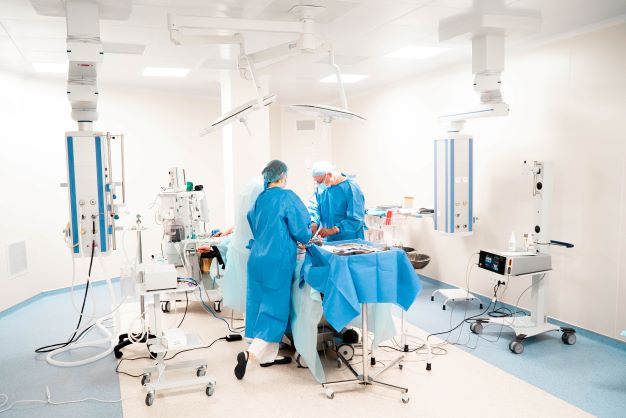
Oxford Medical employs top-class oncologists with over 20 years of experience. Thanks to this, as well as the high-tech equipment of the surgical hospital, the clinic performs operations of any complexity.

In addition to surgery, many patients with stomach cancer need chemotherapy, radiation, targeted or immune therapy.

Chemotherapy has a systemic effect on the entire body and allows you to fight distant metastases. It can also be prescribed before surgery to reduce the size of the tumor and after to prevent relapse.

Radiation therapy involves the exposure of the affected area of ​​the body to radiation. It slows the growth of cancer cells and causes their destruction.

Targeted therapy allows you to directly affect the neoplasm, due to the sensitivity of tissues to certain drugs.

Immune therapy is carried out to increase the body's defenses in the fight against the tumor.

For each patient, Oxford Medical doctors create an individual treatment program, taking into account the stage of cancer and general health. They are guided by state and international protocols, using only effective methods with clinically proven effectiveness.

Stomach cancer prevention

To reduce the risk of developing stomach cancer, it is recommended to:

Eat a balanced diet – reduce the amount of fatty meats, convenience foods, heavily fried foods, smoked and salty foods, replacing them with plenty of fresh and stewed vegetables, fresh fruits, and whole grain products.

Quit smoking

Avoid or minimize the consumption of alcoholic beverages.

Have regular preventive checkups

If you have gastrointestinal diseases, get treatment promptly.

Our services
Consultations
Consultation with an oncologist
1100.00 ₴
Add Added
Consultation with a leading oncologist
1989.00 ₴
Add Added
Consultation with a leading surgeon-oncologist
1989.00 ₴
Add Added
Online consultation with an oncologist
1100.00 ₴
Add Added

Frequently asked questions

What are the first signs of stomach cancer?

In the early stages, stomach cancer is almost asymptomatic. As the tumor grows, the patient may experience periodic nausea and vomiting, heaviness in the stomach, upper abdominal pain, weight loss, general weakness, etc. These symptoms are characteristic of various diseases, so if they appear, you should consult a doctor and undergo diagnostics.

What is the life expectancy with stomach cancer?

When treatment is started at stage 1, more than 80% of patients with stomach cancer recover completely. At stage 2, the five-year survival rate is 56%, at stage 3 - 38%, and at stage 4 - less than 20%.

How quickly does stomach cancer develop?

Stomach cancer develops slowly. In some patients, it takes 5-7 years from the appearance of atypical cells to the formation of a tumor and the appearance of symptoms. Due to this, regular check-ups allow for the diagnosis of cancer at an early stage.

How often does atrophic gastritis turn into cancer?

According to some reports, 10% of patients who suffer from atrophic gastritis for more than 15 years develop stomach cancer.

( Rating: 4.88 , Votes: 84 )

Benefits of stomach cancer treatment at Oxford Medical

Expert-grade diagnostic and surgical equipment

Oncologists and oncological surgeons with many years of experience

High-tech surgical hospital

Intensive care unit (resuscitation), equipped with equipment to support vital body functions

Chemotherapy, targeted therapy, and immunotherapy

Affordable price and loyalty program for regular patients

Our doctors

Lifshitz Yuriy Zinovievich
4.9
rating (48)
47+
Years of experience
Online consultation
Surgeon of the highest category, Doctor of Medical Sciences
47+ Years of experience
Make an appointment
Dechtjar Tetyana Volodymyrivna
4.86
rating (35)
34+
Years of experience
Oncologist of the highest category
34+ Years of experience
Consultation 1989
Kyiv, st. Bereznyakivska, 30b
Make an appointment
Doctor at the private clinic Oxford Medical Kyiv
0
rating (0)
8+
Years of experience
Category I oncologist
8+ Years of experience
Consultation 1100
m. Kyiv, Parkovo-Syretska St., 7A
Make an appointment
All doctors
Reviews
Vladislav But 21.03.2021
Из всех клиник здесь наиболее оптимальное соотношение качества и цены. Все врачи, с которыми мне приходилось сталкиваться очень добрые и хорошие люди, объясняют всё максимально в деталях и отвечают на все вопросы, так что после приема не остаётся чувства недосказанности или непонимания. Советую.
Star Star Star Star Star
Марія 15.03.2019
Дякую за консультацію головному лікарю клініки Петру Олексійовичу Зайченку - за професіоналізм, уважність, тактовність і за те, що бачить не просто чергового пацієнта, а конкретну людину з її проблемами, які потрібно вирішувати комплексно. Бажаю Вашій клініці вдячних пацієнтів!
Star Star Star Star Star
Sign up
in the clinic
online
This site is protected by reCAPTCHA technology, and the Google Privacy Policy and Terms of Service apply.
Hello!
Let's take care
about your health:
Sign up via call center

We use cookies and other technologies to remember your preferences and find out exactly how you use and interact with the site.

By using our site, you also agree to the terms of the "User Agreement" and "Regulation on the processing and protection of personal data". By clicking "I AGREE", you consent to the processing of your data.