


Redness, dryness, itching, peeling of the skin on the chest
Highly differentiated tumor (G1), sensitive to female sex hormones, no HER2 receptors, low Ki67 protein level. The tumor grows slowly and is well-tolerated.

 Adults Adults Adults Adults Adults Adults Adults Adults Adults
  Children Children Children Children


 Hotline:
 Adults Adults Adults Adults Adults Adults Adults Adults Adults Children Children Children Children
Breast cancer is the most common type of oncology in women. According to the World Health Organization, in 2020, it was diagnosed in 2.2 million people. This incidence rate is observed every year. But there is good news: over the past 5 years, 7.8 million patients have overcome breast cancer. When therapy is started at an early stage, the probability of recovery reaches 90%.
At Oxford Medical, treatment is carried out by highly qualified oncologists and surgeons with many years of experience. For each patient, they draw up an individual therapy program, guided by state and international protocols.
At Oxford Medical, there is a modern oncology department with a high-tech surgical hospital. It is equipped with expert-class equipment and employs oncologists and oncological surgeons with many years of experience. Thanks to this, we provide the maximum quality of medical care.
To schedule a consultation, call our contact center or write to the chat on the website.
Approximately 10% of patients develop breast cancer due to a mutation in the BRCA1 and BRCA2 genes. According to some reports, it increases the risk of the disease by 60-80%. In the remaining cases, the cause of the neoplasm is considered to be the presence of several risk factors.
These include:
In the presence of many risk factors, the likelihood of the disease increases, but this does not mean that the tumor will necessarily develop.
Due to the high prevalence of breast cancer, women are advised to carefully examine and feel their breasts and armpits once a month. The symptoms listed below can occur not only with cancer, but also with other diseases, so an examination is necessary to clarify the diagnosis.
If the following symptoms appear, you should immediately consult a mammologist for diagnosis:


Redness, dryness, itching, peeling of the skin on the chest
The appearance of nodes, seals in the mammary gland or under the armpit
Breast shape change
Nipple shape change, indentation
Nipple discharge
General weakness
Weight loss

If the above symptoms appear, you should consult a mammologist. He will conduct an examination and study the medical history, after which he will prescribe a diagnosis. First of all, women under the age of 40 undergo an ultrasound of the breast, and after 40, a mammogram. If the study confirms the presence of a neoplasm, a biopsy is recommended.
A biopsy is a simple procedure during which, under ultrasound control, a specialist punctures the breast with a thin needle and takes a sample of tumor tissue. The latter is sent to the laboratory for histological analysis. Only it allows you to accurately determine whether the tumor is malignant or not. If so, an immunohistochemical study is immediately performed to assess the molecular properties - the treatment tactics and prognosis depend on them.
After this, the patient is prescribed other examinations to determine the size of the tumor, its prevalence and the presence of metastases.
To do this, the following are performed:
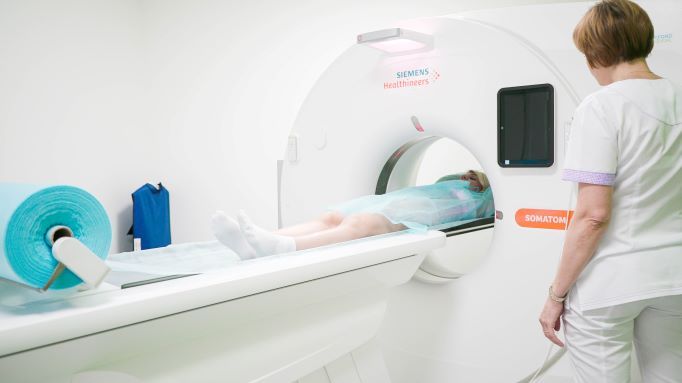
It is generally accepted to distinguish 5 stages of cancer:
This system is considered simplified. To determine the stage of cancer, oncologists use the international TNM classification, where T (tumor size) - the size of the tumor, N (nodes) - damage to the lymph nodes, M (metastasis) - the presence of metastases.
So, according to the T index, the stage of breast cancer may correspond to:
According to the N index, the following are distinguished:
According to the M index, the following are distinguished:
Thus, the diagnosis may look like T1N1M0, T2N0M0, T2N1M0, etc.
Detailed classification allows oncologists to choose the most effective treatment.
In addition to the stage, the following are also of great importance:
The above features are called molecular genetic markers.
Depending on them, the following types of breast cancer are distinguished:
Highly differentiated tumor (G1), sensitive to female sex hormones, no HER2 receptors, low Ki67 protein level. The tumor grows slowly and is well-tolerated.
The tumor is also hormone-dependent, and may or may not have HER2 receptors, but has a high level of the Ki67 protein. The tumor grows faster and has a less favorable prognosis.
The tumor is insensitive to hormones and has negative HER2 receptors. It occurs mainly in women with BRCA1 gene mutations. It is prone to rapid growth and metastasis. It is less treatable than other types.
The tumor is not hormone-dependent, but has positive receptors for HER2. It is prone to rapid growth and has an unfavorable prognosis, but with timely diagnosis it is well treated with targeted therapy directed at the HER2 protein.
Also important is the histopathological grading (G), i.e. the degree of difference between malignant cells and normal cells and the speed of their division. This parameter determines the aggressiveness of the tumor.
The following are distinguished:
Complex therapy is used to treat breast cancer.
Depending on the stage and type of cancer, the patient may be prescribed the following types of treatment:
In the early stages of cancer, surgery is usually performed first.
Depending on the size and location of the tumor, the following are performed:
Oxford Medical specialists try to perform organ-preserving surgeries in all cases where possible. In breast cancer, lumpectomy is recommended if the tumor is small and there is no damage to adjacent tissues and lymph nodes. Mastectomy may be necessary if the tumor is large, has spread into the skin or chest wall, is small in size, and in some other cases.
After mastectomy, women are offered reconstructive surgery. Depending on the wishes and state of health, it can be done simultaneously with tumor removal or after reconstruction.
In addition to surgery, other treatment may be required. If the tumor is hormone-dependent, hormonal therapy is prescribed. If there are receptors sensitive to HER2, targeted therapy is used.
Chemotherapy can be prescribed both before surgery to reduce the size of the tumor and perform radical removal, and after treatment of metastases and prevention of relapse. It is also performed for palliative purposes.
Radiation therapy for breast cancer is prescribed mainly after surgery, like chemotherapy, for preventive purposes, as well as for the treatment of metastases and relief of symptoms in patients at the last stage of the disease.
In each case, oncologists develop an individual treatment program.
The risk of breast cancer depends on genetic factors that cannot be influenced, and lifestyle.
Experts noted that the incidence is lower in women who:
If one of the close relatives has breast cancer, women are recommended to undergo diagnostics for the presence of mutations in the BRCA1 and BRCA2 genes. If the result is positive, they are advised to monitor their health more carefully.
Regardless of being in the risk group, girls after 18 years of age are shown to undergo an annual ultrasound of the breast glands, and women over 40 years of age - mammography. You should also perform a breast self-examination at least once a month, feeling their structure, and if you detect any abnormalities, immediately consult a doctor.


Invasive cancer is cancer that grows beyond the duct or lobe of the breast where the pathological process began, into adjacent tissues.
The rate of cancer progression depends on the molecular genetic characteristics of the tumor and the degree of cell differentiation. Triple-negative and HER2-positive cancers are the most aggressive, while luminal subtype A cancers tend to develop slowly.
For timely diagnosis, women are recommended to visit a mammologist at least once a year and undergo a physical examination.
When treated early, more than 90% of women achieve a complete cure. At stage 3, the 5-year survival rate reaches 70%, while at stage 4 it is just over 20%.
HER2 (human epidermal growth factor type 2) is a protein produced by the HER-2/neu gene. If a tumor has receptors that respond to it, HER2 can attach to cells and speed up their division, causing the tumor to grow rapidly.
Lymphedema is a chronic swelling that develops when the lymphatic drainage process is disrupted. It can be a symptom of breast cancer or another benign disease.


Affordable price and loyalty program for regular patients
Chemotherapy, targeted therapy, and immunotherapy
Expert-grade diagnostic and surgical equipment
Oncologists and oncological surgeons with many years of experience
High-tech surgical hospital
Intensive care unit (resuscitation), equipped with equipment to support vital body functions


 4.96
4.96  14+
14+ 
 14+ Years of experience
  Kyiv, Hlybochytska St., 40x
 4.86 34+ 34+ Years of experience Kyiv, st. Bereznyakivska, 30b
  0 8+ 8+ Years of experience m. Kyiv, Parkovo-Syretska St., 7A
 in the clinic
  online
  Hello!


