The information in the article is provided for informational purposes only and is not a guide to self-diagnosis and treatment. If symptoms of the disease appear, you should consult a doctor.
Contents:
-
What does professional teeth cleaning include?
-
The difference between professional and daily hygiene
-
The role of professional hygiene in preventing oral diseases
-
Professional hygiene procedures
-
Ultrasonic teeth cleaning
-
Air Flow teeth cleaning
-
How is professional teeth cleaning performed at «Oxford Medical»?
-
How often should you undergo professional hygiene?
-
Recommendations for maintaining oral hygiene
-
Frequently asked questions
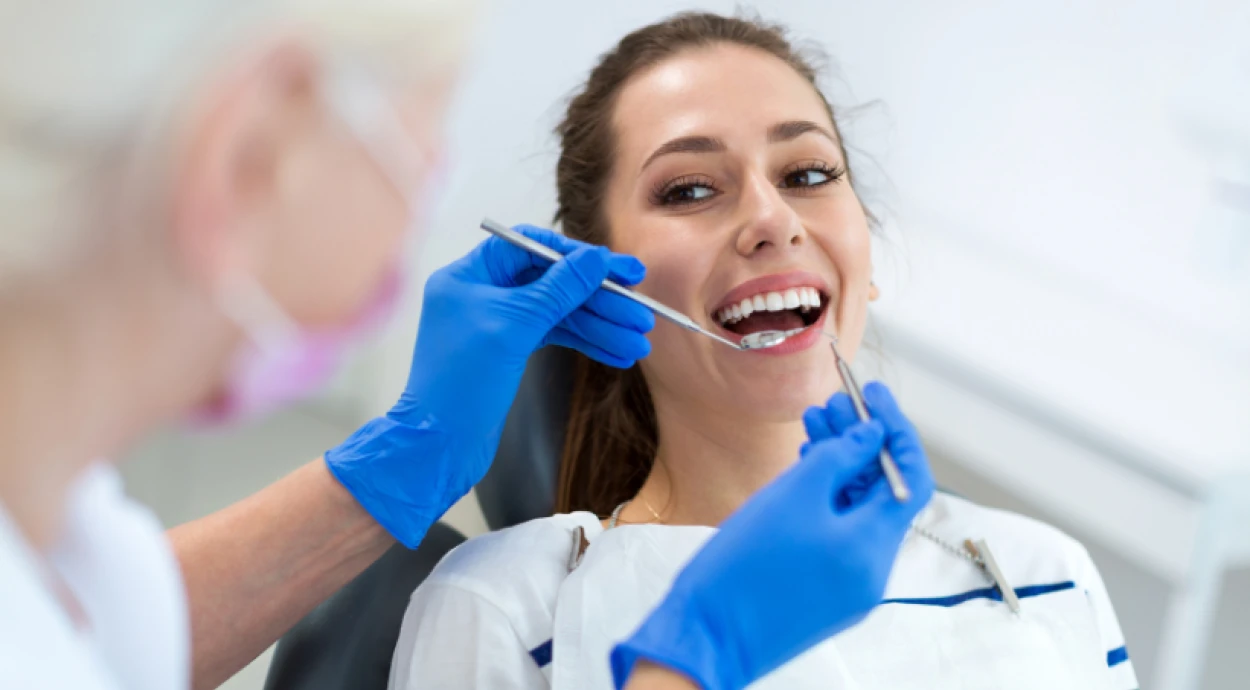
Proper hygiene is one of the main conditions for maintaining the health and beauty of teeth. It is recommended to brush your teeth in the morning and evening, and if possible - after each meal. However, even with frequent and thorough care, it is impossible to remove all deposits. Food residues penetrate into the interdental space and under the gums, where a regular brush cannot reach. This causes plaque to form, which over time mineralizes and turns into tartar. It can only be eliminated with the help of professional teeth cleaning at a dentist.
In this article, we will analyze whether the importance of professional teeth cleaning is exaggerated, as well as which types of it are the most effective.
What does professional teeth cleaning include?

Professional teeth cleaning is performed using special devices. Most often, an ultrasonic scaler or the Air Flow system is used. They allow you to:
-
remove tartar;
-
remove hardened plaque on the teeth and in the interdental spaces;
-
remove roughness of the teeth;
-
reduce dark spots and brown borders near the gums by removing darkened deposits;
-
get rid of bad breath, which occurs due to the accumulation of bacteria;
-
reduce the risk of developing caries and gingivitis.
Thus, these procedures help maintain the health and beauty of your teeth. Although the purpose of cleaning is not to whiten the enamel, this effect is also present due to the removal of darkened deposits.
The difference between professional and daily hygiene
Despite all the advantages of professional cleaning, it cannot replace daily hygiene. It should not be neglected, expecting that periodic visits to the dentist will solve all problems. The accumulation of plaque can very quickly lead to the development of caries and other diseases of the teeth and gums.
However, thorough brushing of teeth, the use of rinses and even an irrigator are also no substitute for professional care. Small food particles constantly get into hard-to-reach places - interdental spaces and gum pockets. Remaining there, they create a breeding ground for bacteria, and also mineralize over time. This causes hard plaque and tartar to form.
Removing these hard deposits is the goal of professional teeth cleaning. While home cleaning helps remove most daily dirt and soft plaque.
The role of professional hygiene in preventing oral diseases
Caries, gingivitis, periodontitis and most other oral diseases are infectious in nature. They develop due to contact with certain infectious agents. However, the likelihood of developing the disease in different people is different. It depends on the state of the immune system and the presence of other risk factors. One of them is insufficient hygiene - the presence of soft and hard plaque. It is a breeding ground for bacteria, which contributes to their rapid reproduction.
Regular professional cleaning allows you to clean the spaces between the teeth and gum pockets, where plaque accumulates the most. This eliminates the factors that contribute to the development of caries and other inflammatory and infectious diseases.
Professional hygiene procedures

Today, the most effective and gentle methods of professional teeth cleaning are considered to be:
-
ultrasound;
-
Air Flow system.
The choice of method depends on the condition of the teeth, the amount of plaque and the degree of its hardening. Ultrasonic cleaning is more suitable for removing tartar, and for removing plaque and cleaning teeth in hard-to-reach places – cleaning with Air Flow system.
Ultrasonic teeth cleaning
Cleaning with killed by ultrasound – this is a contactless procedure. It does not cause damage to the enamel and pain. Ultrasound is transmitted to the tooth through a special nozzle. Thanks to powerful radiation, it breaks down solid deposits into small particles that are washed away by a stream of water.
Air Flow teeth cleaning
Air Flow – this is a Swiss technology for removing dental plaque using the device of the same name. It is a painless and gentle procedure. Allows you to remove all deposits on the teeth, including darkening and stains on the enamel, which are formed from frequent smoking or coffee drinking.
The procedure is performed using an aerosol, which is formed from water and an abrasive powder based on calcium carbonate. Through a special nozzle, it is applied to the surface of the teeth, penetrates into the gaps between them and gum pockets.
How is professional teeth cleaning performed at «Oxford Medical»?
To ensure the best result, the specialists of dentistry «Oxford Medical» perform a comprehensive teeth cleaning. It involves the removal of tartar and hard plaque using ultrasound, as well as thorough cleaning of interdental spaces and gums with the Air Flow device.
The next stage is tooth polishing and remineralization. A special preparation in the form of a paste is applied to the teeth, which ensures the restoration of the mineral composition and strengthening of the enamel. This helps reduce tooth sensitivity and protect them from decay and caries.
A comprehensive approach allows for the maximum effect in preserving and restoring the health and natural beauty of the teeth.
How often should professional hygiene be performed?
The regularity of professional cleaning is determined individually. It all depends on the condition of the teeth and the rate of formation of hard plaque.
If a person smokes, abuses sweets and other unhealthy foods, or does not follow oral hygiene well enough, the procedure may be recommended more often - once every 3-6 months.
With good dental condition and a healthy lifestyle, it may be enough to clean once a year. But even in the absence of complaints, you should visit the dentist every 6 months for a preventive examination.
Recommendations for maintaining oral hygiene

Everyone knows about the need to brush their teeth twice a day. However, this is not enough to maintain a radiant smile.
Dentists at «Oxford Medical» say that for the health and beauty of your teeth, you should thoroughly rinse your teeth after each meal and use dental floss to clean the spaces between your teeth. It is also advisable to use an irrigator in the morning and evening to remove food debris that cannot be reached with a brush. Regular professional cleaning is an indispensable addition to daily care.
General recommendations for hygiene and maintaining dental health:
-
You should brush your teeth after each meal, using a soft toothbrush and fluoride toothpaste. This process should take at least 2 minutes. After that, it is advisable to use a special mouthwash or clean with an irrigator.
-
It is necessary to use dental floss to remove food debris and plaque from between the teeth.
-
It is advisable to reduce the consumption of sweets and products containing acids. They can destroy tooth enamel and contribute to the development of caries.
-
It is important to give up smoking and drinking alcohol. These substances can negatively affect the health of the gums and cause darkening of the teeth.
For complete and high-quality prevention of dental diseases, you should visit a dentist every 6 months. During the examination, the doctor can detect caries and other diseases at an early stage, which greatly simplifies treatment and allows you to save the tooth. In addition, the specialist will tell you how often to do professional cleaning and how to take care of the health of your teeth and gums at home.
Frequently asked questions:
Why do you need professional teeth cleaning?
Professional teeth cleaning is an integral part of comprehensive care. It allows you to get rid of hard plaque and tartar that cannot be removed on your own. This preserves the natural color of your teeth and reduces pigmentation, and eliminates favorable conditions for the development of caries.