Table of Contents
- Why Psoriasis Develops
- How Psoriasis Starts: The Early Stage
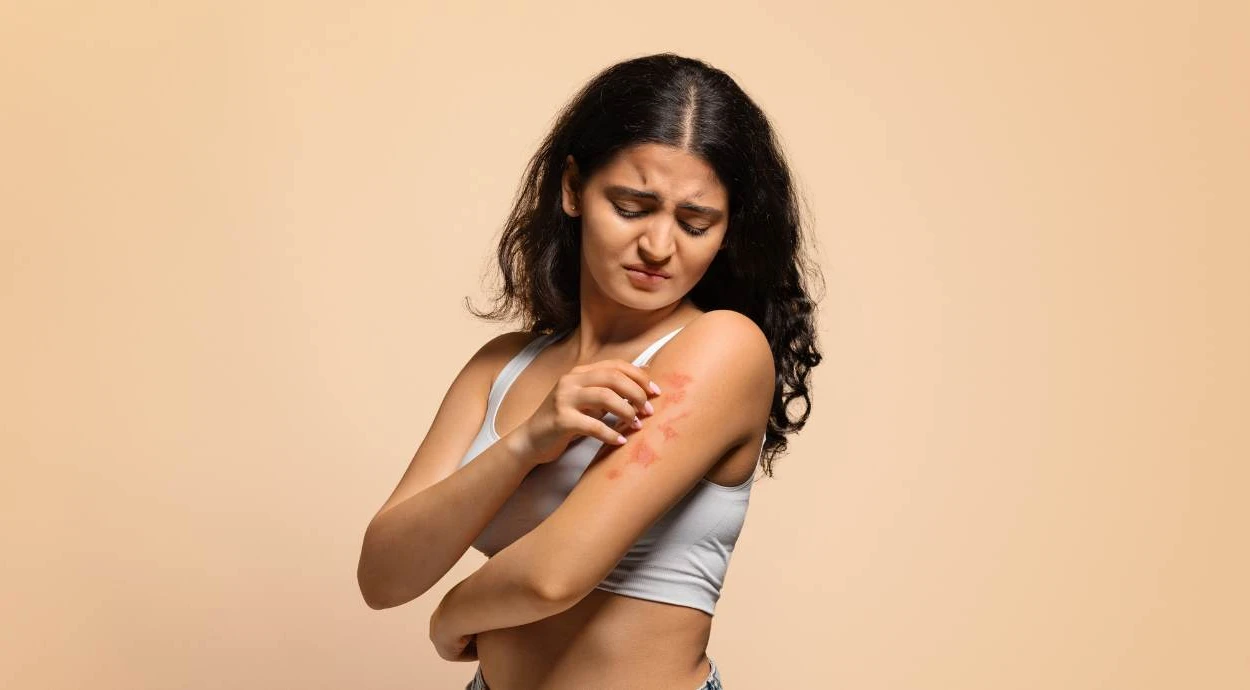
- What Psoriasis Looks Like: Typical Clinical Signs
- How Psoriasis Differs From Other Skin Conditions
- Psoriasis and Internal Diseases: A Hidden Connection
- Why Self-Treatment Is Dangerous
- Who Treats Psoriasis and Why Early Medical Care Matters
- Frequently Asked Questions
Psoriasis is a chronic immune-mediated inflammatory skin disease characterized by a long course with periods of symptom worsening and improvement. Immune system dysregulation plays a major role in its development, causing skin cells to renew much faster than normal. This accelerated turnover leads to the appearance of typical skin lesions.
At an early stage, psoriasis may present as isolated spots or plaques on the skin. These changes are not always accompanied by severe itching or pain, which is why they are often mistaken for other dermatological conditions. At the same time, timely recognition of the disease affects subsequent treatment strategy and the ability to control the course of the condition.
In this article, we will explain what psoriasis is, how it typically begins, which signs may suggest the disease at an early stage, and why starting treatment on time is important.
Why Psoriasis Develops
Psoriasis is considered a disease with a multifactorial mechanism of development. This means that its onset is usually related not to one single cause, but to a combination of internal and external factors that influence the immune system and the skin.
One of the key factors is hereditary predisposition. If there are cases of psoriasis or other autoimmune diseases in the family, the risk of developing the condition increases. However, genetic predisposition does not mean that psoriasis will necessarily occur.
Factors that may trigger the onset or a flare-up of the disease include:
- acute and chronic stress;
- infectious diseases;
- hormonal changes;
- skin injuries, including scratches, burns, and surgical interventions;
- long-term use of certain medications;
- harmful habits.
Immune dysregulation also plays an important role: protective mechanisms begin to react incorrectly to the body’s own tissues. As a result, an inflammatory process develops in the skin, leading to characteristic changes.
Thus, psoriasis does not appear suddenly “out of nowhere.” Its development results from a complex interaction of genetic features and external factors.
How Psoriasis Starts: The Early Stage
The onset of psoriasis usually does not have a sharply pronounced clinical picture. At an early stage, skin changes may be limited and localized, making them easy to confuse with other dermatological conditions.
The first signs of psoriasis most often include:
- small pink or reddish spots with clearly defined borders;
- dryness of the skin in the affected area;
- fine scaling on the surface of the spots;
- gradual thickening of the affected areas.
Most often, these changes appear on the elbows, knees, the scalp, and the lower back; less frequently, they occur on other parts of the body.
At an early stage, itching or discomfort may be absent or mild. Because of this, patients often postpone seeing a doctor, considering the rash a temporary issue.
What Psoriasis Looks Like: Typical Clinical Signs
.jpg)
When psoriasis progresses to a more advanced stage, skin changes develop characteristic features that allow a doctor to confidently establish the diagnosis. At this stage, lesions are no longer isolated and superficial; they have a clearly formed structure.
Psoriasis is typically characterized by:
- persistent inflammatory plaques with well-defined borders;
- marked thickening of the skin in the affected area;
- intense dry scaling with the formation of dense scales;
- gradual expansion of the affected area and merging of lesions.
Affected areas may react to mechanical irritation, temperature changes, or dry air, which can intensify inflammation. Some patients also develop nail changes: nails may become brittle, thickened, or develop small pinpoint depressions. This can be a characteristic, but not mandatory, sign of psoriasis.
This condition typically alternates between periods of stability and active phases, during which the number and severity of lesions increase.
How Psoriasis Differs From Other Skin Conditions
Early manifestations of psoriasis, and even its more developed form, can resemble other dermatological conditions. That is why patients often confuse psoriasis with dermatitis, eczema, or fungal skin infections. However, there are important differences between these diseases.
In dermatitis, skin changes are usually associated with a specific irritant or allergen. Rashes often have less distinct borders, are accompanied by pronounced itching, and tend to improve after the triggering factor is eliminated.
Eczema, unlike psoriasis, is often characterized by oozing (serous fluid), small blisters, and cracks. The inflammatory process is typically more acute and often accompanied by intense itching and a burning sensation.
Fungal skin infections usually have a more specific distribution, may be associated with nail changes or involvement of the skin between the toes or fingers, and often spread gradually at the periphery with a relatively clearer center.
Psoriasis is distinguished by persistent lesions, clearly defined plaque borders, and characteristic scaling. Skin changes persist for a long time and do not resolve on their own without targeted treatment, even in the absence of external irritants.
These differences help a doctor suspect psoriasis and perform the necessary evaluation, including dermatoscopy, which allows a more detailed assessment of the structure of the affected skin.
Psoriasis and Internal Diseases: A Hidden Connection
Psoriasis is not limited to skin involvement. In some patients, the disease may be associated with other disorders, reflecting its systemic nature. These conditions do not develop in everyone, but their association with psoriasis is well recognized in clinical practice.
The most common associated manifestations include:
- Psoriatic arthritis. Inflammatory joint involvement that may occur along with skin signs of psoriasis or независимо of their severity. Typical symptoms include pain, morning stiffness, and joint swelling, more often affecting the hands, feet, or the spine.
- Cardiovascular-related changes. Patients with psoriasis more often have metabolic changes, particularly in lipid metabolism. This may increase the risk of cardiovascular disease, although psoriasis itself is not a direct cause.
- Metabolic disorders. Psoriasis may be associated with body weight changes, insulin resistance, and other metabolic alterations.
- Psycho-emotional difficulties. A long course of disease, visible skin changes, and flares may negatively affect emotional well-being, sleep, and overall quality of life. This is a common response to a chronic illness and requires an appropriate approach.
Given the potential impact of psoriasis on different body systems, it is important to view it not only as a dermatological problem but as a condition that may require comprehensive medical monitoring.
Why Self-Treatment Is Dangerous
Psoriasis has a chronic course and a complex mechanism of development, so attempts to treat it independently often do not lead to the expected result. Moreover, incorrect actions can worsen the skin condition and complicate long-term disease control.
One of the most common mistakes is the uncontrolled use of topical corticosteroids. Such products may quickly reduce redness and scaling, but they do not address the underlying mechanism of the disease. After stopping their use, symptoms often return in a more pronounced form, contributing to more frequent and severe flare-ups.
Equally dangerous are medically unsubstantiated recommendations from the internet. Aggressive topical agents, questionable “detox” practices, or strict dietary restrictions can disrupt the skin barrier and provoke deterioration.
Self-treatment also makes accurate diagnosis more difficult. Changes in the clinical picture due to incorrectly chosen products may mask the true activity of the process. That is why, when typical skin changes appear, it is important to consult a dermatologist rather than experiment with treatment on your own.
Who Treats Psoriasis and Why Early Medical Care Matters
.jpg)
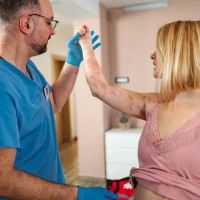
Psoriasis is a condition that requires observation and treatment by a dermatologist. This specialist performs the initial assessment of the skin, analyzes the pattern of lesions, and evaluates the course of the disease. Based on the clinical picture, the dermatologist identifies the type of psoriasis, the activity of the process, and selects an individualized treatment plan.
Seeking medical care at an early stage is crucial. When psoriasis is detected at the beginning, there are more opportunities to influence the course of the condition, reduce the frequency and severity of flare-ups, and achieve a long-term stable state. In such cases, psoriasis treatment is usually less intensive and easier for the patient to tolerate.
It is also important to understand that psoriasis is not a condition that can be cured once and for all. The main goal of therapy is symptom control and maintenance of remission, when manifestations are minimal or absent.
Timely consultation with a dermatologist not only confirms the diagnosis but also provides clear recommendations on skincare, lifestyle, and prevention of factors that may trigger flare-ups.
Prevention of psoriasis involves daily proper skin care with moisturizers, minimizing the influence of provoking factors, particularly stress and skin trauma, and regular monitoring by a dermatologist to monitor the disease.
This approach is the basis for effective long-term psoriasis management.
Book a dermatologist consultation at the medical center «Oxford Medical» in Kyiv. During the appointment, the doctor will assess your skin condition and determine an individual treatment strategy.
Frequently Asked Questions
How does psoriasis present?
Psoriasis usually presents with clearly defined red or pink plaques on the skin covered with dry scaling. The elbows, knees, scalp, and lower back are affected most often. Symptom intensity may change over time, and lesions may expand or decrease.
How can psoriasis be distinguished from dermatitis?
In dermatitis, rashes are more often related to an irritant or allergen, have less clearly defined borders, and improve after the cause is removed. Psoriasis is characterized by persistent plaques with pronounced scaling that do not resolve on their own and remain for a long time.
How can psoriasis be cured permanently?
Psoriasis is a chronic disease, so the question of whether it can be cured has a clear answer: the condition cannot be completely eliminated. However, modern treatment options can help achieve long-term remission and control symptoms.
Does diet affect the course of psoriasis?
Diet is not a cause of psoriasis, but it can influence the frequency and severity of flare-ups. A balanced diet, weight management, and avoiding foods that may promote inflammatory reactions can support a more stable course.
What foods should be avoided with psoriasis?
Dietary recommendations are individual, but it is often advised to limit alcohol, overly fatty and spicy foods, high-sugar products, and processed convenience foods. Final guidance on a psoriasis diet is provided by a doctor based on the patient’s condition.
Is psoriasis contagious?
No. Psoriasis is not an infectious disease. It is not transmitted through contact, household interaction, or airborne droplets and does not pose a risk to others.
Can stress trigger a flare-up?
Yes. Psychological and emotional stress is considered one of the factors that can trigger a psoriasis flare-up. Prolonged or intense stress may affect immune mechanisms and intensify skin manifestations.
Can laser hair removal be done with psoriasis?
The possibility of laser hair removal is determined individually. The procedure is usually not performed on areas with active lesions. Before making a decision, it is recommended to consult a dermatologist to assess the skin condition and avoid unwanted reactions.