Sign up via call center
Department
Treatment of extrasystole

Treatment of extrasystole

Extrasystole is a heart rhythm disorder resulting from premature heartbeats, after which the heart pauses for a few seconds and then returns to its normal rhythm. Normally, the regularity of heart contractions is controlled by the sinus node, which generates electrical impulses. These impulses travel through the atria down to the ventricles and ensure their contraction. In extrasystole, the electrical impulse originates not in the sinus node but in the ventricle, atrium, or another part of the heart, which provokes a premature contraction and disrupts the normal rhythm.

Cardiac extrasystole is the most common type of arrhythmia. It occurs even in completely healthy people. In most cases, extrasystoles appear rarely, after physical exertion, stress, or coffee consumption, and do not pose a threat to a person’s health and life.

Pathological extrasystole is diagnosed when heart rhythm disturbances occur frequently, are accompanied by deterioration of well-being, and are present in patients with heart and vascular diseases. In such cases, extrasystole may cause atrial fibrillation, myocardial infarction, stroke, or sudden cardiac arrest. With timely diagnosis and treatment, extrasystole can be controlled, and despite the diagnosis, a person can lead a полноценный lifestyle.

Symptoms of Extrasystole

Many patients live with the diagnosis for years without even suspecting
heart problems. Symptoms appear when extrasystole becomes frequent
or develops against the background of other diseases. The symptoms
are usually nonspecific.

The patient may experience:

a feeling of irregular heartbeat, heart pause, or a thump in the chest;

pain in the heart area, angina;

dizziness, fainting, shortness of breath;

a feeling of heat, sudden sweating, pale skin;

sensory disturbances, numbness in different parts of the body;

weakness in the body, anxiety, and other symptoms.

List of diseases

During an extrasystole attack, the patient experiences only some of these symptoms. They may depend on the underlying disease. In particular, with cerebral atherosclerosis, dizziness occurs more often, and with cardiac ischemia — angina.

Extrasystole may develop at any age, including in young children. In infants, the condition may be suspected due to changes in pulse, refusal to feed, sleep disturbances, irritability, etc. In older children, the symptoms may be similar to those in adults.

Why Is Extrasystole Dangerous?

Physiological extrasystole, which occurs rarely and is not felt, is most often not dangerous. The risk of complications arises with frequent and severe attacks, as well as in the presence of other heart diseases.

Extrasystole may provoke:

  • atrial fibrillation;

  • paroxysmal tachycardia;

  • ventricular fibrillation;

  • worsening of heart failure;

  • sudden cardiac arrest.

Extrasystole is a type of arrhythmia and may lead to more severe forms of heart rhythm disorders, such as atrial fibrillation and ventricular fibrillation. In such cases, the heart cannot contract normally and pump the necessary amount of blood throughout the body. Extrasystole also worsens the course of heart failure and other cardiovascular diseases.

The most dangerous complication is cardiac arrest. Its risk is higher in patients with chronic diseases, but it is not excluded in healthy individuals. With extrasystole, it is important to monitor well-being more carefully, take the treatment prescribed by a doctor, and avoid excessive physical exertion and emotional stress.

Causes of Extrasystole

There are many causes of extrasystole. In healthy individuals, occasional episodes may occur due to physical exertion, stress, alcohol consumption, intoxication, etc. However, heart rhythm disturbances may also be caused by serious diseases.

Extrasystole may be caused by:

  • heart defects;

  • atherosclerosis;

  • coronary heart disease;

  • cardiomyopathy;

  • previous myocardial infarction and other heart diseases;

  • digestive system diseases;

  • endocrine system diseases;

  • cervical osteochondrosis;

  • anemia;

  • neoplasms;

  • intoxication of the body;

  • allergy;

  • use of certain medications;

  • consumption of alcohol, coffee, and energy drinks;

  • excessive physical exertion;

  • stress, strong emotional experiences, neurosis;

  • pregnancy and others.

During pregnancy, extrasystole may develop due to hormonal changes, increased blood pressure, weight gain, and other physiological processes. Rare extrasystole may not be dangerous, but a serious heart rhythm disturbance may cause fetal hypoxia and other complications.

Types of Extrasystole

Extrasystoles may originate in different parts of the heart and differ in direction, frequency, and cause of development. Depending on this, separate forms of extrasystole are distinguished.

According to the localization of electrical impulses, the following types are distinguished:

  • ventricular — the impulse originates in the right or left ventricle, may be accompanied by a feeling of heart pause and may not be transmitted to the atria;

  • atrial — the impulse is transmitted to the ventricles and the sinus node;

  • ventriculoatrial — the impulse appears near the ventricles and atria, spreads in both directions, and may cause reverse blood flow;

  • atrioventricular — the impulse originates in the atrioventricular node;

  • supraventricular — the impulse arises above the ventricle;

  • combined (polytopic) — extrasystoles develop in several parts of the heart.

According to the number of extrasystoles, the following are distinguished:

  • bigeminy — extrasystoles occur after each normal heartbeat;

  • trigeminy — one extrasystolic beat occurs after two normal heartbeats;

  • quadrigeminy — one extrasystole alternates with three normal heartbeats.

According to the frequency and number of episodes, extrasystole may be:

  • rare — fewer than 5 extrasystoles per minute;

  • moderate — from 6 to 15 impulses per minute;

  • frequent — more than 15 impulses per minute.

Depending on the cause, extrasystole may be:

  • functional — occurs as a result of physical or emotional stress, smoking, coffee consumption, etc. (if the patient has no other diseases, such extrasystole may not require treatment);

  • organic — develops against the background of cardiovascular diseases (atherosclerosis, heart defects, myocardial infarction, and other conditions);

  • toxic — appears due to intoxication of the body with chemical substances.

Diagnosis of Extrasystole

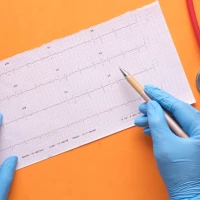
Extrasystole can be diagnosed based on the results of an electrocardiogram. It shows heart rhythm disturbances. However, if extrasystoles occur rarely, the examination may not detect them. A more reliable method is 24-hour Holter ECG monitoring.

Several sensors are attached to the patient’s chest, as in a standard ECG, which record the heart rhythm. The information from them is transmitted to a small portable device. After 24 hours, it is removed, and the cardiologist analyzes the results. Holter monitoring makes it possible to assess heart function throughout the day: when the patient is working, exercising, resting, and sleeping.

For a more comprehensive heart examination, echocardiography (heart ultrasound), chest X-ray or CT scan, laboratory tests, and other studies are also used. When extrasystole is detected, it is very important to determine its cause. This makes it possible to select the optimal treatment and assess the likelihood of other complications.

Treatment of Extrasystole

Extrasystole is treated in different ways, and in some cases therapy is not required at all. If the patient is healthy, extrasystoles occur rarely and do not cause discomfort, only regular examinations may be prescribed. In this case, the number of extrasystoles per day should be less than 200.

In other cases, extrasystole is usually treated with medication. The patient is prescribed drugs to normalize heart rhythm, blood pressure, and to treat the underlying disease that provokes extrasystole. If it is caused by emotional stress, sedatives or antidepressants may be effective. In cases of hormonal disorders, consultation with an endocrinologist and appropriate treatment are required. In most cases, extrasystole develops against the background of other diseases, which is why thorough diagnostics and the correct choice of therapy are so important.

In severe forms of extrasystole, surgical treatment may be required. It is used when extrasystoles occur frequently, disrupt heart function, and cause complications. In such cases, ablation may be necessary — targeted cauterization of the tissues where pathological impulses originate. The procedure is usually performed using a minimally invasive method — a catheter is inserted into the heart through large blood vessels.

Surgery may also be required in cases of heart defects and certain other diseases.

Prevention of Extrasystole

To prevent the development and recurrence of extrasystole attacks, it is recommended to:

  • identify the provoking factor and eliminate it if possible;

  • treat the disease that causes extrasystole;

  • reduce physical exertion;

  • control stress levels and avoid emotional strain;

  • quit smoking, alcohol consumption, and energy drinks;

  • stop or reduce coffee consumption;

  • normalize sleep, work, and rest schedules.

Properly conducted treatment helps normalize heart rhythm and reduce the risk of complications. Many patients with extrasystole do not feel its symptoms and lead an active lifestyle. At the same time, it is very important to undergo timely examinations and follow all the doctor’s recommendations.

To schedule a consultation with a cardiologist, call the “Oxford Medical” contact center or use the chat on the website.

Our services
Consultations
Cardiologist consultation
1100.00 ₴
Add Added
Consultation with a leading cardiologist
1989.00 ₴
Add Added
Online consultation with a cardiologist
1100.00 ₴
Add Added
Services
Heart ultrasound (echocardiography)
1389.00 ₴
Sign up by the call center
Electrocardiography (ECG without description)
319.00 ₴
Sign up by the call center
Electrocardiography (ECG with description)
499.00 ₴
Sign up by the call center
Description of electrocardiography (ECG)
229.00 ₴
Sign up by the call center
Monitoring (Holter) of blood pressure (24 hours)
1789.00 ₴
Sign up by the call center

Advantages of the “Oxford Medical” cardiology department in Kyiv

Experienced cardiologists. Highly qualified specialists who follow modern treatment approaches.

Modern equipment. The latest devices for diagnosing and monitoring the condition of the heart and vessels.

Comprehensive treatment. Possibility to undergo examination, treatment, and rehabilitation in one place.

Comfort and care. Convenient location of clinics in different districts of Kyiv, friendly atmosphere, and attentive staff.

Our doctors

Vita Mykolayivna Bolkunevich - cardiologist at the private clinic Oxford Medical Kyiv
4.68
rating (28)
32+
Years of experience
Online consultation
Cardiologist of the highest category
32+ Years of experience
Consultation 1100
Kyiv, Sribnokilska St. 20
Kyiv, Mykhayla Hryshka St., 1
Make an appointment
Doctor at the private clinic Oxford Medical Kyiv
4.45
rating (29)
22+
Years of experience
Online consultation
Cardiologist of the highest category
22+ Years of experience
Consultation 1100
Make an appointment
Doctor at the private clinic Oxford Medical Kyiv
5
rating (3)
23+
Years of experience
Cardiologist of the highest category
23+ Years of experience
Consultation 1100
Make an appointment
Oleinnikova Yana Oleksandrivna - cardiologist at the Oxford Medical Kyiv clinic
5
rating (1)
4+
Years of experience
Online consultation
Cardiologist, Ultrasound Diagnostics Physician, Category I
4+ Years of experience
Consultation 1100
m. Kyiv, Parkovo-Syretska St., 7A
Make an appointment
All doctors
Reviews
Анастасія 07.02.2026
Звернулася до Сивоконь Альони Василівни як до кардіолога і залишилася дуже задоволена прийомом. Лікар уважно вислухала всі мої скарги, детально розпитала про самопочуття та попередні обстеження. Пояснює все спокійно, зрозуміло й без зайвої «медичної» складності, що для мене було дуже важливо. Відчувається професіоналізм, досвід і щире бажання допомогти пацієнту. Після консультації з’явилося відчуття спокою та впевненості в лікуванні. Дуже вдячна Альоні Василівні та щиро рекомендую її як уважного й компетентного кардіолога.
Star Star Star Star Star
Наталя 29.01.2026
В серпні 2025 року в мене значно підвищився тиск і я відповідно звернулась до лікаря кардіолога іншого медичного центру ( з етичних міркувань не буду зазначати найменування медичного центру та прізвище лікаря), мені було призначено лікування, яке мені зовсім не допомагало, тиск не знижувався і так тривало з серпня по жовтень. На щастя, мої знайомі порекомендували мені звернутись до медичного центру ОКСФОРД, а саме до лікаря ВЕКЛОВА Германа Юрійовича. Я вдячна долі, що знайшла для себе цього лікаря-кардіолога. Це чуйна, уважна людина та високопрофесійний лікар. Після призначеного лікування вже на другий день в мене нормалізувався тиск, з жовтня по теперішній час мій тиск та стан здоров’я в нормі. Лікар завжди уважно вислухає, детально розпитає про всі симптоми, проведе необхідні дослідження, пояснює все просто та доступно. Завжди після візиту до цього лікаря відчуваю впевненість і спокій. РЕКОМЕНДУЮ ВЕКЛОВА Г.Ю. всім, хто шукає компетентного кардіолога та відповідального спеціаліста.
Star Star Star Star Star
Current information
All Articles

We use cookies and other technologies to remember your preferences and find out exactly how you use and interact with the site.

By using our site, you also agree to the terms of the "User Agreement" and "Regulation on the processing and protection of personal data". By clicking "I AGREE", you consent to the processing of your data.