
Sign up via call center
Department
Treatment of angina pectoris

Treatment of angina pectoris

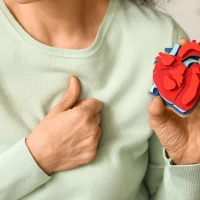
Angina pectoris is a clinical syndrome (a set of symptoms) that manifests as a feeling of heaviness, discomfort, and pain in the heart area or behind the sternum. It often radiates to the left shoulder and arm. Angina attacks mainly occur during physical exertion or psycho-emotional stress. They may also appear at rest, but this is typical for complicated cases.

Attacks last about 10–15 minutes. Usually, the pain subsides when a person calms down and relaxes. Medications that dilate the coronary vessels are also used to relieve symptoms. They should be taken only as prescribed by a doctor.

Prolonged attacks increase the risk of myocardial infarction. If pain in the heart area occurs, it is necessary to consult a cardiologist and undergo an examination. Cardiac angina may be associated with atherosclerosis and coronary heart disease, which require serious treatment.

How an Angina Attack Develops

With an increase in physical or emotional stress, the heart rate rises and, accordingly, blood circulation accelerates. At the same time, the coronary arteries dilate — they provide blood supply to the myocardium.

An angina attack develops when the arteries are narrowed (for example, due to atherosclerosis) and cannot ensure adequate blood flow, as well as in the case of arterial spasm.

As a result, a certain area of the myocardium receives an insufficient blood supply — this causes pain, heaviness, and other symptoms.

What Are the Symptoms of Angina

The main symptom is pain. It may vary in intensity and location.

During an attack, pain may occur:

in the heart area or behind the sternum;

in the left shoulder and arm, sometimes in the area between the shoulder blades;

in the upper abdomen;

on the right side of the chest, as well as in the lower jaw.

List of diseases

The pain may be aching or sharp. A feeling of pressure in the chest and burning may also occur.

Depending on the type of angina, symptoms may appear with increased physical and mental exertion, including significant overeating. They may also develop with hypothermia and even during rest.

In atypical cases, shortness of breath, bloating and abdominal pain, nausea, and vomiting may also occur.

In most cases, the pain subsides quickly when a person sits down and relaxes. An attack may last from a few minutes up to 15 minutes. This feature helps doctors distinguish the disease from other conditions with similar symptoms.

First Aid for Angina

Proper actions in the first minutes after symptoms appear help reduce the workload on the heart and lower the risk of complications.

If squeezing or burning pain behind the sternum occurs, it is necessary to:

  • immediately stop physical activity;

  • sit down or take a semi-sitting position with back support;

  • ensure access to fresh air (open a window, loosen tight clothing);

  • remain calm and breathe slowly and evenly;

  • take a fast-acting medication prescribed by a doctor (usually nitroglycerin under the tongue).

Relief usually occurs within 3–5 minutes. If the pain does not decrease, a repeated dose of the medication is allowed according to the doctor’s recommendations.

Emergency medical assistance should be called immediately if:

  • the pain lasts more than 10–15 minutes;

  • the symptoms intensify;

  • sudden weakness, cold sweat, or nausea appears;

  • severe shortness of breath or loss of consciousness occurs.

Prolonged or atypical chest pain may indicate the development of myocardial infarction, therefore delaying the call for medical help is dangerous.

It is important to remember: even if the attack resolves on its own, this does not mean that the problem has been solved. After an episode of ischemic pain, it is necessary to consult a cardiologist to adjust treatment and monitor the condition of the cardiovascular system.

Causes of Angina

Angina develops when the coronary arteries cannot supply the myocardium with a sufficient amount of blood and, accordingly, oxygen. This occurs in several situations. Most often, the narrowing of the arterial lumen is associated with atherosclerosis and coronary heart disease.

Vascular spasm may also occur due to nervous overstrain or a sudden change in ambient temperature (for example, when going out into the cold). In rare cases, an attack may develop against the background of an infectious disease or a severe allergic reaction.

The following may trigger an attack:

  • physical exertion;

  • psycho-emotional tension, severe stress;

  • significant overeating;

  • hypothermia and exposure to cold;

  • increased blood pressure;

  • smoking.

Specialists also identify factors that increase the likelihood of developing angina. These include:

  • coronary heart disease — chronic damage to the coronary arteries and impaired blood supply to the myocardium;

  • hypertension — elevated blood pressure;

  • aortic stenosis — a defect or narrowing of the aortic orifice;

  • aortic regurgitation — incomplete closure of the aortic valve;

  • hypertrophic cardiomyopathy — thickening of the wall of the left or right ventricle;

  • atherosclerosis — narrowing of the vascular lumen due to cholesterol deposits;

  • diabetes mellitus;

  • hypercholesterolemia — high blood cholesterol levels;

  • obesity;

  • hereditary predisposition;

  • age over 40 years;

  • male sex — in women, angina occurs almost three times less often;

  • low physical activity;

  • frequent stress;

  • smoking — in men, the risk of angina and coronary heart disease increases by 18%, and in women by 31%;

  • alcohol consumption.

Previously, it was believed that the condition developed mainly in older people. Now it is often diagnosed in middle-aged and younger individuals. If several risk factors are present, regular heart examinations are recommended.

Types of Angina

Angina is divided into several types. The main parameter is the time of onset of attacks. Depending on this, the following are distinguished:

  • exertional angina — develops against the background of physical or emotional stress;

  • rest angina — attacks develop without visible causes, including when the patient is resting and at night.

Depending on the severity of symptoms and the frequency of attacks, the following are distinguished:

  • stable angina — there is a proportional relationship between the level of physical exertion, the increase in myocardial oxygen demand, and the intensity of attack symptoms;

  • unstable angina — the frequency and intensity of symptoms vary, attacks may occur at rest.

Stable angina is also divided into 4 functional classes:

  • Class I — no attacks during usual physical activity, but they appear with increased exertion;

  • Class II — symptoms appear during walking up to 500 m and climbing more than one flight of stairs;

  • Class III — attacks develop when walking 100–200 m and climbing a small flight of stairs;

  • Class IV — symptoms develop when walking less than 100 meters and at rest.

Unstable angina is also divided into classes:

  • Class I — attacks began within the last 2 months and occur only during exertion;

  • Class II — subacute form, attacks frequently recur within a month and occur at rest;

  • Class III — attacks often occur at rest and were present within the last 2 days before diagnosis.

How Angina Is Diagnosed

To diagnose angina, a cardiologist performs a physical examination, reviews the patient’s complaints, and studies the medical history. After that, laboratory tests and instrumental examinations are prescribed.

The patient may be assigned:

  • laboratory blood tests (complete blood count, biochemical analysis, blood glucose, cholesterol level, etc.);

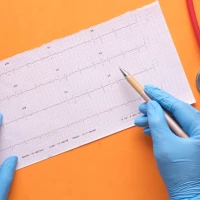
  • electrocardiogram (ECG) at rest and during physical activity;

  • 24-hour Holter ECG monitoring;

  • echocardiography (heart ultrasound);

  • coronary angiography — an X-ray examination with contrast;

  • scintigraphy — a method of functional imaging.

An important stage of diagnosis is conducting stress tests, that is, assessing heart function during physical exertion (exercise on a stationary bike or treadmill).

The doctor determines which examinations are necessary for the patient individually.

Methods of Angina Treatment

Angina often develops against the background of other diseases, in particular atherosclerosis and coronary heart disease. Therefore, comprehensive treatment is carried out, aimed not only at relieving symptoms but also at eliminating the cause of attacks.

Angina is treated with medical and surgical methods. First, the cardiologist recommends that the patient reduce physical exertion (but not exclude it completely), adjust the diet, quit smoking and alcohol consumption, and prescribes a set of medications. The doctor may recommend nitroglycerin to dilate the coronary vessels, acetylsalicylic acid to thin the blood, beta-blockers to reduce heart rate, or other medications.

In severe forms or in case of ineffectiveness of conservative therapy, surgical intervention may be required. In angina, coronary artery stenting, coronary artery bypass grafting, and plastic reconstruction of the coronary arteries are performed. All operations are aimed at restoring blood flow to the myocardium.

Prevention of Angina

To prevent angina and other cardiovascular diseases, it is recommended to:

  • maintain a balanced diet — prevent an increase in blood cholesterol levels;

  • exercise regularly;

  • keep body weight within normal limits;

  • quit smoking and avoid alcohol consumption;

  • avoid overwork and chronic stress.

People at risk of heart disease are advised to visit a cardiologist once a year and undergo an examination.

Consultations
Cardiologist consultation
1100.00 ₴
Add Added
Consultation with a leading cardiologist
1989.00 ₴
Add Added
Online consultation with a cardiologist
1100.00 ₴
Add Added
Services
Heart ultrasound (echocardiography)
1389.00 ₴
Sign up by the call center
Electrocardiography (ECG without description)
319.00 ₴
Sign up by the call center
Electrocardiography (ECG with description)
499.00 ₴
Sign up by the call center
Description of electrocardiography (ECG)
229.00 ₴
Sign up by the call center
Monitoring (Holter) of blood pressure (24 hours)
1789.00 ₴
Sign up by the call center

Advantages of the “Oxford Medical” cardiology department in Kyiv

Experienced cardiologists. Highly qualified specialists who follow modern treatment approaches.

Modern equipment. The latest devices for diagnosing and monitoring the condition of the heart and vessels.

Comprehensive treatment. Possibility to undergo examination, treatment, and rehabilitation in one place.

Comfort and care. Convenient location of clinics in different districts of Kyiv, friendly atmosphere, and attentive staff.

Our doctors

Vita Mykolayivna Bolkunevich - cardiologist at the private clinic Oxford Medical Kyiv
4.68
rating (28)
32+
Years of experience
Online consultation
Cardiologist of the highest category
32+ Years of experience
Consultation 1100
Kyiv, Sribnokilska St. 20
Kyiv, Mykhayla Hryshka St., 1
Make an appointment
Doctor at the private clinic Oxford Medical Kyiv
4.45
rating (29)
22+
Years of experience
Online consultation
Cardiologist of the highest category
22+ Years of experience
Consultation 1100
Make an appointment
Doctor at the private clinic Oxford Medical Kyiv
5
rating (3)
23+
Years of experience
Cardiologist of the highest category
23+ Years of experience
Consultation 1100
Make an appointment
Oleinnikova Yana Oleksandrivna - cardiologist at the Oxford Medical Kyiv clinic
5
rating (1)
4+
Years of experience
Online consultation
Cardiologist, Ultrasound Diagnostics Physician, Category I
4+ Years of experience
Consultation 1100
m. Kyiv, Parkovo-Syretska St., 7A
Make an appointment
All doctors
Reviews
Анастасія 07.02.2026
Звернулася до Сивоконь Альони Василівни як до кардіолога і залишилася дуже задоволена прийомом. Лікар уважно вислухала всі мої скарги, детально розпитала про самопочуття та попередні обстеження. Пояснює все спокійно, зрозуміло й без зайвої «медичної» складності, що для мене було дуже важливо. Відчувається професіоналізм, досвід і щире бажання допомогти пацієнту. Після консультації з’явилося відчуття спокою та впевненості в лікуванні. Дуже вдячна Альоні Василівні та щиро рекомендую її як уважного й компетентного кардіолога.
Star Star Star Star Star
Наталя 29.01.2026
В серпні 2025 року в мене значно підвищився тиск і я відповідно звернулась до лікаря кардіолога іншого медичного центру ( з етичних міркувань не буду зазначати найменування медичного центру та прізвище лікаря), мені було призначено лікування, яке мені зовсім не допомагало, тиск не знижувався і так тривало з серпня по жовтень. На щастя, мої знайомі порекомендували мені звернутись до медичного центру ОКСФОРД, а саме до лікаря ВЕКЛОВА Германа Юрійовича. Я вдячна долі, що знайшла для себе цього лікаря-кардіолога. Це чуйна, уважна людина та високопрофесійний лікар. Після призначеного лікування вже на другий день в мене нормалізувався тиск, з жовтня по теперішній час мій тиск та стан здоров’я в нормі. Лікар завжди уважно вислухає, детально розпитає про всі симптоми, проведе необхідні дослідження, пояснює все просто та доступно. Завжди після візиту до цього лікаря відчуваю впевненість і спокій. РЕКОМЕНДУЮ ВЕКЛОВА Г.Ю. всім, хто шукає компетентного кардіолога та відповідального спеціаліста.
Star Star Star Star Star
Current information
All Articles
Sign up via call center
in the clinic
online
This site is protected by reCAPTCHA technology, and the Google Privacy Policy and Terms of Service apply.
Hello!
Let's take care
about your health:
Sign up via call center

We use cookies and other technologies to remember your preferences and find out exactly how you use and interact with the site.

By using our site, you also agree to the terms of the "User Agreement" and "Regulation on the processing and protection of personal data". By clicking "I AGREE", you consent to the processing of your data.