dizziness
All structures of the skull are examined, including the facial bones, occipital and frontal bones. It is performed in direct and lateral projections.

 Adults Adults Adults Adults Adults Adults Adults Adults Adults
  Children Children Children Children


 Hotline:
 Adults Adults Adults Adults Adults Adults Adults Adults Adults Children Children Children Children
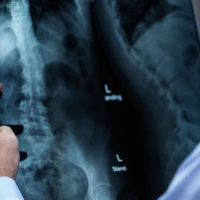
Digital skull x-ray is an examination of the skull that is used when congenital malformations or injuries of the skull bones are suspected, as well as to exclude a pituitary tumor. This is a quick and safe way to verify the integrity of the brain case and the absence of skull abnormalities. Safe radiation dose, comprehensive information and fast results - all these things are provided by the «Oxford Medical» Kiev clinic thanks to the use of the Multix Select DR digital x-ray system (Siemens, Germany).
Many patients falsely believe that skull x-ray is necessary for the diagnosis of brain diseases, but usually CT is used for this purpose. X-ray examination is necessary to diagnose the consequences of traumatic brain injuries, suspected tumors, symptoms of developmental abnormalities, and diseases of the ENT organs.
A separate study is the radiography of the Turkish saddle - a bone formation that looks like a depression in the sphenoid bone of the skull and got its name for its visual similarity to the saddle. There is a fossa in the center of the Turkish saddle which is called the pituitary gland (hypophisis) - the gland that produces hormones controlling the metabolism and the rate of human body development.
Indications for the Turkish saddle x-ray may include: gigantism and acromegaly, diabetes insipidus, increased intracranial pressure, traumatic brain injuries, visual disturbances, adrenal or thyroid dysfunction, increased prolactin concentration in the blood, infertility and menstrual disorders.
Skull x-ray can be prescribed if the following symptoms are observed:


dizziness
headache
hand tremor
nose hemorrhage with no obvious reason
blurred vision
hearing impairment
pain that occurs during chewing

Depending on the area being examined, the following types of skull X-rays are distinguished:
All structures of the skull are examined, including the facial bones, occipital and frontal bones. It is performed in direct and lateral projections.
The study mainly examines the sella turcica, i.e. the area where the pituitary gland is located. It is performed in a lateral projection.
To perform a skull x-ray no preliminary preparation is required. A patient just needs to remove all metal accessories and jewelry from the head and neck so that they do not appear on the image.
The patient does not feel pain or discomfort during the procedure – the passage of x-rays does not cause any physical sensations. During the skull x-ray the patient can stand, sit or lie in different positions, depending on which projection is required. In most cases images in one or two projections are sufficient.
As the result the survey or compression spot films are obtained. In the first case, the condition of the skull as a whole is studied, in the second - special attention is paid to its individual parts: the zygomatic bones, orbits, jaw, sphenoid bone, temporomandibular joint, etc.
The main advantage of the digital x-ray is that the image is recorded not on film (in case an analog device is used – old machines that often still work in state medical institutions), but using a special digital matrix.
Digital x-ray is, above all, safer for the patient. Although the radiation received from old devices is acceptable, the dose received from modern digital x-ray system is several times lower due to the high sensitivity of the detector.
Images taken with the help of digital x-ray system provide more information than captured on film thanks to image processing programs that allow getting more detailed data.
The results of a digital x-ray are obtained immediately after the examination, while the film from the analog device must be developed.
Make an appointment for an x-ray at the «Oxford Medical» clinic in Kiev by phone. You can also contact us by using the chat on the website.
The cost of a skull X-ray at the Oxford Medical clinic depends on the area of examination and the number of projections. In particular, the price of a skull X-ray in two projections is slightly higher than in one projection. The doctor determines which X-ray should be done individually. You can find out the cost of the examination here.

Children should only have an X-ray performed if prescribed by a doctor. If the child is small, head immobilization or parental supervision may be required.
The examination can be performed as many times as necessary. Digital devices provide minimal radiation exposure, so there are no strict restrictions on the number of images.
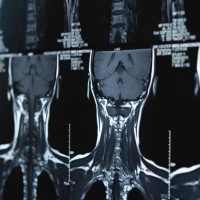
X-rays provide visualization of bone tissue, while MRI also allows for assessment of the condition of soft tissues and blood vessels.
If tumors are suspected, CT or MRI are usually prescribed, as they provide a more accurate diagnosis in this case.
In case of a traumatic brain injury, a CT scan or MRI may be prescribed, since X-rays can only visualize bone tissue.
Appointments for X-rays at the Oxford Medical Kyiv clinic are made by phone. You can also make an appointment using the chat on the website.


Reduced radiation exposure. The radiation dose is several times lower than with film-based devices, making diagnostics safer.
Instant results. The image is available immediately after the scan, without the need for film development.
High image quality. Advanced software algorithms provide sharpness and detail, even for very small structures.
Convenient data storage and transfer. Results are available in electronic format, allowing easy sharing with doctors and storing in the patient’s medical record.
Digital image processing. The doctor can zoom in, adjust contrast and brightness for more accurate diagnosis.
Effectiveness and safety. The Siemens Multix Select DR digital X-ray is FDA certified, confirming its high effectiveness and compliance with the strictest safety standards.


 4.82
4.82  36+
36+  4.92 20+



 in the clinic
  online
  Hello!