


tissue necrosis, gangrene
Required to assess blood supply to the feet.

 Adults Adults Adults Adults Adults Adults Adults Adults Adults
  Children Children Children Children


 Hotline:
 Adults Adults Adults Adults Adults Adults Adults Adults Adults Children Children Children Children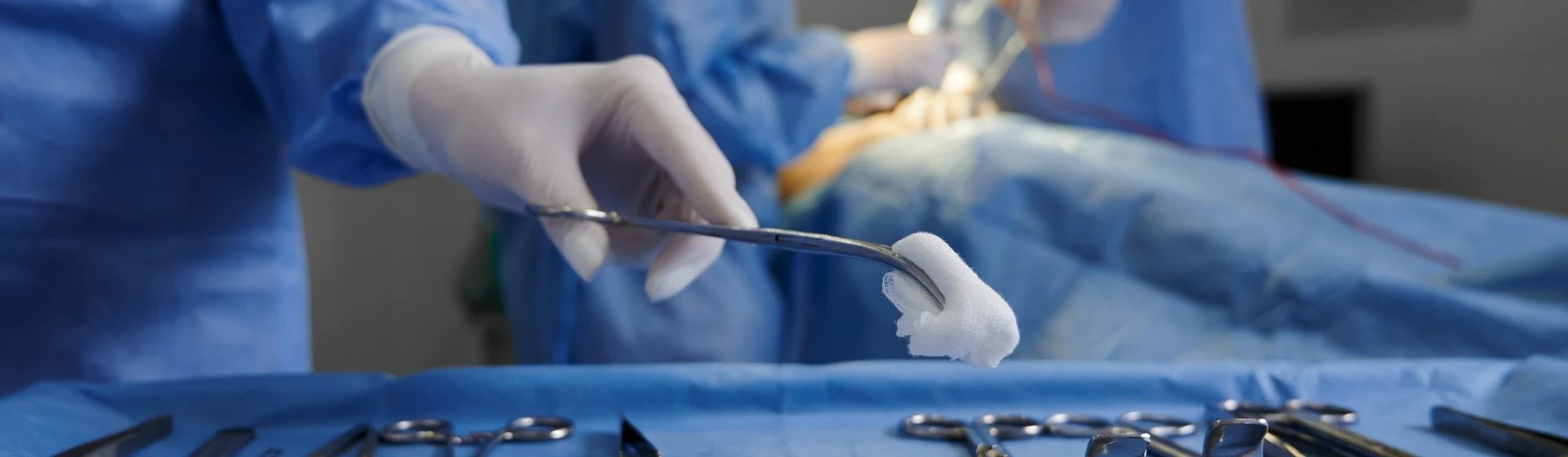
Amputation of a toe or finger is an operation that is prescribed when conservative treatment methods are ineffective. Most often, it is necessary for necrosis, gangrene, or severe traumatic injury. In such cases, amputation of the finger may be the only way to stop further damage to the leg tissues and prevent the development of life-threatening complications.
At Oxford Medical, a comprehensive examination is performed on the patient before the operation. Its main goal is to make sure that there are indications for amputation. If there is even a small chance of saving the finger, it is definitely used. If there are no other options besides surgery, surgeons try to remove the minimum amount of tissue to preserve the functionality of the limb.
Most often, necrosis develops due to tissue ischemia - insufficient blood supply. Its cause can be atherosclerosis and other vascular diseases accompanied by narrowing or blockage of the arteries. Necrosis can also develop in diabetic foot syndrome in patients with severe diabetes. Less commonly, the cause is frostbite or a severe burn.
Also, an indication for amputation may be deformity and chronic pain in the fingers on the background of arthritis or arthrosis.
In each case, the decision to amputation is made individually. The operation is prescribed when conservative treatment methods are ineffective and there is a high risk of spreading necrosis, blood infection and the development of other complications.
Indications for toe amputation may be:


tissue necrosis, gangrene
severe traumatic injury to the finger
development of a malignant tumor
developmental abnormalities

Amputation of a finger is performed mainly under local anesthesia. The course of the operation may vary depending on the degree of tissue damage. In some cases, the phalanx of the finger is amputated, in others the entire finger is removed.
In case of gangrene, amputation of the finger is sometimes performed in two stages. First, necrotic tissues are removed, and after a few days a stump is formed.
The main stages of the operation:
Before surgery, the patient is prescribed a comprehensive examination.
This may include:
Required to assess blood supply to the feet.
Required to rule out osteomyelitis.
It is performed to monitor the general condition and exclude contraindications to anesthesia and surgical intervention.
Also, before the operation, the patient may be prescribed a course of antibiotic therapy and other medications as indicated. It is important to coordinate with the doctor the intake of all medications, including those prescribed by other specialists.
The operation is usually performed on an empty stomach in the morning. Food intake is stopped at least 8 hours in advance, and water - 1-2 hours in advance. It is recommended to give up drinking alcoholic beverages for a few days or a week.
After the operation, the patient is transferred to the hospital ward, where he remains under constant medical supervision. As a rule, he is allowed to get up after a few hours, but in some cases without putting weight on the operated leg.
The next day, the surgeon conducts an examination, removes the drainage and changes the dressings.
Depending on the complexity of the operation and the patient's well-being, the hospitalization period is from 1 to 3 days.
After discharge, the patient is recommended to:
If the rules of preoperative preparation and postoperative recommendations are followed, most patients have a finger amputation without complications. An important condition is to remove the finger at the level of tissues with good blood supply. Otherwise, there is a risk of poor wound healing and the need for repeated surgery.
The cost of finger amputation may vary depending on the complexity of the operation: partial or complete amputation, simultaneous performance of nekrektomiya etc. You can find out the prices of surgical treatment at «Oxford Medical» here.
Only a surgeon can give a more accurate estimate of the price after conducting an examination, studying the medical history and examination results.
«Oxford Medical» is a modern medical center with a high-tech surgery department. The availability of new equipment allows for accurate examinations, which is important for determining the degree of tissue damage and choosing the optimal treatment method.
Amputation of a finger is a serious operation, so it is performed by surgeons with many years of experience. They work according to international protocols, the main principle of which is to preserve the maximum amount of healthy tissue.
By contacting «Oxford Medical», you can be sure of receiving high-quality medical care and support at all stages from diagnosis to rehabilitation. Make an appointment for a consultation at a time convenient for you.
The healing time of a wound depends on the degree of blood supply and other characteristics of the patient. The better the blood flow, the faster the tissues are restored. On average, this process takes from 3-4 weeks to several months. If the wound does not heal for a long time, bleeds or fester, you need to contact a surgeon.
In most patients, the wound after amputation of the phalanx of the finger heals within 3-4 weeks, after which a scar forms. For successful tissue healing, it is very important to have good blood supply, as well as to follow all medical recommendations.


New expert-grade diagnostic and surgical equipment
High professionalism of surgeons
Use of minimally invasive techniques
A comprehensive approach to therapy
Choosing the optimal treatment method taking into account the individual characteristics of the patient
Comfortable hospital rooms with private bathroom and meals


 4.75
4.75  10+
10+ 
 10+ Years of experience
  Kyiv, st. Bereznyakivska, 30b
 5 22+ 22+ Years of experience
  5 5+ 5+ Years of experience m. Kyiv, Parkovo-Syretska St., 7A
  0 17+ 17+ Years of experience m. Kyiv, Parkovo-Syretska St., 7A



 in the clinic
  online
  Hello!


