Contents:
- Why and when wrinkles appear on the face
- First wrinkles — how to fight them
- How to remove wrinkles under the eyes at home
- How to remove wrinkles under the eyes
- How to remove wrinkles above the upper lip
- How to remove wrinkles on the forehead
- How to remove wrinkles on the neck
- How to remove wrinkles between the eyebrows
- How to reduce wrinkles on the face: general tips
- Wrinkle prevention
Wrinkles can appear gradually and remain barely noticeable for a long time, but over time they become more pronounced and affect the appearance of the skin. That is why many people have the question: what best smooths wrinkles, and is it possible to get rid of them completely.
We asked the cosmetologists at “Oxford Medical” which methods really work, when care is enough, and when professional procedures are needed, and how to properly approach the correction of age-related changes. It is important to understand: an effective result is possible only with a comprehensive approach, when the causes of wrinkles are taken into account, and not only their external manifestation.
Why and when wrinkles appear on the face
Wrinkles are the result of complex changes in the skin that occur gradually. They form not only because of age, but also under the influence of external and internal factors that change the structure of the dermis and its ability to recover.
With age, the synthesis of collagen and elastin decreases — proteins that are responsible for the firmness and density of the skin. At the same time, the level of hyaluronic acid decreases, which leads to moisture loss. The skin becomes thinner, less elastic, and recovers worse after strain.
Main causes:
- natural aging and slowing of metabolism;
- active facial expressions, due to which mimic wrinkles form — first dynamic and then permanent;
- exposure to ultraviolet radiation, which destroys collagen fibers (photoaging);
- dehydration of the skin and disruption of its barrier function;
- hormonal changes, especially during menopause;
- chronic stress, lack of sleep, and lifestyle.
It is important to understand that wrinkles can appear at different ages. In some people, the first changes appear after the age of 25, while in others much later. This depends on genetics, care, and the influence of external factors.
By nature, wrinkles are divided into:
- superficial — associated mainly with dehydration;
- deep — formed because of structural changes in the dermis and active facial expressions.
At the initial stages, wrinkles may be barely noticeable and disappear at rest. But without correction, they gradually become fixed and permanent, so it is important to start care and prevention even before pronounced changes appear.
First wrinkles — how to fight them
The first age-related changes usually appear in the form of fine lines that become noticeable during facial expressions or when the skin is dehydrated. At this stage, the changes are still reversible, so the right approach helps not only improve the condition of the skin, but also significantly slow further aging.
The main mistake is trying to eliminate only the external manifestation. In fact, it is important to influence the causes: moisture deficiency, reduced collagen synthesis, and disruption of the protective barrier of the dermis.
What really works at this stage:
- regular moisturizing of the skin with products containing hyaluronic acid, ceramides, and amino acids;
- daily use of SPF protection, since ultraviolet radiation is one of the main causes of premature aging;
- use of products with retinoids or antioxidants to stimulate cell renewal;
- maintaining the body’s water balance and correcting lifestyle (sleep, nutrition, stress level).
To understand what exactly the skin needs at this stage, it is worth going for a cosmetologist consultation. This will help objectively assess its condition and choose care without unnecessary experiments.
The cosmetologists at “Oxford Medical” explain that already at the stage when the first age-related changes appear, it is advisable to add light professional procedures aimed at deep moisturizing and improving skin quality. They are selected individually and help maintain youthfulness and reduce the severity of the first age-related changes.
.jpg)
How to remove wrinkles under the eyes at home
The area around the eyes has thin and sensitive skin that is almost devoid of sebaceous glands. That is why it loses moisture faster, recovers worse, and is the first to react to fatigue, stress, and age-related changes. Fine wrinkles appear early in this area and may deepen over time.
Many people are interested in how to get rid of wrinkles at home. It is important to understand: home care can improve the condition of the skin, but it has limited possibilities. In reality, it works only at the stage of superficial changes — when wrinkles are still associated with dehydration and have not become fixed in the structure of the skin.
What can give a result at home:
- intensive moisturizing with products containing hyaluronic acid, which temporarily evens out the texture;
- use of creams with peptides that support tone;
- antioxidants (vitamin C, niacinamide) to improve skin quality;
- gentle massage or patches to reduce puffiness and improve microcirculation;
- normalization of sleep and water balance, which directly affects the appearance of this area.
The cosmetologists at “Oxford Medical” note: even with regular care, it is important to understand the limitations: home products do not penetrate deeply enough to affect the structure of the dermis. They do not stimulate collagen production at the level necessary for pronounced rejuvenation.
That is why, with already formed changes, home care can only partially smooth wrinkles under the eyes, but not remove them completely. In such cases, noticeable results require professional methods that work more deeply and affect the causes of the changes.
How to remove wrinkles under the eyes
When changes in the area around the eyes become noticeable even at rest, this indicates deeper processes. In such cases, home care is no longer enough — noticeable results require professional methods.
It is they that make it possible to truly smooth wrinkles under the eyes, since they work not only with the surface of the skin, but also with its structure: they restore the level of hydration, stimulate collagen synthesis, and improve tissue density.
The most effective approaches:
- injectable methods — include biorevitalization for deep skin hydration, improvement of its elasticity, and smoothing of fine wrinkles, as well as other procedures for delicate correction of facial muscle activity or restoration of volume in this area;
- hardware techniques — aimed at stimulating collagen production, densifying the skin, and gradually reducing the severity of age-related changes;
- a combined approach — a combination of different methods to achieve a more pronounced and long-lasting result.
It is important to take into account that the area under the eyes requires a particularly careful approach. Excessive or incorrectly selected correction may look unnatural, so treatment tactics are always determined individually.
Cosmetologists select methods taking into account the type of age-related changes, the condition of the skin, and age-related changes. In most cases, it is the comprehensive approach that gives the optimal result, allowing work not only with the manifestations, but also with the causes of their appearance.
How to remove wrinkles above the upper lip
Wrinkles above the upper lip (the so-called “smoker’s lines”) are formed due to a combination of several factors: active facial expressions, age-related decrease in tissue volume, loss of skin elasticity, and a decrease in the level of hydration. In addition, their appearance is influenced by smoking, the habit of pressing the lips together, and photoaging.
The peculiarity of this area is that the skin here is thin and constantly moves, so dermal folds quickly deepen and can become noticeable even at rest.
The following are used for correction:
- injectable methods — aimed at reducing excessive facial muscle activity;
- restoration of tissue volume — replenishment of lost density, which allows the texture to be evened out and dermal folds to become less noticeable;
- methods of stimulation of regeneration — aimed at improving skin quality and increasing its density and elasticity.
It is important to take into account that excessive correction in this area can affect facial expressions and the appearance of the lips, so all procedures must be performed delicately and with the anatomical features taken into account.
How to remove wrinkles on the forehead
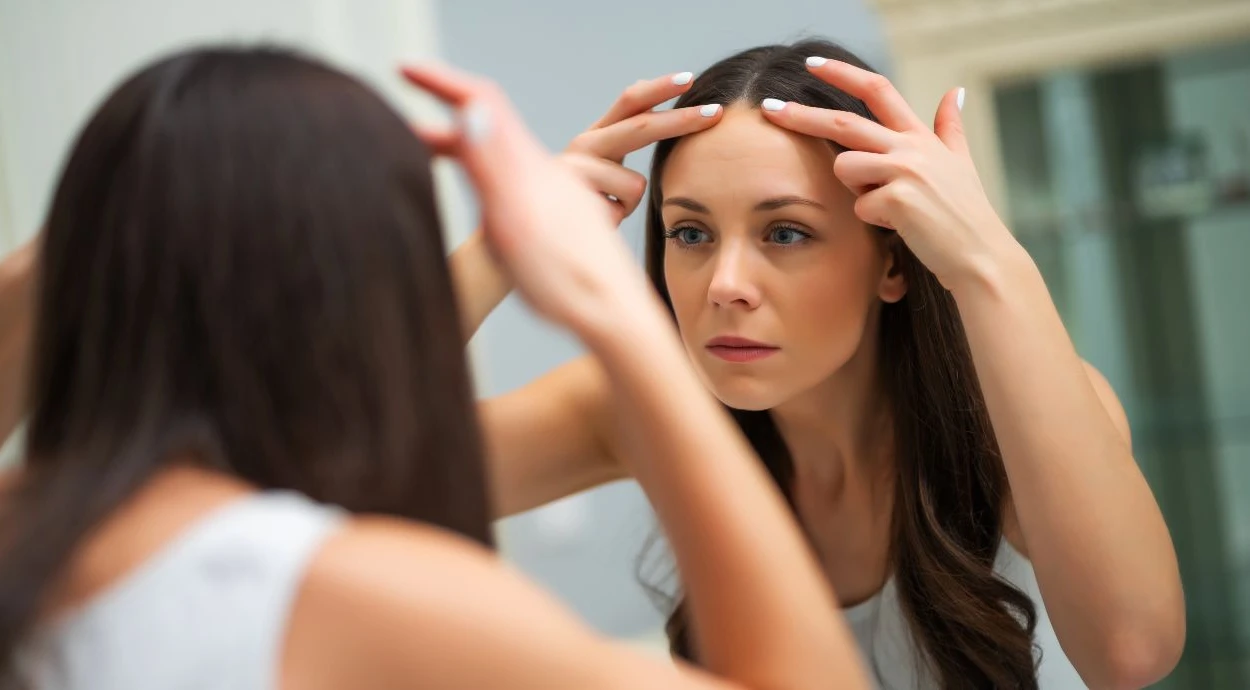
The forehead is one of the most mobile areas of the face, so wrinkles here often appear earlier than others. They are formed due to active muscle work (raising the eyebrows, emotional facial expressions), and over time they become fixed because of decreased skin elasticity and loss of collagen.
At the initial stage, wrinkles may be noticeable only during facial expressions, but without correction they become static — that is, they remain even at rest.
To smooth wrinkles on the forehead, it is important to act simultaneously on two mechanisms: muscle activity and skin quality.
The following approaches are used:
- beauty injections — reduce excessive muscle activity, due to which the skin stops constantly creasing and gradually evens out;
- hardware procedures — stimulate collagen synthesis, improve skin density, and its ability to recover;
- supportive care — helps maintain the result and supports the level of skin hydration and elasticity.
It is important that correction in this area requires precise dosing and an individual approach. Excessive reduction of facial muscle activity may look unnatural, so the doctor’s task is to preserve the natural mobility of the face while simultaneously reducing the severity of age-related changes.
In most cases, the best result is provided by a combination of methods, which makes it possible not only to even out the skin texture, but also to prevent further wrinkle formation.
How to remove wrinkles on the neck
The neck is an area that often begins to show age-related changes earlier than the face. This is due to anatomical features: the skin here is thinner, contains fewer sebaceous glands, and loses moisture faster. In addition, the condition of this area is affected by constant movements, head position (for example, when working with a smartphone), and insufficient attention to care.
Wrinkles on the neck may appear in the form of horizontal folds or loss of skin definition. Unlike the face, the mimic factor dominates less often here, so the main role is played by a decrease in tissue density and disruption of the structure of collagen fibers.
For correction, it is important not only to even out the texture, but also to improve the quality of the skin as a whole.
Effective approaches:
- hardware techniques — aimed at deep stimulation of tissues and restoration of the skin framework;
- injectable procedures — used to improve hydration and elasticity;
- regular care — helps maintain the result and prevent further changes.
One of the modern solutions is RF lifting Morpheus 8, which:
- acts on the deep layers of the skin due to the combination of microneedles and radiofrequency energy;
- stimulates the synthesis of new collagen and tissue remodeling;
- increases skin density and firmness;
- helps reduce the severity of age-related changes.
The cosmetologists at “Oxford Medical” select correction methods individually, taking into account the degree of age-related changes and the condition of the skin. In most cases, the optimal result is provided by a combination of procedures aimed at restoring the structure of the skin and maintaining its quality.
How to remove wrinkles between the eyebrows
The wrinkle between the eyebrows is formed due to regular contraction of the muscles in this area — for example, with the habit of frowning or concentrating. Over time, the skin stops fully straightening even at rest, and the fold becomes permanent.
Its deepening is also influenced by age-related changes: reduced skin elasticity, a decrease in the amount of collagen, and a slowing of recovery processes. As a result, the wrinkle becomes more pronounced and can give the face a tense appearance.
Since the main cause is active muscle work, correction should be aimed not only at the skin, but also at this mechanism.
The following methods are used:
- injectable methods — reduce excessive muscle contraction, which makes it possible to eliminate constant skin creasing;
- hardware procedures — improve skin density and make folds less noticeable;
- control of facial expressions — helps reduce the load on this area in everyday life.
If wrinkles are already formed and deep, care or hardware procedures alone are usually not enough. In such cases, it is necessary to work specifically with the muscular component in order to achieve a stable result.
How to reduce wrinkles on the face: general tips
.jpg)
The cosmetologists at “Oxford Medical” explain: patients often look for a universal way to reduce wrinkles on the face, but in practice the result depends on a systematic approach. Individual products or procedures produce a temporary effect, whereas a stable result is achieved through regular influence on the key mechanisms of skin aging.
What really matters:
- control of photoaging — daily use of SPF protection helps prevent collagen destruction and the appearance of new wrinkles;
- maintaining hydration of the dermis — regular use of products with hyaluronic acid and restoration of the barrier function reduce dryness and fine creases;
- stimulation of cell renewal — products with retinoids or acids help even out skin texture and improve its quality;
- work with facial habits — reducing excessive tension in certain areas of the face helps slow the formation of new wrinkles;
- regular professional procedures — maintain the density of the dermis, stimulate collagen synthesis, and allow correction of already existing changes.
It is important to understand that different approaches are needed at different stages: superficial wrinkles can be corrected with care, whereas deeper changes require professional intervention.
That is why it is not enough simply to smooth wrinkles — for a lasting result, it is necessary to work with the causes of their appearance and support the skin on a regular basis.
Wrinkle prevention
The most effective approach is prevention of premature aging, which makes it possible not to fight already formed wrinkles, but to prevent their appearance or delay their development.
Age-related changes begin long before they become noticeable, so regular care and proper habits are of key importance already at a young age.
What prevention includes:
- daily protection from ultraviolet radiation — the use of SPF products helps prevent photoaging, which is one of the main causes of early wrinkles;
- maintaining the level of hydration — regular use of products with hyaluronic acid and components to restore the skin barrier reduces the risk of fine creases appearing;
- stimulation of skin renewal — the use of active components (retinoids, antioxidants) helps maintain density and an even texture;
- care of the neck area and around the eyes — these areas age faster, so they require special attention;
- lifestyle control — sleep quality, stress level, nutrition, and water balance directly affect the condition of the skin;
- regular preventive procedures — make it possible to maintain skin quality and promptly correct the first changes.
The cosmetologists at “Oxford Medical” recommend not waiting for deep wrinkles to appear, but starting care and preventive measures in advance — this makes it possible to preserve the natural firmness and even texture of the skin for a long time.
For many people, the question is relevant: what best smooths wrinkles at home. Home care is an important part of prevention, but its possibilities are limited — it supports the condition of the skin, but cannot completely replace professional methods in the case of already formed changes.
The information in this article is provided for ознакомления and is not an instruction for self-diagnosis or self-treatment. If symptoms appear or if you have questions about the condition of your skin, you should consult a doctor.
Sources: